
Pernod-Ricard, who amongst other wineries own St Hugo, sent me some samples of three 2013 reds from Barossa Valley and Coonawarra fruit. Here are my impressions.
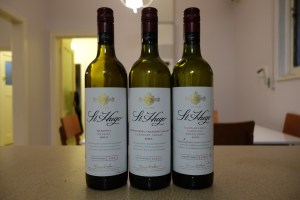
St Hugo 2013 Reds
Pernod-Ricard, who amongst other wineries own St Hugo, sent me some samples of three 2013 reds from Barossa Valley and Coonawarra fruit. Here are my impressions.
St Hugo 2013 Reds
Ben Haines wasn’t sure what he wanted to do as a career, but his father sensed that the wine industry would be a great option. After studies and experience in viticulture, he discovered that quality doesn’t stop once the grapes are harvested, it continues all the way through to bottling. Postgraduate studies in winemaking lead him on a career path that would include vintage experiences overseas, and eventually led he was appointed chief winemaker at famed Grampians estate, Mount Langi Ghiran. Ben spoke about his journey on this episode of The Vincast.
Follow Ben on Twitter, Instagram and Facebook
Follow James on Twitter, Instagram and Facebook
Subscribe to the Intrepid Wino channel on YouTube and watch a few videos!
Follow The Vincast on Twitter and download all the previous episodes here
Subscribe to the podcast on iTunes, Stitcher or PlayerFM and don’t forget to rate and review!

Ben Haines from Mount Langi Ghiran
You may have heard me recently mention the re-birth of the Yarra Valley in the 1970s as a wine-producing region. Yarra Yering was in fact the first of these estates that was established in 1969, by Dr. Bailey Carrodus. When he passed away in 2008 the property was sold and has gone through somewhat of an evolution since then, whilst still retaining its core. These 2006 wines were purchased by myself while I was working in the Yarra Valley, and if I remember correctly it was after Dr. Carrodus passed away. I actually bought them well before they opened their cellar door, on their then annual open days. So I thought I would open them both, and talk about them. Let me know what you think in the comments below!

Yarra Yering Pinot Noir & Dry Red No. 1 2006
Two wines from my cellar for this video tasting, that I bought from the cellar door many years ago. Port Phillip Estate, based on the Mornington Peninsula, opened a new facility in November 2009 that incorporated all their functions, including the cellar door. I bought these bottles from the previous cellar door just before the new one opened. At the time they were the top red wines (Morillon and Rimage), made from (respectively) pinot noir and syrah. Let me know what you think in the comments below.

Port Phillip Estate Rimage & Morillon 2005
Neill Robb, owner and founder of Sally’s Paddock Redbank Winery, was my guest on Episode 90 of The Vincast, my wine podcast. He talked about why he chose the site in the Pyrenees region of Victoria, and why he chose to plant the grape varieties he did. He generously brought me a bottle of the 2012 Sally’s Paddock, the top wine from the estate, and I was very excited to open it and share my experiences here on Let’s Taste. Let me know your thoughts in the comments below, please like and subscribe!
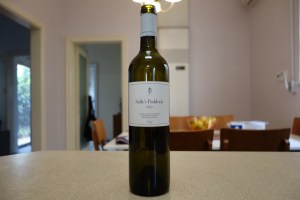
Sally’s Paddock 2012
Simon Killeen comes with quite the pedigree, being a seventh-generation Rutherglen-born winemaker. Growing up in vineyards and cellars very quickly made an impact, he barely entertained any other career apart from wine. After many years of experience in vineyards and wineries around the world, he made the bold decision to start his own project; Simão & Co. It was his intention to champion the Greater North-East of Victoria, purchasing grapes from growers in multiple regions. He joined me on this episode to talk about his journey and how he hopes to change people’s perceptions of this somewhat misunderstood part of the country.
Follow Simon on Facebook and Instagram
Follow James on Twitter, Instagram and Facebook
Subscribe to the Intrepid Wino channel on YouTube and watch a few videos!
Follow The Vincast on Twitter and download all the previous episodes here
Subscribe to the podcast on iTunes, Stitcher or PlayerFM and don’t forget to rate and review!

Simon Killeen from Simâo & Co.
Filed under Podcasts
Neill Robb’s father was a pioneer viticulturist and consultant, working in such important wine regions as the Hunter Valley and Pyrenees. It was in the latter region that Neill ended up following his father into the wine industry, eventually purchasing an estate with his wife Sally in 1973. Here they established one of the most important estates in this still neglected Victorian wine (and tourism) region, and this year marks the 40th year of the Sally’s Paddock wines being available both in Australia and beyond. Neill shared his story and insights on this episode of The Vincast.
Follow Sally’s Paddock on Twitter, Instagram and Facebook
Follow James on Twitter, Instagram and Facebook
Subscribe to the Intrepid Wino channel on YouTube and watch a few videos!
Follow The Vincast on Twitter and download all the previous episodes here
Subscribe to the podcast on iTunes, Stitcher or PlayerFM and don’t forget to rate and review!
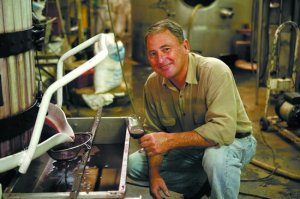
Neill Robb from Sally’s Paddock
Filed under Podcasts
Tahbilk Winery in the Nagambie region of Victoria sent me samples of their 2013 Reds for my appraisal. You may have seen previous Let’s Taste episodes looking at Tahbilk wines, and you may have heard my episode of The Vincast with owner Alister Purbrick. If you haven’t, head to the Intrepid Wino website.

Tahbilk 2013 red wines
Yeringberg is one of the most historic viticultural sites in the Yarra Valley, and is also one of the oldest family owned wineries in Australia. The de Pury family have been in this part of Victoria since the 1860s, and have an incredible connection with their land, farming a number of different agricultural products. They make a number of outstanding wines, and the Yeringberg sits at the top. I opened the 2005 vintage from my cellar and shared my impressions, let me know what you think in the comments below.
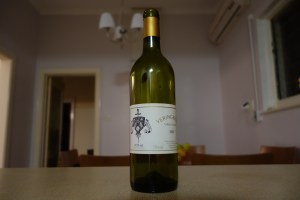
Yeringberg 2005
Part three of The Sangiovese Project is all about pressing the two bins and transferring them into their vessels. If you haven’t already seen part one and two, I recommend watching them before this video.
Bin X of the Heathcote Sangiovese that was foot-stomped and plunged daily, took about 10 days to finish its fermentation on skins. The skins were quite broken down and plenty of colour had been leached into the wine. The original 500kg of grapes fit into one basket press, and produced just over 300 litres of wine. It settled in a tank for two nights then was transferred into a seven-year-old hogshead (300L) barrel for its elevage.
Bin Y was left as whole berries after de-stemming. It went through a mostly carbonic maceration, and was not handled until pressing. Any juice in the bin was fully fermented, but there was still a lot of juice inside intact berries that was not fermented yet. Pressing included two top ups of the press, as the berries took up much more space. The wine was darker and fruitier. It was transferred into a 300L stainless-steel tank and a 34L demijohn to finish fermentation, and it will stay there.
Please note that the memory card was full towards the end of pressing so I missed a bit.
I hope you enjoy this next part of my first winemaking journey, thanks again to Alex for the advice and the help processing the wine. If you have any questions please feel free to ask them in the comments below.
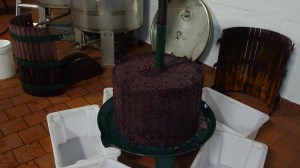
Bin X Wine Cake


A podcast about wine, wine culture and wine people. Every week a different guest from the wine industry joins host The Intrepid Wino (aka James Scarcebrook) for a casual chat about the world of wine.
All content on this podcast remains the sole property of the author unless otherwise acknowledged and appropriately credited. Unauthorised use and/or duplication of content without express and written permission from the author is strictly prohibited. Content may be used for reproduction provided that full and clear credit is given to James Scarcebrook and/or The Intrepid Wino with appropriate and specific direction to the original content.
 The Intrepid Wino