I’ve been familiar with the Coonawarra producer Rymill since my days as a wine buyer for a Melbourne independent wine store, though it’s been at least five years since I’ve tasted any of their wines. I was very interested to look at two of their cabernet sauvignon wines that I received as samples, here are my impressions.
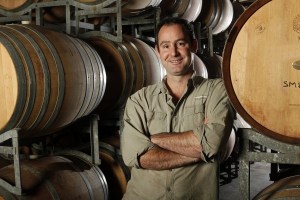
Becoming the Chief Winemaker for Mount Pleasant Wines – one of the most important and historic vineyard/winery operations in Australia – is no mean feat. Being only the fourth chief winemaker since Maurice O’Shea is even more impressive. With incredible and diverse winemaking experience behind him, Jim Chatto did this a few years ago. He also manage to find time to produce some outstanding wines in Tasmania under the Chatto Wines label, where he has also recently been appointed Chief Winemaker of Kreglinger Estates.
I was joined by a very special guest on this edition of Let’s Taste, Piero Fonseca, who as an Italian sommelier and wine wholesaler is an expert in Italian varieties. We looked at a bottle from my cellar, the 2010 Giaconda Nebbiolo. Giaconda is one of Australia’s most cult producers, it’s Beechworth vineyard producing one of the finest chardonnays in the country. I was fascinated to see what their interpretation of the noble nebbiolo grape would be.
As mentioned before here on Let’s Taste and on my podcast The Vincast, Yeringberg is a very special winery for me as they produced my epiphany wine that led me to follow my career path. For a period of time I would try to find older bottles of Yeringberg wines, and this was the last one I had. The bottle unfortunately wasn’t in great condition, but the wine still looked pretty good. Let me know what you think in the comments below!
Not the first time I’ve tasted Toppers Mountain wines on the channel, but the first time I’ve tasted some of their red wines. Toppers Mountain – located in the northern New South Wales region of New England – are known for their use of alternative varieties. They do however produce some more prominent international varieties, so here I can compare their approach to two grapes!
Greg Lambrecht discovered an interest in wine while growing up in California, but his passion for discovery began when he studied in Boston and met the woman who would become his wife. Through family and friends he was able to taste and learn while he developed an incredible career in medical technology. During his wife’s pregnancy he wanted to enjoy a glass of wine but it seemed a waste to open a bottle as she wasn’t drinking. Thus he conceived of a device that could allow someone to drink from a bottle without opening it, and the Coravin is now changing the wine industry around the world.
Increasing the volume of fruit for this vintage meant a lot more pressing. Luckily that was largely automated thanks to the pneumatic press, but there was quite a lot of manual labour required, bucketing solids into the press. Six separate skin-contact ferments were all press at different times, and every time the press needed to be cleaned. The pressing program was as follows;
– One of two tonnes of Riverland Vermentino were fermented on skins in two separate ferments. One was pressed immediately after the completion of fermentation, spending a total of nine days on skins. The other was pressed twelve days later, spending a total of three weeks on skins. Both were transferred to neutral white barriques for ageing.
– One tonne of Mildura Nero d’Avola was de-stemmed and split into two fermenters. After only two days of fermentation one half-tonne was pressed and completed fermentation in a stainless steel tank, whilst the other half-tonne completed fermentation on skins but was pressed soon after, a total of 10 days on skins. Each press went to a 300L mature hogshead barrel for ageing.
– Two tonnes of Pyrenees nebbiolo were de-stemmed and split in half. Both finished fermenting on skins. Nothing was added or removed from these ferments. One tonne was pressed after 15 days on skins, the other spent 56 days on skins. They were split between 2010 and 2012 vintage barriques.
Vino Intrepido is a (soon to be launched) brand that combines great Italian grape varieties with great Australian wine regions and growers, experimenting with different winemaking techniques to bring you delicious wine! If you are interested in finding out more, please get in touch via email on vinointrepido@gmail.com
The 2017 vintage was very prolonged, and each of the three varieties finished fermenting before the next one arrived. The fermentations were as follows;
– Two tonnes Riverland Vermentino were split in half – one tonne was pressed and one tonne de-stemmed for skin-contact fermentation. Half of the pressed juice was transferred to neutral barriques for barrel-fermentation, the rest fermented in stainless steel. The two skin-contact ferments had a neutral commercial yeast added to help them through ferment.
– One tonne of Mildura Nero d’Avola was de-stemmed and split into two fermenters. After only two days of fermentation one half-tonne was pressed and completed fermentation in a stainless steel tank, whilst the other half-tonne completed fermentation on skins. Due to the low acids and high pH, tartaric acid was added to help balance the wine.
– Two tonnes of Pyrenees nebbiolo were de-stemmed and split in half. Both finished fermenting on skins. Nothing was added or removed from these ferments.
Vino Intrepido is a (soon to be launched) brand that combines great Italian grape varieties with great Australian wine regions and growers, experimenting with different winemaking techniques to bring you delicious wine! If you are interested in finding out more, please get in touch via email on vinointrepido@gmail.com
Whilst the D’Aloisio family have been involved with agriculture in the Yarra Valley since the 1960s, it wasn’t until 1994 that they planted their own vineyards. Starting with the most important varieties for the region (Cabernet Sauvignon, Shiraz, Merlot, Pinot Noir, Chardonnay and Sauvignon Blanc), they have since diversified with alternative varieties. Barbera is one of those grapes, and I was excited to try a bottle of their 2013 vintage. Let me know what you think in the comments below!
I’ve been friends with Sam Jorgensen (aka Old Mate Wine) on social media for a few years, and was thrilled to finally meet him in person over in Perth two years ago. He’s been working in the industry for a while and gave me a bottle of his first wine to taste. Two years later his approach to riesling has changed a bit, and while he and his partner were over for dinner I thought I would open his 2016 riesling with him, to discuss how he made it last year. Let me know what your thoughts are in the comments below.
The Vincast - a Wine Podcast with The Intrepid Wino
A podcast about wine, wine culture and wine people. Every week a different guest from the wine industry joins host The Intrepid Wino (aka James Scarcebrook) for a casual chat about the world of wine.
All content on this podcast remains the sole property of the author unless otherwise acknowledged and appropriately credited. Unauthorised use and/or duplication of content without express and written permission from the author is strictly prohibited. Content may be used for reproduction provided that full and clear credit is given to James Scarcebrook and/or The Intrepid Wino with appropriate and specific direction to the original content.




 The Intrepid Wino