Category Archives: Winery Visits

When I have visited wineries

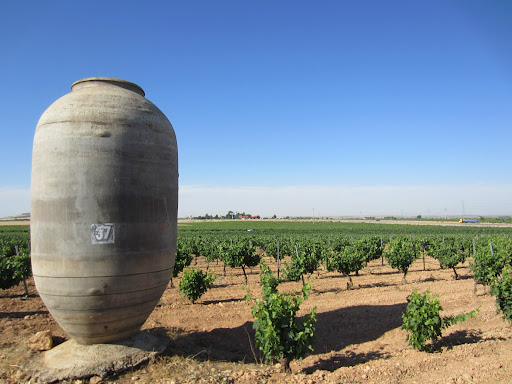
Vote for pedro (Montilla-Moriles, Spain)

Quite often on my trip I show my ignorance and/or naivety when it comes to wine. This isn’t hard to believe considering how big the wine world is, how many wineries and how many regions there are. It was one of the first things that excited me about working with wine, is that it is essentially impossible to know everything about wine, but I liked the challenge regardless. Sometimes these instances are a little more embarrassing, such as not knowing what the whole left bank-right bank thing referred to. My former employer King & Godfree prides itself on the range of fortified wines it stocks, particularly their sherries, so I was familiar with the different styles and many of the better known houses. So when I got in contact with one of my favourite producers noting my dates in Jerez, I was very embarrassed to discover that they aren’t even in the same province. The surprises didn’t stop there, as I had one of my most enlightening visits in Spain.
Dreams can come true

Continue reading

Leave a comment

Filed under Winery Visits

The heat is on (Yecla, Spain)

I’d just like to point out a few things about myself and where I come from. It is true that I come from Australia, which is very hot and dry and is famous for the outback and the beaches, the latter I am familiar with but not the former. I’ve spent 29 summers in Australia, and I know how hot it can get. The part of Australia I am from is far from the hottest in the country, and is actually more famous for the rain. Particularly in winter it can get pretty chilly (rarely below zero), and doesn’t fit the image of Australia that most people may have. Thus I was somewhat unprepared for example, for the desert like conditions of Mendoza in Argentina, where the sun beats mercilessly down for 16 hours a day with very little respite or anywhere to hide. Nor was I prepared for southern Spain, particularly in the centre of the country, where you can easy go through six t-shirts in a day through sweat alone. Priorat and Montsant were pretty hot, but this was worse because it seems much drier. In a way it did remind me of some very well-known regions in Australia, and I wasn’t surprised that famed Barossa winemaker Chris Ringland is actually making wine in this part of Spain. What did surprise me is that there hasn’t been more investment in the Yecla region, as the potential to make the kind of wines the markets are crying out for is outrageous. With very little time to spend I was able to visit the cooperative winery, which is doing an outstanding job bringing Yecla to Spain and the world.
Sadly it is empty

Continue reading

Leave a comment

Filed under Winery Visits

Resurrection (Alicante, Spain)

Alicante just ain’t what it used to be. At one point it boasted one of the most important wines of Europe, found in cellars of royal families, even referenced in books by Alexandre Dumas. Back in these day most wine was being sold in bulk to other parts of Europe to be bottled or blended with other wines, but this changed at the end of the 19th Century. The first enemy was the phylloxera epidemic, and the second was changes in markets and politics domestically and overseas. There are two main areas for viticulture in Alicante, and they each have a major indigenous variety. Closer to the coast where it is lower in altitude and a bit warmer and more humid grows moscatel, used to make sweet wines. Further away from the coast is where you find a bigger range of varieties, most importantly monastrell. I visited two estates in Alicante that represent a resurgence in interest in the region, but one is in a modern and the other a traditional model.
Fireworks over the beach in Alicante

Continue reading

Leave a comment

Filed under Winery Visits

Man of La Mancha… couldn’t resist (Valdepenas, Spain)

Madrid is everything that a capital city should be; it’s big, busy, historic, cultural, classy and teaming with life. In late June it is also scorchingly hot. It would have been at least 38 degrees in the shade, almost 10 degrees higher than only two hours north. On the Friday night of the weekend I was invited to have dinner with Didier Belondrade, his partner and a friend, where I enjoyed one of the finest meals of my trip and made me miss Melbourne a lot. Madrid is certainly a party town, and I didn’t get much sleep so on the Sunday evening when I got to Valdepenas I flicked on the Italy England Euro 2012 match and fell asleep after only ten minutes. Valdepenas is town that the DO takes its name from, and is the part of the La Mancha DO, the largest producing wine region in the world. Many in the Spanish wine industry look down on La Mancha as a low-quality commercial area, blaming it for the ills of the wine glut. There is however much quality to be found here providing that the price is right, and it is thanks to this region that so many consumers are drinking Spanish wine around the world. Valdapenas is the premium area of the region, and I wanted to find out what the best this wide, dry and healthy part of Spain had to offer.
Traditional fermentation vats in Valdepenas

Continue reading

Leave a comment

Filed under Winery Visits

The White Stuff (Rueda, Spain)

Not too long ago, there was a region to the south-west of the Ribera del Duero that produced a wine very similar to that of Jerez. Just like their colleagues down south they grew palomino, a very fast ripening high yielding variety that they harvested early with plenty of acidity, and then made wine in the flor based solera system in the sun. That was until the Rioja winery Marques de Riscal came in search of a region to produce white wine, and found some very old indigenous verdejo vines. Seeing the potential for the wines here, they cultivated vines and began to produce crisp fresh white wines that captured the imagination and the palates of Spanish wine drinkers, particularly in warmer weather when full-bodied reds can be a little unforgiving. Soon the region flourished as more producers began producing wine in the region, particularly important people like Telmo Rodriguez, and suddenly Spain had found its new white wine region. The second wave occurred towards the end of the 1990s as some vintners began fermenting and ageing verdejo wines in barrels, and a new style was created.
The soils and stones of Rueda

Continue reading

Leave a comment

Filed under Winery Visits

The Wild West (Toro, Spain)

Only 30 minutes away from Valladolid is the town of Toro, but the difference is so apparent you would almost guess it was 3 hours away. Driving around the villages in this area almost feels like driving through an old west town from the movies, as it feels the landscape and lifestyle feels very familiar. It actually reminds me of being back in the Salta region of Argentina, albeit on much smaller scale. Life is a bit simpler and tougher here, and it is a common site to find Toro bulls destined for the bullfighting ring grazing in paddocks by the road. In this area the valley opens up and is significantly flatter as the Duero River approaches Portugal to become the Douro and flows out into the Atlantic Ocean. The landscape is significantly drier ad tougher for the cultivation of vines, which is part of the reason viticulture was almost entirely abandoned many years ago. Fortunately many vineyards were not removed and there are some seriously old vines growing close to the ground in very sandy and sometimes alluvial soils. The rediscovery of this region came during the boom of Spanish wine, when wines like the Ermita and Pingus were gaining attention for their immense power and structure, unlike any other wine made in Europe. All of a sudden the region exploded, and the number of wineries went from six in 1998, to over 50 today. The first winery I visited on my only day in Toro brought attention to the region, and the second confirmed its status as the next big thing. The third winery shows how good and affordable wine can be made even in such a harsh climate.

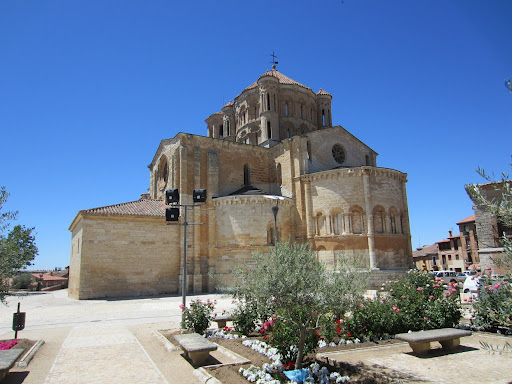
The biggest church in Toro

Continue reading

Leave a comment

Filed under Winery Visits

Even better than the real thing (Ribera del Duero, Spain – Day Three)

I’d like to take this opportunity to talk about the complexities of communication. A significant amount of the worlds problems can be traced back to a failure to communicate, through misunderstandings, misrepresentations or ignorance. In daily life it can be so difficult to get your message across and understand your opposite within your native language, let alone someone else’s. It is my firm belief that the major thing holding wine back in the world is communication, rather than economic, political or social barriers. Wine is such a unique product that it is futile attempting to market it in my opinion, all you can do is communicate it. Some might argue that this is the same thing, but communication is only one element of marketing that is the most complicated in relation to wine. In my experience one of the hardest things to convey about wine is more than quality, it is personality, context and the overall mystery of wine. I have always endeavoured to improve the way I communicate about wine, dependant on the audience, and I will continue to do so in the future. When you consider that in todays global wine market there are hundreds of different language and cultural barriers, this further adds to the complexity involved. On my journey I have had several instances of misunderstanding and miscommunication, but my experience today was one of the most frustrating.
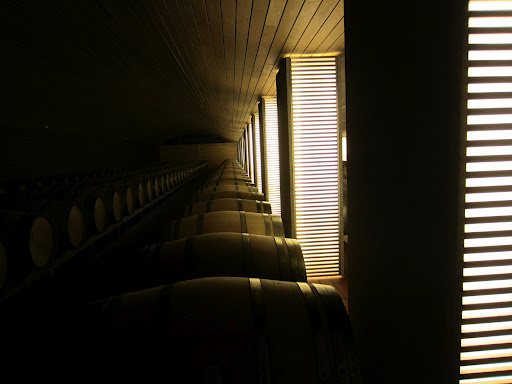
Barrels in the cellars of Vega Sicilia

Continue reading

Leave a comment

Filed under Winery Visits

Moving and shaking (Ribera del Duero, Spain – Day Two)

About 15 years ago Spain became the new frontier for wine in Europe, with a number of emerging regions being discovered by a small group of pioneers not necessarily from Spain. It was a great time to invest in the country, as land prices were still relatively low, the costs of labour and materials was lower, taxes were beneficial and there was growing interest for the wines around the world. Those early pioneers like Alvaro Palacios and Telmo Rodriguez got in at the best time, but had to work hard for very little initial reward. They are now reaping the benefits of their commitment and foresight, and those who followed rode on their coattails (particularly in terms of brand building), but at the same time paid higher prices in general. Unfortunately times are different in the year 2012 as it is well-known. Spain amongst other countries is in deep recession, and things aren’t much better in many export markets. The recent controversy of Pancho Campo only served to highlight the growing reliance on media endorsement, and the exploitability of wine businesses eager to get an edge in an increasingly competitive global market. The pioneers aren’t too fazed, as they are well entrenched in their regions and wineries, and their wines are unlikely to fall out of favour, as long as there is rabid demand to pay full price for allocated wines. I was introduced to two projects of another pioneer and modern icon, the Danish-born Peter Sisseck.
Bunches in mid-flower in the vineyards of Quinta Sardonia

Continue reading

Leave a comment

Filed under Winery Visits

The source (Ribera del Duero, Spain – Day One)

As I’ve probably already said, my trip isn’t just about wine. Naturally the most important thing for me is to travel to the regions and visit wineries to learn about the places, people and processes behind the many and varied wines of the world. As I have also probably said, wine isn’t just about what is in the glass and the facts about how it was made. So many things influence wine that it is hard to have one without the other. Cuisine for example, or culture. The previous weekend I went to San Sebastian to indulge in the former, and this past weekend I went to Bilbao to indulge in the latter. Specifically I wanted to visit the Guggenheim, and add it to the list of iconic galleries/museums I have visited in the last year, which include the Louvre and Musee d’Orsay in Paris, the Uffizi and l’Acedemia in Florence, and the Met in New York. After visiting the Guggenheim in Bilbao I have now visited all three (the others are in New York and Venice respectively), but the Bilbao was probably the most impressive in terms of architecture and collection. Having got a bit of a culture fix, I journeyed to the eastern part of the Ribera del Duero region, which lies in the next valley south from Rioja. On my first day I ventured deep into the very mouth of the river to visit two producers who are doing things a little differently.
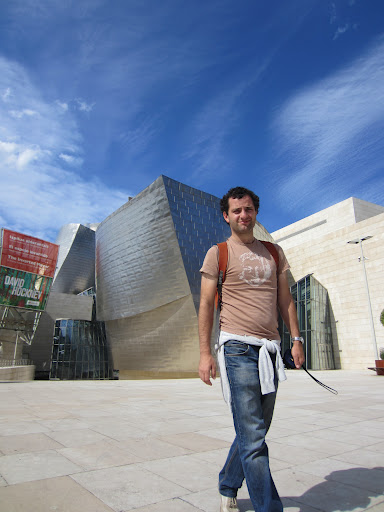
Outside the Guggenheim in Bilbao

Continue reading

Leave a comment

Filed under Winery Visits

A bit different (Getaria, Spain)

One of the big problems I have with the globalisation and homogenisation of wine is that unique and traditional wines for uncomplicated consumption with food are lost. The first really different and regionally specific wine discovery I have made in Spain was made in San Sebastian the previous weekend. During a tapas bar crawl I was introduced to Txakoli (pronounced chakoli), which is a wine made on the coast only 30 kilometres west of San Sebastian on the way to Bilbao. The vineyards are planted mostly in pergola trellising systems, on the steep slopes of the coast. The wines produced are 95% white wine with a slight spritz to it, as a small secondary fermentation happens in the bottle. To encourage the bubbles when it is poured it is done from some height, something I had seen in San Sebastian. The high acids and slight fruit residual sugar matches beuatifully with fresh salty pinchos. I’m not sure it would taste the same if drinking it anywhere else, but I was intrigued to find out more. Carlos from Artadi very kindly set me up with an appointment at the most important Txakoli producer in Getaria.

In case you forget which way the Atlantic Ocean is

Continue reading

Leave a comment

Filed under Winery Visits