
After six weeks in Italian wine regions I have reached a crossroads, and have developed some interesting theories and anomalies. One of these theories is about what the best wines in Italy are. What these wines should not be is purely statement wines, as this is not France. They should not be designed like something else, they should be themselves and proud of it. They should be made with indigenous grapes, particular to that area as often as possible. The wines don’t necessarily need to be a single variety, but the blend should make sense and express the origin. Some of the best wines I have tasted have had little to no oak treatment, avoiding the temptation to be matured for long periods of time in brand new medium toasted French barriques. I am by no means suggesting that this process is not good; I just feel it is not true to the wines here. The red wines should not be heavily extracted, but ultimately they should be balanced in fruit, alcohol and tannin. The white wines similarly shouldn’t be too rich and complex in malolactic, using oak only when necessary and again achieving balance. The wines should respect the traditions and origins of the variety and area, but utilise technology to merely observe and coax, rather than to intervene and dictate. Most importantly the wine should be approachable but not simple. The best wines are seriously made, but should not be taken too seriously. After all, wine is intended to be enjoyed with people and food, and too much emphasis placed on wines inevitably leads to disappointment and increased prices. Hopefully Italian wine won’t continue to lose its sense of place and personality, as the world needs the wines of Italy to demystify wine, and make it clear that not every wine has to be an ethereal experience. Variety is the spice of life, which drives the winery I visited today.
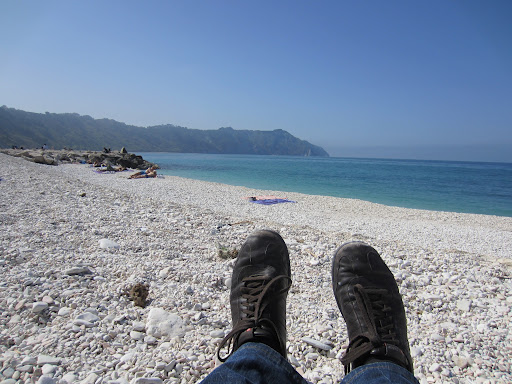 |
| Porto Nova beach |





 The Intrepid Wino