Category Archives: Winery Visits

When I have visited wineries

Keep it simple (Chablis, France – Day Two)

If anyone has played competitive team sport in their life they may have heard of the KIS principle, which stand for Keep It Simple. Looking back on my trip I am finding it fascinating that many of the wineries and regions that I most connected with have this same principle in mind. Even more interesting is that this connection was regardless of red or white wine, but applied to philosophies and practices as well as style. The clarity purity and minerality of the rieslings I tasted in Germany blew me away, as did the gruner veltliners in Austria. Some of the best wines I tasted in Spain were those that were straightforward and approachable, such as the albarinos in Rias Baixas and the verdejos in Rueda. In terms of French wine, the simple white wines of the Loire Valley and Chablis have a special place in my heart, as the minimal intervention they make in the wineries means it is purely the expression of the variety in their particular terroir. In fact there are a number of similarities in terms of climate and soil composition between Sancerre, Pouilly and Chablis, but the latter chooses to express through chardonnay rather than sauvignon blanc. The minerality of these regions is legendary, but I am starting to see there are some different expressions that still follow the KIS principle.

Some of the characters of Chablis

Continue reading

Leave a comment

Filed under Winery Visits

The name game (Chablis, France – Day One)


When I was younger I didn’t like my name. In terms of my first name I didn’t really have a problem with James, but I didn’t like it being such a common name, nor did I like derivations and colloquialisms of it, like Jim, Jimmy or Jamie. Considering how uncommon my surname is and how much of an individual I attempted to be, you would think I would like my surname but this was not the case. I wasn’t a fan of the length of it nor did I like the fact that people could neither spell it by ear nor could they pronounce it when reading it. I love my name now, being proud of its uniqueness and also as the last male Scarcebrook in the family I have a sense of obligation to continue the name. People in Europe, particularly France, are similarly fiercely proud of their names, often naming their children after themselves. Continuing the family name carries over to the family business as well, but complications arise with splitting of estates between children or establishing new estates with the same name. Within the same village it is not uncommon to find several producers of the same name, and within an entire region this could multiply significantly. Not for the first time on my trip I arrived at the wrong winery because it had essentially the same name, even though there is no relation between them. This gets complicated out in the market as a producer’s name is effectively their brand, so when someone else is using the same brand their products can reflect on your own reputation. I guess this is another complication that makes wine so special, and it is important to trust your source, be it a restaurant, store or importer.

Limestone clay and a bit of chalk

Continue reading

Leave a comment

Filed under Winery Visits

It is and it isn’t (Pouilly, France – Day Two)

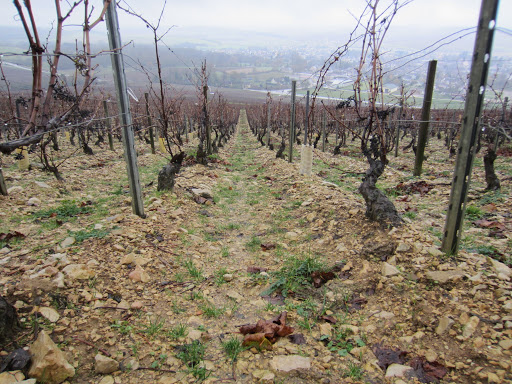
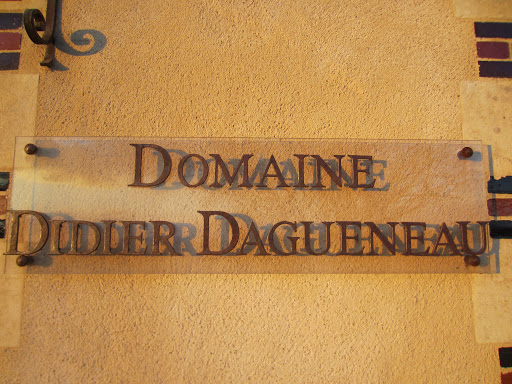
I’ve never really understood the phrase “the exception that proves the rule”, and I’m wondering if someone can explain it to me. Doesn’t an exception by definition DISprove a rule? Isn’t that the whole point of a rule? I understand the concept of “rules were meant to be broken”, never more appropriate than when talking about the rules and regulations around appellation des origine controlee (AOC) in France, and similar denominations in other European countries. The idea that the best wines are produced from certain varieties in certain terroirs perfected over the centuries isn’t the question for me. The question is the determination of yields and practices in the vineyards in cellars that are determined by this quite rigid system. In terms of planting other varieties, not only can you not label any wine made from the varieties, but the mere existence of them is forbidden. Around Europe there are mavericks looking to shake things up a bit, breaking away from the norm and attempting to disprove the rules, or prove the exception. One of these is Domaine Didier Dagueneau.

Domaine Didier Dagueneau

Continue reading

Leave a comment

Filed under Winery Visits

Everybody needs good neighbours (Pouilly, France – Day One)

In the world of wine there are a few appellations that neighbour each other and are almost identical in terms of the climate, variety and style. Yet for some reason they aren’t as large or well known as these neighbours. One that comes to mind is Barbaresco and Barolo, the former being a third of the size and yet both are made from nebbiolo and are planted on the same soil type. Another more recent one I visited was in Touraine where the king of whites is Vouvray, but just across the river is Montlouis-sur-Loire where they also produce crisp fresh white wine from chenin blanc. Adding to this is the Pouilly-Fume appellation, which sits on the eastern/left bank of the Loire River, is about 40% the size of Sancerre and is also made with sauvignon blanc. There are some similarities in terms of soil with variations of clay, flint and chalk (much like in Chablis in fact). An interesting difference is that there is an additional AOC within Pouilly called Pouilly-sur-Loire, surrounding the town of the same name, which is exclusively planted to the more traditional chasselas variety and totals only 50 hectares. There is enough similarity in the style to be able to buy Pouilly-Fume instead of Sancerre and not be disappointed, particularly as the prices are a little friendlier. Head into your local independent boutique wine store and get them to recommend some alternatives to the better known wines you may drink, and you may discover something even better for the price.
Chateau de Nozet, the unofficial heart of Pouilly-Fume

Continue reading

Leave a comment

Filed under Winery Visits

Finishing big (Sancerre, France – Day Three)

It is important to remember that everything is relative, and also that there are numerous implications depending on the person and the word. Language is complicated as much as communication itself, and over the past 14 months (to the day in fact) I have had so many situations where things can have different meanings depending on audience and context. My understanding of things, not only about wine, has changed significantly and I have discovered that it is important to always clarify and speak relatively. For example, there is a word in French that will be familiar to most wine-lovers that actually has different meanings in English which are related but have different connotations. The word is ‘grand’, and in the context of vineyard classification for such regions as Burgundy and Alsace, it means ‘great’ or essentially ‘the best’. The word can also mean ‘big’ or ‘large’, which implies size rather than importance and in terms of wine, could refer to the size of vineyards or a winery for example. When a winery produces 3.5 million bottles per year in Sancerre, this is both great and large, but in the Australian context it is merely a medium-sized winery. Everything is relative. What is interesting is that in my humble opinion I began my week with the most important producer in Sancerre and finished with the largest, and the quality of the wines to decline with each estate I visited.

Cellars in Sancerre

Continue reading

Leave a comment

Filed under Winery Visits

All things bright and beautiful (Sancerre, France – Day Two)

Sancerre is another one of those wine words that is almost a synonym for white wine. The white wines have been well known along time not only in France but also in the UK, where as has been suggested by Chris Kissack, Sancerre is an easy name to say and thus ask for. Sancerre is on the Loire River and is thus part of the valley, but it is a long way even from Touraine let alone the western parts of the Loire. It is actually closer to Burgundy which it has more in common in terms of terroir, climate and even varieties. The AOC for Sancerre white wines was created in 1936 around the same time that most of the AOCs in the Loire Valley were established. The cultivation of grapes in this part of France is believed to date back to the Roman era, so it has a much longer history. The name is taken from the village where a castle once stood with nine towers, only one of which remains. This hill and surrounding slopes make it ideal for viticulture in a pretty cool climate, as the exposure to the sun improves ripeness. This is in contrast to Touraine which is a little more flat but also a little warmer. The key grape variety here is sauvignon blanc and is without question the best known place for the variety. 20% of the vineyards however are planted to pinot noir which produce both red and rose wines for which an additional AOC was created in 1959. With the market changing away from sancerre red wines they are beginning to produce more rose wine which is in a very light dry and food-friendly style. The white wines differ depending mostly on the specific terroir on which the vineyards are planted, and also a little on how the wines are vinified.
Always work to be done in the vineyards

Continue reading

Leave a comment

Filed under Winery Visits

Personality plus (Sancerre, France – Day One)

Any skill for organisation I may have developed on this trip seems to have abandoned me on my break, and the journey from Touraine to the Central Loire Valley was the victim. The first thing I realised was that Orleans, the city I had decided to stay in during my time in Sancerre and Pouilly-sur-Loire, was at least 90 minutes away. The problem was that I realised this the day I was set to check-in, and changing to a motel close to Pouilly cost me the first nights accommodation in Orleans. My second big error was that I had forgotten my initial plan, which was to stay in Tours an extra night and stop at a winery on the way to Sancerre, one which I had made an appointment with. The winery is located about 150 minutes away from Sancerre, and driving back for one appointment was not something I wanted to do. So due to my incompetence I then had to cancel this appointment, something I felt quite ashamed about and also disappointed. My mood picked up a lot and I managed to move on a little as I stopped at three chateaux in Touraine which were amazing. The castles in the Loire Valley are well known to be some of the most beautiful and grandiose in Europe, as most of them hark back to the Rennaisance period when the French monarchy was one of the most wealthy and influential.
The Sancerre Centre

Continue reading

Leave a comment

Filed under Winery Visits

Moullieux out (Vouvray, France – Day Two)

Not having done any serious winery visiting for so long I had forgotten that generally in certain countries in Europe they don’t really show visitors vineyards. I have a number of theories about their reasons for this. The first is that a lot of the time cellars are not on the estates the vines grow, partly as it is more important to use land for vines but also as originally the vineyards were owned by the church and then split amongst the people in the villages by Napoleon. The second theory I have is that with so many vignerons owning vineyards in essentially the same area they can rarely claim a terroir as their own, and must therefore talk about their expression of the terroir. Another theory I have is that there is an assumed understanding about their appellation and terroir, and there is very little need to show the vineyards. The final reason is that generally visitors are more interested in either flash wineries (Bordeaux) or cellars, and of course in tasting the wines. So it is with disappointment that after three days and seven appointments already I have only had one of my hosts show me vineyards. This is the case in France and Germany, but less so in most of Italy, Spain and Portugal. I took it upon myself to drive around the vineyards of Vouvray to get acquainted with them, but it isn’t the same without someone pointing out specifics like viticulturist practices.
The cellars of Bernard Fouquet

Continue reading

Leave a comment

Filed under Winery Visits

Straddling the Loire (Vouvray, France – Day One)

Closer to Tours to the north-east sits Vouvray, the Loire Valley’s second or third most famous appelations and one of the great white wine regions in the world. Until recently no-one could claim that they were doing more for the chenin blanc variety than Vouvray, but some upstarts down in South Africa are now establishing a reputation with this misunderstood variety. To be labelled as Vouvray AOC you can only make white wine from 100% chenin blanc, but similar to Alsace they make wines of differing levels of sweetness as well as producing some excellent sparkling wine. The vineyards of Vouvray sit on a plateau about 50m above the village of the same name which lies on the banks of the Loire River. On the opposite side of the bank sits Montlouis-sur-Loire, which is actually between the Loire and River on a headland. Montlouis is also 100% chenin blanc and the wines are arguably as good, but they aren’t as famous as their neighbours across the river. I spent my first day in this part of the region on either side of the bank coming to terms with a variety that isn’t particularly fashionable in Melbourne, but is more widely planted further west.
Did I mention how cold it has gotten?

Continue reading

Leave a comment

Filed under Winery Visits

A red dot in a sea of white (Chinon, France)

It was a little strange and unfamiliar at first, returning to winery visits and regions. Interestingly the last region I visited before my break was also in France, but was almost four months ago. I’d forgotten that fear of arriving late or not finding the winery but it came back a little bit. Visiting regions in the Loire Valley is almost like being in Inception as there are so many layers. For example you have the different parts of Chinon which sit around the town of the same name on the Vienne River, and they each have specific vineyards. Then Chinon is part of Touraine, which is then part of the Loire Valley. At this point we are already four layers deep, not including France and Europe. Chinon is the best known red wine appellation in the Loire Valley, although there is quite a bit of red vineyards mostly dedicated to rose in the whole region. They do make some white wine from chenin blanc, but it represents at most 5% of the vineyards and production. The important variety here is cabernet franc, and although there is more planted in Bordeaux, Chinon is the unofficial home of cabernet franc. Appelation laws allow them to use a percentage of cabernet sauvignon, but as sauvignon ripens later they don’t always get it to maturity in this cooler than Bordeaux climate.
Chateau de Chinon

Continue reading

Leave a comment

Filed under Winery Visits