Category Archives: Winery Visits

When I have visited wineries

My house in Umbria (Umbria, Italy – Day Two)

According to my host the previous day, Orvieto is not traditionally considered part of Umbria, as it is closer to Lazio and Tuscany with an Etruscan heritage. Central Umbria had a much more rustic history, being very simple farmers. This part of Umbria has garnered a lot more attention recently thanks to their red wines, most notably in the Montefalco area where the sagrantino grape is king. In the past Sagrantino di Montefalco was a passito sweet wine that was consumed as a table wine with food. It was traditionally the wine that would be drunk with breakfast on Easter Sunday each year, as the first wine drunk after lent. The breakfast was naturally very hearty, including slow-roasted lamb, cured meats and egg, and would last several hours. Back in the 1970s they began to introduce viticultural practices from other parts of Europe in Umbria, and this changed grape and wine production in the region. With the former trellising systems there were high volumes of grapes produced, which meant to achieve the ripeness necessary for the sweet wines in particular, the harvest was usually not until late October. With new pruning practices introduced and more intense plantings, yields were reduced and ripening occurred earlier, with harvests beginning in September. Thus began the serious production of dry red wines from one of the most tannic red varieties possible. Sagrantino is tough to grow, but is quite malleable in terms of ripeness levels and vinification practices, and from what I tasted there is no defined style as yet, it is up to the producer. As the understanding of the variety and the terroir improves so will the quality of the wines.
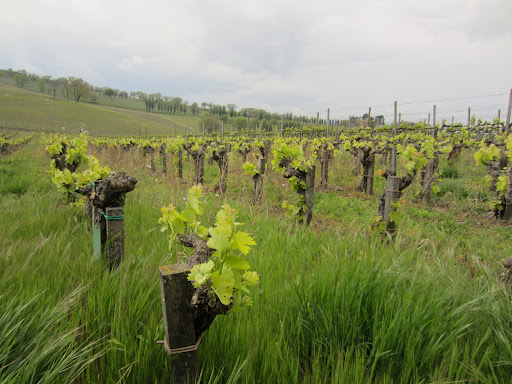
Bush-trained sagrantino vines

Continue reading

Leave a comment

Filed under Winery Visits

You’d never know (Umbria, Italy – Day One)

When you think about the most impressive and unique wine towns in the world, there are some that immediately spring to mind. Not necessarily for the quality of the wines, that goes without saying for many, but for a combination of other factors. Chateauneuf-du-Pape and St. Emilion for example are gorgeous old villages that sit on top of hills with vineyards surrounding them. Montalicino sits in the midst of forests and vineyards, with spectacular views of the Tuscan countryside thanks to the altitude. Villages in Alba like Serralunga d’Alba and Castiglione Falleto seem to be perched on the side of hills about to fall off. Traben-Trarbach and Bernkastel-Kues sit on opposite sides of the Mosel River, connected by historic bridges. Cafayate in the Salta region of Argentina is so isolated and small you would never know it was there, and feels like a Wild West town. Nothing could prepare me for Orvieto in southwestern Umbria, near the border of Tuscany and Lazio. The geological origins of the area are a combination of volcanic and inland sea, and sit on the famous Tiber River. The village itself sits on top of prehistoric rock, and was once a medieval castle. Inhabitants have not only built homes amongst the narrow cobblestone streets, but they also used the rock like a natural city wall and carved passages and cellars into it. The population exceeded the village long ago, and residential areas have spilled out into the surrounds underneath. In the past the region was famous for the quality of the white wines, but became associated with very simple fruit driven wines many years ago. Small producers are attempting to return the region to its former glory, and one such producer is Palazzone who I visited to learn more about the region.

The majestic village of Orvieto

Continue reading

Leave a comment

Filed under Winery Visits

A slightly different model (Tuscany, Italy – Day Five)

Looking back over the past few weeks in Italy there were certain trends that I have identified in hindsight. One of these trends was who I was hosted by in wineries depending on the region. In Alto Adige, Romagna and Valpolicella my hosts varied, in the latter two regions I was only there for a short time. In all of the other regions – or more specifically sub-regions – I was commonly hosted by a person of similar position. For example when I was in Friuli many of my hosts were one of the children of the owner/founder of the winery, who are now heavily involved with different elements of the business. When I was in Piedmont, more often than not I was hosted by either the winemaker or the owner/winemaker. In both of these cases the host is able to provide first-hand insights into the specifics of the winery, and are well prepared to answer any of my probing questions. As you could imagine, Tuscany is the most visited region in Italy by tourists, particularly English speaking tourists, and as such there are dedicated individuals to welcome these guests. In many instances this week I was hosted by these individuals, sometimes privately and sometimes with others. Because I have not only experience with wine education of this nature and also will continue to make this an important part of career, I don’t really mind listening in to different approaches to wine communication. Being somewhat selfish however, it is difficult to take a lot away from these experiences as most of the information provided I already know, and I don’t want to intervene too much on the tour. If I am honest I would think that wineries would take me a little more seriously than this, as I am not a tourist and am going to great expense to visit the region and winery. I don’t feel it is appropriate to ask for specific hosts as any invitation to visit is welcome, but I would hope that wineries I request to visit treat it as an opportunity. Montalcino is possibly the most beautiful part of Tuscany I visited, and the wines are out of this world, but unfortunately I didn’t learn a lot about this complicated wine and was a little disappointed at not being taken more seriously.
The fort of Montalcino

Continue reading

2 Comments

Filed under Winery Visits

Who is Kaiser Soze? (Tuscany, Italy – Day Four)

When you hear names of regions and places for wines, many things may come to mind. Very rarely are you able to associate a specific wine or style with a specific place, but some famous examples are Champagne, Burgundy, Mosel, Rioja, Barolo and Chianti. It is not difficult to see why this phenomenon is common in the vast majority of regions outside of Europe, as the focus on producing regionally distinct wines from specific regions has only been a recent occurrence. In many cases entire countries that may have a huge variety of climates are associated with a particular variety, such as Australia with shiraz, New Zealand with sauvignon blanc, Chile with merlot, Argentina with malbec, and South Africa with pinotage. Anyone from these countries will happily tell you that this does not reflect the entire production, as they produce many more varieties and many more styles even with the same variety. This phenomenon is also common in Europe for a range of reasons. This may be because a range of different varieties are grown but no one or two are considered the best, it may be because the law allows much leeway for blending other varieties, or perhaps the wines are simply not good enough. In many countries this is further compounded by the setbacks in the first half of the 20th century, with most regions rediscovering the right variety for the best sites, and re-establishing many of the winemaking traditions. With so many regions in Europe, with some much bigger and more diverse than others, it is easy to get lost. Thus it is important to establish regional identity and distinction, rather than produce the same wines as everywhere else. Montepulciano is one such region that lacks clear regional identity, in spite of the fact that the most common grape grown is sangiovese.
New shoots on old vines in Montepulciano

Continue reading

Leave a comment

Filed under Winery Visits

Chianti to coast (Tuscany, Italy – Day Three)

So far on my journey it’s been a wonderful experience meeting people from each winery and discovering their similar but also different philosophies. Peoples’ philosophies may relate to the management of their vineyards, such as whether they use sustainable practices, are organic or biodynamic. In the winery they may change how they use equipment and additives, what their maturation program is, and how they have designed the layout of their facility. Wineries have different approaches to how they brand and communicate their wines, and also how they welcome visitors to their wineries. The thing to remember is that no one philosophy is the best or right one, as every country, region, producer and audience/market is different. What is most important is to select the right approach for that winery and place, and this is how I have determined to assess whether the philosophy has been successful. Within the space of one day I visited four wineries that had similar but different philosophies, but were all successful in themselves and offer something different. Between the first and last winery I had covered a fair amount of ground, leaving very early and finishing late.
The Black Rooster greets every day in Chianti Classico

Continue reading

Leave a comment

Filed under Winery Visits

Drawing blood from a stone (Tuscany, Italy – Day Two)

It becomes necessary to attempt to remove all expectations and preconceived notions when arriving into a new region and new producers. There is always going to be some flow-through from the previous region, we naturally compare an experience to the most recent one. Thus on my journey I am constantly having to readjust to each new place I visit and make no assumptions or judgements about such things as production volumes, estate sizes, yields, varieties or practices. What the important (and difficult) thing to ascertain is whether or not the philosophies and subsequent practices are right for that particular place. Whilst the nebbiolo grape is ideal for the elevated and cool hills of Piedmont, it is the sangiovese grape which performs exceptionally in the undulating and warmer landscape of Tuscany. Further to this, nebbiolo is a grape that necessitates small yields and small volumes to produce great wine, as it is notoriously difficult to handle both in the vineyards and in the cellar. Sangiovese needs a careful eye to be sure as it has very high yielding potential, but similar to the syrah grape is quite adaptable to site and you can easily make great wine in more generous volumes. The fact that I am visiting wineries that annually produce approaching one million bottles should therefore not mean they are not great wineries; they just couldn’t be great in Piedmont. After a very restful night and a couple of café lattes with breakfast, I adjourned to the winery of my hosts for the previous night.

Budburst has most definitely begun

Continue reading

Leave a comment

Filed under Winery Visits

The heart of Italy (Tuscany, Italy – Day One)

One of the things that I have realised since arriving in Italy is that it is so difficult to categorise it in a certain way, and no single image does it justice. One of the most indelible images that spring to most people’s minds when they think of Italy is the classic image of gently rolling hills covered in grape vines, olive trees and villas. Tuscany perfectly lives up to this cliché. As I drove south from Florence (which is simply stunning, but is kind of a sinkhole when it comes to money), I became more excited at a place that seems so familiar, as you see it on travel and cooking shows, on calendars, promotional material of Italy, you name it. Tuscany has a number of unfair advantages over every other region in Italy. The first is its location close to the centre of Italy, where the weather is neither too hot nor too cold. It has some of the most beautiful and diverse natural scenery in Italy, from the hills all the way to the coast. The diversity also helps with viticulture, and they have the ability to produce a wide range of wines. It is a very large province, and also has a very long history, with families going back over 1,000 years. Tuscany is very wealthy, and is arguably the most visited province in the country. The food is great, the people are great. If this were the USA, Tuscany would be California. And like cabernet sauvignon is the most important grape (but far from the only one) in California, the king of varieties in Tuscany is sangiovese, and I am spending five days here to become more familiar with it.

Dante Alighieri once owned these cellars

Continue reading

1 Comment

Filed under Winery Visits

Cream of the crop (Langhe, Italy – Day Four)

The Langhe region was without question the best region I have visited so far, for several reasons. The first was the same reason it was one of the most anticipated places for my trip, and I had been looking forward to it for the first six months. This is the fact that the wines produced here, in particular Barolo and Barbaresco, are some of the finest and most sought after wines in the world. On the few opportunities I had to taste them back at home, I had been blown away by them, as they are amazingly unique, but I needed to understand them better because of this. To have the chance to try so many wines that back at home would cost over $150 is fantastic. The second reason that the region was so amazing is its beauty. It’s not a region a lot of non-Italian people visit, which is a shame because of the gorgeous rolling hills, varieties of forest and agriculture, hilltop villages and hidden valleys. Even though the weather wasn’t great for most of the week, this didn’t take anything away from the scenery. The final reason is the people are some of the most wonderful I have met; humble, honest, generous, patient and funny. On my final day in the region, I had the chance to meet two modern icons in Luciano Sandrone and Roberto Voerzio, and a winemaker whose wines had a profound impact on me, in Chiara Boschis.
Me with the famous Luciano Sandrone

Continue reading

1 Comment

Filed under Winery Visits

Nice day for it (Langhe, Italy – Day Three)

I had to pinch myself many times this week to make sure this is all real, as I feel like I’m in a dream. It is hard enough to get the opportunity to taste some of these wines back at home, but to be able to not only taste but also experience the wines one after another is amazing, and I feel truly blessed. The weather was gorgeous for my third day in this magical region, a clear blue sky greeted me and made the view from above Monforte d’Alba that much more spectacular. One of my realised dreams continues, as many of my wonderful hosts continue to introduce me to some of the regional cuisine. The previous day I enjoyed lunch with Giovanni from Massolino, where I had carne crudo (raw meat), which is simply minced beef with olive oil, garlic and pepper, and some freshly prepared ravioli with oil and thyme, and tagliatelle with a meat and tomato sauce. For lunch on this day I tried some thinly sliced cold cuts of beef with a mayonnaise, egg and tuna sauce, along with steamed turkey with a hazelnut sauce and steamed vegetables. My lovely host at the B&B invited me to enjoy dinner with them in the evening; chicken soup with rice, prosciutto crudo and roasted finnochio, and a castgna cake to finish. All washed down with some Moscato d’Asti. A gastronomical delight all around.

Turkey with hazelnut sauce and steamed vegetables

Continue reading

Leave a comment

Filed under Winery Visits

Barolo brain! (Langhe, Italy – Day Two)

Anyone from Melbourne is familiar with the concept of “four seasons in one day”. I don’t think I’ve ever experienced this phenomenon as profoundly as my second day in Alba. It was raining very lightly all afternoon the previous day, and kept raining all night. In the higher parts of the Langhe,  however it snowed. The view from my first appointment in Serralunga d’Alba was magical, as by the time I got up there it had started to clear and you could see the white-capped hills. By the time I got out from lunch, the sun was shining and it felt like Autumn, but it was still a little windy and chilly. Between my second and third appointment, it had got up past 20 degrees, and was almost feeling like Summer. Then by the time I got back to my hotel it had started to cool down to Spring conditions here in the Langhe. It makes me a little homesick, and also glad that I have a zippy little Fiat 500 to take the sharp corners in the wet. Today I ventured deeper into Alba, visiting three producers entrenched in what is considered the ‘masculine’ part of Barolo; Serralunga d’Alba, Castiglione Falletto and Monforte d’Alba.
Quite a view, on top of the world

Continue reading

Leave a comment

Filed under Winery Visits