Category Archives: Wine Experiences

The Wild West (Toro, Spain)

Only 30 minutes away from Valladolid is the town of Toro, but the difference is so apparent you would almost guess it was 3 hours away. Driving around the villages in this area almost feels like driving through an old west town from the movies, as it feels the landscape and lifestyle feels very familiar. It actually reminds me of being back in the Salta region of Argentina, albeit on much smaller scale. Life is a bit simpler and tougher here, and it is a common site to find Toro bulls destined for the bullfighting ring grazing in paddocks by the road. In this area the valley opens up and is significantly flatter as the Duero River approaches Portugal to become the Douro and flows out into the Atlantic Ocean. The landscape is significantly drier ad tougher for the cultivation of vines, which is part of the reason viticulture was almost entirely abandoned many years ago. Fortunately many vineyards were not removed and there are some seriously old vines growing close to the ground in very sandy and sometimes alluvial soils. The rediscovery of this region came during the boom of Spanish wine, when wines like the Ermita and Pingus were gaining attention for their immense power and structure, unlike any other wine made in Europe. All of a sudden the region exploded, and the number of wineries went from six in 1998, to over 50 today. The first winery I visited on my only day in Toro brought attention to the region, and the second confirmed its status as the next big thing. The third winery shows how good and affordable wine can be made even in such a harsh climate.
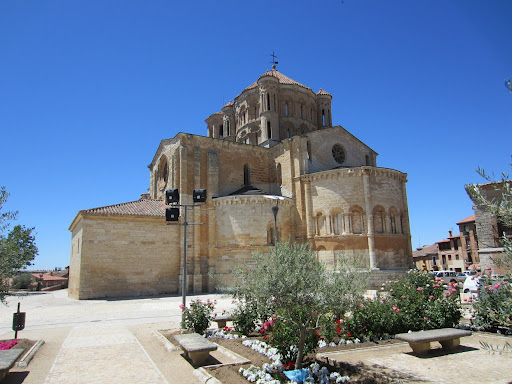
The biggest church in Toro

Continue reading

Leave a comment

Filed under Winery Visits

Even better than the real thing (Ribera del Duero, Spain – Day Three)

I’d like to take this opportunity to talk about the complexities of communication. A significant amount of the worlds problems can be traced back to a failure to communicate, through misunderstandings, misrepresentations or ignorance. In daily life it can be so difficult to get your message across and understand your opposite within your native language, let alone someone else’s. It is my firm belief that the major thing holding wine back in the world is communication, rather than economic, political or social barriers. Wine is such a unique product that it is futile attempting to market it in my opinion, all you can do is communicate it. Some might argue that this is the same thing, but communication is only one element of marketing that is the most complicated in relation to wine. In my experience one of the hardest things to convey about wine is more than quality, it is personality, context and the overall mystery of wine. I have always endeavoured to improve the way I communicate about wine, dependant on the audience, and I will continue to do so in the future. When you consider that in todays global wine market there are hundreds of different language and cultural barriers, this further adds to the complexity involved. On my journey I have had several instances of misunderstanding and miscommunication, but my experience today was one of the most frustrating.
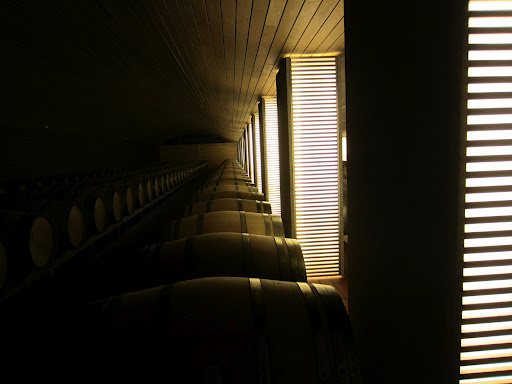
Barrels in the cellars of Vega Sicilia

Continue reading

Leave a comment

Filed under Winery Visits

Moving and shaking (Ribera del Duero, Spain – Day Two)

About 15 years ago Spain became the new frontier for wine in Europe, with a number of emerging regions being discovered by a small group of pioneers not necessarily from Spain. It was a great time to invest in the country, as land prices were still relatively low, the costs of labour and materials was lower, taxes were beneficial and there was growing interest for the wines around the world. Those early pioneers like Alvaro Palacios and Telmo Rodriguez got in at the best time, but had to work hard for very little initial reward. They are now reaping the benefits of their commitment and foresight, and those who followed rode on their coattails (particularly in terms of brand building), but at the same time paid higher prices in general. Unfortunately times are different in the year 2012 as it is well-known. Spain amongst other countries is in deep recession, and things aren’t much better in many export markets. The recent controversy of Pancho Campo only served to highlight the growing reliance on media endorsement, and the exploitability of wine businesses eager to get an edge in an increasingly competitive global market. The pioneers aren’t too fazed, as they are well entrenched in their regions and wineries, and their wines are unlikely to fall out of favour, as long as there is rabid demand to pay full price for allocated wines. I was introduced to two projects of another pioneer and modern icon, the Danish-born Peter Sisseck.
Bunches in mid-flower in the vineyards of Quinta Sardonia

Continue reading

Leave a comment

Filed under Winery Visits

The source (Ribera del Duero, Spain – Day One)

As I’ve probably already said, my trip isn’t just about wine. Naturally the most important thing for me is to travel to the regions and visit wineries to learn about the places, people and processes behind the many and varied wines of the world. As I have also probably said, wine isn’t just about what is in the glass and the facts about how it was made. So many things influence wine that it is hard to have one without the other. Cuisine for example, or culture. The previous weekend I went to San Sebastian to indulge in the former, and this past weekend I went to Bilbao to indulge in the latter. Specifically I wanted to visit the Guggenheim, and add it to the list of iconic galleries/museums I have visited in the last year, which include the Louvre and Musee d’Orsay in Paris, the Uffizi and l’Acedemia in Florence, and the Met in New York. After visiting the Guggenheim in Bilbao I have now visited all three (the others are in New York and Venice respectively), but the Bilbao was probably the most impressive in terms of architecture and collection. Having got a bit of a culture fix, I journeyed to the eastern part of the Ribera del Duero region, which lies in the next valley south from Rioja. On my first day I ventured deep into the very mouth of the river to visit two producers who are doing things a little differently.
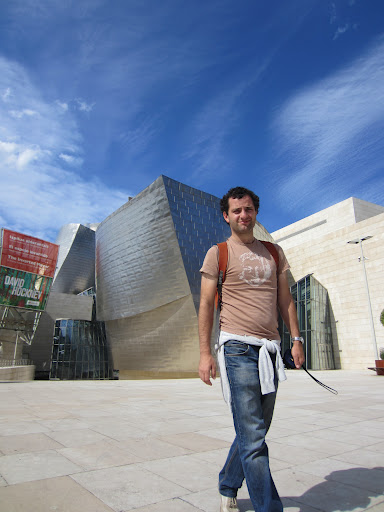
Outside the Guggenheim in Bilbao

Continue reading

Leave a comment

Filed under Winery Visits

A bit different (Getaria, Spain)

One of the big problems I have with the globalisation and homogenisation of wine is that unique and traditional wines for uncomplicated consumption with food are lost. The first really different and regionally specific wine discovery I have made in Spain was made in San Sebastian the previous weekend. During a tapas bar crawl I was introduced to Txakoli (pronounced chakoli), which is a wine made on the coast only 30 kilometres west of San Sebastian on the way to Bilbao. The vineyards are planted mostly in pergola trellising systems, on the steep slopes of the coast. The wines produced are 95% white wine with a slight spritz to it, as a small secondary fermentation happens in the bottle. To encourage the bubbles when it is poured it is done from some height, something I had seen in San Sebastian. The high acids and slight fruit residual sugar matches beuatifully with fresh salty pinchos. I’m not sure it would taste the same if drinking it anywhere else, but I was intrigued to find out more. Carlos from Artadi very kindly set me up with an appointment at the most important Txakoli producer in Getaria.

In case you forget which way the Atlantic Ocean is

Continue reading

Leave a comment

Filed under Winery Visits

The Spanish wine Renaissance (Navarra, Spain)

More than any country I have been to in Europe, Spain seems to be going through a profound and significant evolution. In the distant past viticulture was pretty widespread across many parts of the country, but due to various reasons (Spanish Inquisitions, revolutions, civil wars, phylloxera) vineyards were left abandoned until the 1960s. Since the 1970s with the global increase in demand for premium wines, often in new markets like North America, Asia and Eastern Europe, a lot of investment has gone into establishing and re-establishing viticultural areas across the country. There are many large companies spearheading this, such as the Torres family, but there are also a number of smaller producers that are developing in new areas after gaining reputations in other areas. One of these producers I had visited the previous day, and I got the chance to visit their estate in the Navarra D.O.

High above the village of Artazu in Navarra

Continue reading

Leave a comment

Filed under Winery Visits

South by South-East (Rioja, Spain – Day Four)

It’s funny how everyone’s concept of quality is different. In New World wine-producing countries the only laws and restrictions we have on our wines relate to labelling, whereby if we label our wines as being from a variety, region and/or vintage, they must be a minimum level (e.g. a minimum 85% in Australia). This doesn’t mean we have to use these minimums, we can always not indicate any of these things on the label. In Europe on the other hand, most of the wine regions and countries have established sometimes complicated systems and laws governing viticulture and wine production to maintain and in some cases guarantee quality. Take the Rioja Denominacion de Origen Calficada (DOCa, the only one in Spain not including the Priorat DOCQ) for example. The classification relates to red wines, and limits the maximum yield per hectare to 6.5 tonnes, and only allows tempranillo, graciano, garnacha tinto and mazuelo. There are then four quality designations that are determined based on the barrel and bottle ageing, from the young/Joven wines, to Crianza (minimum one year in oak, total two years before release), Reserva (minimum one year in barrel, total three years before release), and Gran Reserva (minimum two years in barrel, minimum three years in bottle). This comes back to my initial comment, that quality is partly subjective and somewhat controversial, as many producers forego the system in favour of less oak ageing, and they would be considered far superior in quality compared to others. Simply labelling a wine as Gran Reserva is no indication of quality at the end of the day. Like any wine (or product for that matter) regardless of origin , all you can do is trust the producer, but unfortunately you can’t tell the quality of a wine when it is the bottle.

Above Rioja Orientale vineyards near Alfaro

Continue reading

Leave a comment

Filed under Winery Visits

What’s the deal? (Rioja, Spain – Day Three)

Despite the fact that the Rioja region only runs for about 130 km, it is an unbelievably diverse region geologically and climatically, not to mention the fat that it actually crosses three political regions of La Rioja, Basque and Navarra. The region follows the Ebra River and which sits between the Cantabrian Mountains to the northeast and another range to the South-West, and has a wide valley ideal for the cultivation of a range of agricultural products. The climate is quite interesting, as it is a combination of Atlantic, Mediterranean and Continental. They are protected from rain coming from the north so it is very dry, and as they have cool air sucked up the valley from the Mediterranean so it is relatively cool at night. The micro-climate depends on a number of factors, including elevation, aspect and soil, the latter of which varying significantly from alluvial, to calcareous, to clay, limestone and chalk. The fact that most wine in Rioja is blended from a great range of these individual terroirs means that you are losing a lot of the nuances, but luckily there are estates like the three I visited today who are focusing on village and single vineyard wines in the future.

Rioja Alavesa as depicted by an artist that lived at Remelluri

Continue reading

Leave a comment

Filed under Winery Visits

A healthy mix (Rioja, Spain – Day Two)

So here it is; Rioja is a big deal. With over 14,000 vineyards across 65,000 hectares it is the largest producing region in Spain. It is by no means the largest in area though, only stretching for 130 km from Haro to Alfaro, the vineyard planting is possibly the densest in Spain. Although there are 14,000 vineyards, there are only 583 business with a license to bottle, meaning there are many more growers than producers, like Champagne. Also like Champagne there are quite a few large producers, but large here means for than one million cases. Vineyards are spread across the three viticultural sub-regions of Rioja Alta, Rioja Alavesa and Rioja Orientale, and generally wine is blended across the three in different volumes. Rioja wine is the most exported and consumed around the world, and would most likely be the first region that comes to mind when considering Spanish wine regions. The three appointments I had on my second day in the region were in the three main type of winery; one large commercial winery, one mid-sized modern negociant, and one iconic super-premium producer.

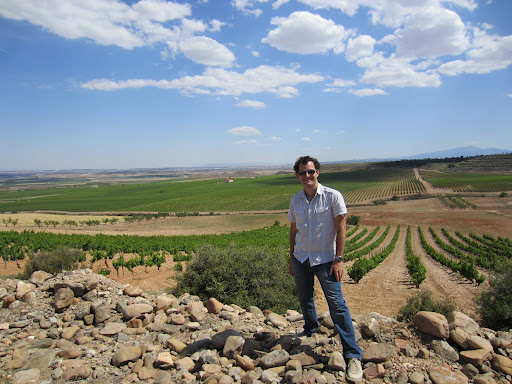
Above Rioja Alavesa

Continue reading

Leave a comment

Filed under Winery Visits

The rain in Spain (Rioja, Spain – Day One)

What a shame that the weekend I happened to be in one of the best beach towns in Spain – during June (aka summer) I might add –  it was raining. This was particularly disappointing considering how hot it was the past week in Priorat and Penedes; why couldn’t I have brought it with me? Adding to my luck I then took it to Rioja with me the following Monday morning, but I’ll come back to that. I managed to get over the poor weather in San Sebastian by hitting the bars (a bit hard), and also the tapas (even harder). There is a good reason why this town is considered to be one of the best to visit in Spain, as the old town has a very extreme concentration of night spots. I sampled a range of pinchos from various bars, and also popped into one of the top wine bars in town, A Fugo Negro, where I tried some wines from a number of regions in Spain, as well as a sensational ceviche dish. On the Monday I hit the dusty (more wet actually) trail for Rioja, less than two hours south-west, for my first and second appointments in the icon region of Spain.

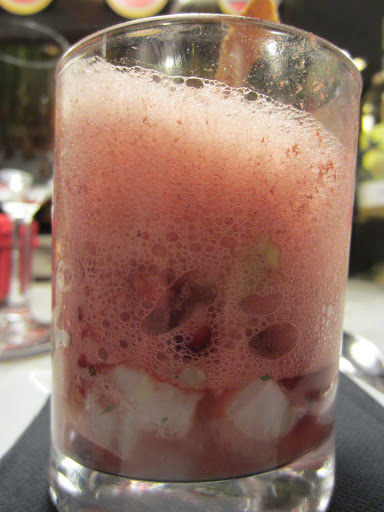
Ceviche with pomegranate seeds and strawberry foam at A Fugo Negro

Continue reading

Leave a comment

Filed under Winery Visits