Familiar ground (Alsace, France – Day Two)

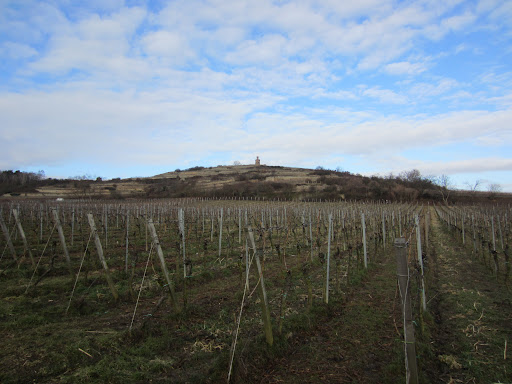
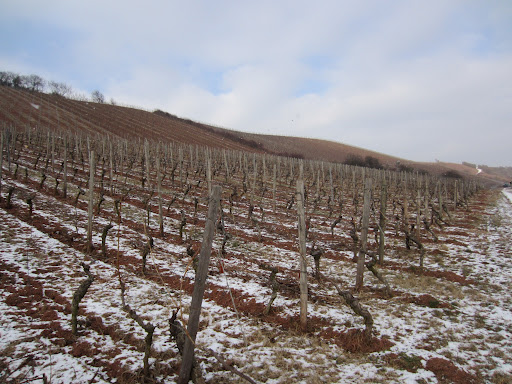
Returning to Alsace feels like coming home, as I feel an affinity to these wines are producers. After trying so many mediocre pinot gris (not pinot grigio, there is a difference) around the world it is nice to taste true examples of this seemingly elusive variety. It is nice to also visit producers I have visited before, or to visit ones whose wines I am familiar with. And although the weather is almost completely different to July 2010, it felt like only yesterday I was turning into the Domaine Weinbach Clos. They do say that familiarity breeds contempt, or in my case complacency. Much like when I was in Champagne, I got quite lazy updating this blog and now find myself chasing my own tail. No use in dilly-dallying then…
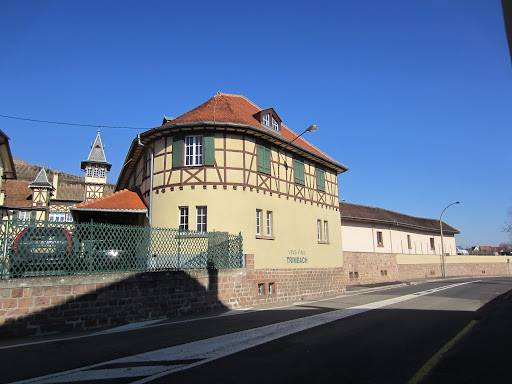
Domaine Trimbach in Ribeauville

Continue reading

Leave a comment

Filed under Winery Visits

Palette fatigue (Alsace, France – Day One)

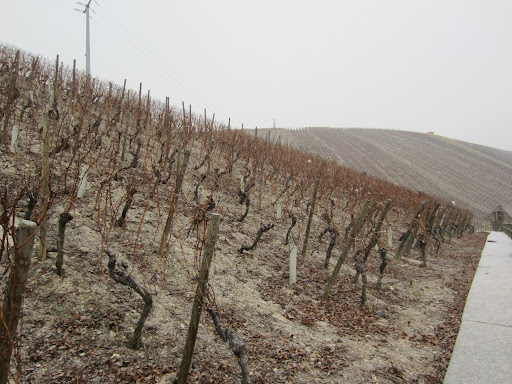
In 2010 the Alsace region was one of the five I visited whilst I travelled in France for three weeks, and was thus the second region that I would be returning to in Europe. Much like Champagne it is quite a different sight to see in winter compared to summer, but unlike Champagne has its own natural beauty not reliant on vines covered with leaves. The region is as I remember it, and supported my comparison with the Pfalz region. It should be noted that Alsace is not Germany, nor is it really France. The people here are very relaxed and generous, and certainly more humble than their counterparts in other French wine regions. One similarity they have with their German neighbours is their focus on single varietal wines, and a lot of them. In my honest opinion there is not one outstanding variety like there is in the Pfalz, but three (riesling, pinot gris and gewürztraminer). Between the numerous varieties and the dry and sweet wines, along with the classifications of vineyards, each producer may have as many as 30 wines at any given time, which would suggest dilution and confusion. I think it is both fantastic for variety, and also challenging to be able to promote such varied styles.

Brand vineyard

Continue reading

Leave a comment

Filed under Winery Visits

Outside the square (Pfalz, Germany – Day Three)

After two and a half weeks of sub-zero temperatures, seven degree temperatures feel positively balmy in comparison. It’s almost to the point that I don’t need to wear my thermals under my clothes every time I go outside. It is nice to get to the point now when I am actually noticing a difference in my understanding of not only riesling, but also German riesling. My palate has picked up enough experience in the past three weeks to be able to detect subtle differences between vineyard sites within the same region, and the subtleties of style between producers and regions. My limited experience with German riesling back home was negligible at best, but at least I was able to determine quality. It is so nice to be able to take that further and understand the nuances, particularly when working with the top grosses lager wines and sweet wines. My appreciation and respect for these wines has risen sharply, so much so that German white wines are some of the finest and diverse I have ever tasted.

Old barrels in the cellars of von Buhl

Continue reading

Leave a comment

Filed under Winery Visits

Heir splitting (Pfalz, Germany – Day Two)

There seems to be a revolution taking place in the German wine industry, perhaps in reaction to market perceptions of the wine they produce. During the 1990s and 2000s there seemed to be a move away from the large volume blended sweet and fruity white wines of the 1970s and 1980s, towards very steely crisp and bone-dry wines. Today there seems to be a movement away from the aromatic and bright dry wines towards more complex textural and rich wines that retain concentration and mid-palate structure. Wineries also seem to be shifting towards more traditional techniques in an effort to craft wines in this style. Firstly in the vineyard the VDP is introducing classification of better parcels of vineyards, much like the French appellation system, and there also seems to be a movement to organic and biodynamic viticulture. Secondly in the cellars winemakers are reintroducing practices like extended must contact, barrel fermentations and oxidative handling. After almost three weeks in six German regions I am starting to wrap my head around the varietal, and see how each region expresses the variety using terroir and winemaking.

Vineyards near Bad Durkheim

Continue reading

Leave a comment

Filed under Winery Visits

Pfalz start (Pfalz, Germany – Day One)

After four and a half months of visiting a few hundred wineries on three continents, it’s interesting looking back and deciding which were the best to visit, but not necessarily had the best wines. When I had the owner of the winery as a host it was always fascinating as you get the full story, and can ask any question and get a thoughtful and clear answer. Whether they own the winery or not, it is also great to get the perspective of the winemaker as they are the ones determining the style of the wine, and can also provide much more technical answers. Sometimes it has been great to get the perspective of a commercial/marketing director, as they provide insights on dynamics and branding. With no disrespect intended (particularly as I have worked in the position myself), rarely do hospitality/cellar door hosts provide any insights into the winery, and often are unable to provide all the answers. This is not to say that I don’t have enjoyable or interesting visits with these hosts, but I don’t always learn something. Occasionally they also don’t understand the nature of my visit, and in extreme cases ask if I would like to buy any bottles in spite of my restricted budget. This mostly happened in North America though.

Continue reading

Leave a comment

Filed under Winery Visits

A silvaner lining (Franken, Germany – Day Two)

The Franken region does not export very much, at most about 20%. The wines that are exported tend to go predominantly to Scandinavia and BeNeLux, with very little leaving Northern Europe. I’m not sure why this is, as the Franken produces more wine than the more famous Rheingau and Mosel regions. It may be the very traditional nature of the region, particularly the Franken bocksbeutel they use, which although unique is harder to store in cellars and stock in retailers. It also looks a bit old-fashioned. Another reason may be that the general quality of wines in the region aren’t outstanding, and don’t have a history of being so, different to the Mosel and Rheingau. This may be something to do with the choice of varieties, but may also be the nature of the climate. In my humble opinion there is huge potential in the region, as there is great diversity of sites and soils, but they have to modernise and focus on certain varieties in certain areas.

Weingut Hans Wirsching

Continue reading

Leave a comment

Filed under Winery Visits

The Main vein (Franken, Germany – Day One)

Ask most Germans and they will agree that Frankfurt is a pretty boring, mostly functional/financial city, and serves as mostly a transportation hub to Europe and the world. So it was with no regret that I left after only one day in Frankfurt for Franconia, one of the most traditional regions in Germany. Thankfully the weather started to get a bit warmer, but still didn’t get to zero degrees. Today it snowed again, which made this region look gorgeous with forests and vineyards covered in white. The Franken region in northern Bavaria sits on the banks of the Main River, which used to be much bigger several million years ago. As such there are large deposits of alluvial soils and limestone in different areas, and make the cultivation of grapevines on the mostly south-facing banks perfect for a range of varieties, including riesling, sylvaner, muller thurgau, spatburgunder, weisburgunder and more. The region is very large, and there are three major areas for viticulture; the Mainvierick (Main Square) in the west; the Maindreieck (Main Triangle) and the Steigerwald.

Escherndorfer Lump vineyards of Weingut Horst Sauer

Continue reading

Leave a comment

Filed under Winery Visits

Due south (Rheinhessen, Germany)

As mentioned in a previous post, the Rhineland-Pfalz region has a lot of regions that are all a stones throw away from each other. This means that even though I had already been through the Rheinhessen region on my way to the Rheingau, it isn’t difficult to backtrack a little. Thus I was able to visit a few wineries here after all, who were kind enough to make some time for me at such short notice. The Rheinhessen is the largest viticultural area in Germany, stretching from the Nahe in the west to the Rhine in the east, from Worms in the south to Bingen in the north. In an area of roughly 26,000 hectares of land, you are undoubtedly going to get some variation in soil type, exposition and climate. Thus I was glad to visit two wineries at each end of the region, to see if the difference was discernible.

Vineyard in the Northern Rheinhessen

Continue reading

Leave a comment

Filed under Winery Visits

Does size count? (Rheingau, Germany – Day Three)

One of the greatest things about German white wines is the high levels of acidity that keep them fresh and make them live for so long in the bottle, also make them food-friendly and mouth-watering. The result is they make you hungry like an aperitif should. In the current climate, you naturally want robust hearty food that warms you up, such as bratwurst, wiener schnitzel and sauerbraten. Thus any of the weight I lost in France three weeks ago, I have subsequently put back on as my appetite has gotten bigger and I have been eating more protein and carbohydrates. This is why German Riesling and Asian food is so great together, as everything tends to be fresher and lighter. Not to mention the higher sugar levels and lower alcohols really keep the spice in check.

Robert Weil estate

Continue reading

Leave a comment

Filed under Winery Visits

Weathering the storm (Rheingau, Germany – Day Two)

The previous evening it snowed in the Rheingau, so in the morning I got to see parts of the region under a beautiful blanket of white. It is amazing when you consider not only how small the Rheingau region is, but also how close you are to several other regions. For fun I put some of the other wineries I plan on visiting in other regions when I was in Rudesheim on the previous day. Amazingly, a winery in the Pfalz which is virtually two regions away, was still less than an hours drive. It really shows how such a small area can have such a big difference on a wine, particularly if it is made from the same variety. The Rheingau sits on the northern bank of the Rhine, the Nahe region on the eastern side of the Nahe River, and the Rheinhessen sits on the western side of the Nahe between the Rhine.

Commemoration statue at Schloss Johannisberg

Continue reading

Leave a comment

Filed under Winery Visits