Category Archives: Wine Experiences

What’s your flavour? (Puglia, Italy – Day One)

Something quite interesting has happened to my tastes over the past six weeks in Italy; I think I have become anti-oak. I think this has been in reaction to tasting so many new wines made from unfamiliar varieties, and my desire to see the subtleties and nuances of each variety without the interference of oak treatment. In general the wines where the oak has worked for it have been made from or included more familiar French varieties, which perhaps suggests I am merely unfamiliar with how oak reacts with these unfamiliar varieties. The wines in Italy have been exceptional, and have got me really excited for the future of Italian wines, as by all accounts the quality of the wines and the understanding of the varieties and terroir have only been happening over the past 20 or so years. In no way am I suggesting that the distracting use of oak is prevalent in Italy, in fact it is quite uncommon. My assumption is that because of the excitement I have felt tasting more ‘traditional’ wines made from indigenous varieties where little to no oak is used, I have been uninspired by wines that use too much new oak for too long that give them a more ‘modern’ and ‘international’ flavour that whilst not necessarily bad are boring and like many others. Too often I see aromas of chocolate and banana (a tad strange, but unmistakable) which immediately turn me off, and then on the palate comes the vanilla and coconut. This makes it difficult for me to assess and come to terms with such unique varieties as montepulciano, lagrein, sagrantino and nero di troia. Whilst I totally agree that I must become more familiar with these varieties and regions before passing judgement, the predilection for over-use of oak is unmistakable and in my opinion unforgivable. Allow the flavours to shine through, speaking for themselves and seducing new consumers all over the world, as nature is the champion rather than the winemaker in my opinion.
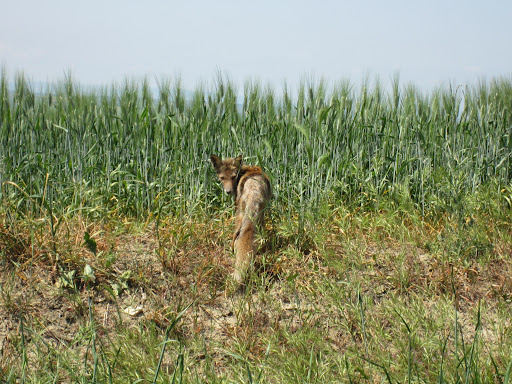
A friendly observer on the way to Puglia

Continue reading

Leave a comment

Filed under Winery Visits

People power (Abruzzo, Italy – Day Two)

In my humble opinion, it takes three things and only three to make great wine; all other elements merely support the others. The first is of course the environment, which includes both the climate/weather and the actual earth & surrounding vegetation. The second element is the vine itself, and ensuring that the right variety is planted in the right location. The third element is people, because everything each person does towards a wine leaves an impact. What elements you use to produce the wine is somewhat irrelevant, and is completely up to the producer. At the end of the day, wine is made using the same process of fermentation, regardless of where you are in the world. People may enter the business of wine from many different backgrounds, be they agricultural, business, marketing, sales, or any other unique origin. Many people are lovers of great wine, many enter the business to make money, some may inherit or take after their parents, and still more may desire a complete change of scenery. In many cases people may produce wine around their day-to-day profession, growing grapes and/or making wine as a hobby. Eventually they may leave their other profession to focus solely on the wine, and others may employ people to handle the production of the wine. Regardless of people’s backgrounds or motives, the ultimate prerequisite to work with great wine is passion and commitment, as wine is not a short-term investment, nor are you likely to achieve overnight success. In my quest I have met so many different people who have all left their mark, regardless of their level of involvement or responsibilities. My final visit for Abruzzo was with a family of noble origins, not the first and probably not the last of my trip.

Barone di Valforte vineyards

Continue reading

Leave a comment

Filed under Winery Visits

Express yourself (Abruzzo, Italy – Day One)

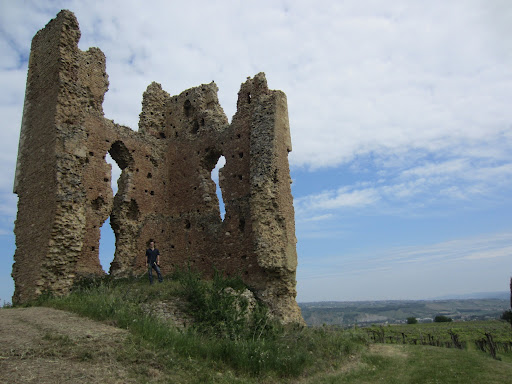
One of the things I have noticed on my trip visiting wine regions is that the best wines come from vineyards planted on a slope. There are exceptions to this of course, but these wines are generally not necessarily of elegance, nor do they come from cool climate regions. All of the regions I have visited in Italy so far, including Tuscany and Valpolicella, have steep and/or terraced vineyards where the best fruit tends to come from. In every case the fruit grown in vineyards on valley floors or flat lands provide volume and approachability. What varies of course is the steepness, elevation, exposition and depth of the soils and this in turn reacts with the particular variety and micro-climates. The fascinating thing about Italy which I didn’t realise is that the entire length of the mainland has a mountain range through it, known as the Appenino Mountains. These mountains are quite wild and imposing between Lazio and Abruzzo/Le Marche, a fact I discovered quite well when I drove from the Adriatic Coast to Rome and back for the weekend. Much like the Great Dividing Range up the east coast of Australia, or the Rockies/Andes Mountains that travels the entire west coast of the Americas, this allows viticulture to be quite diverse and high quality along them. Even in Mediterranean climates like in Abruzzo, you can easily produce red and white wines of elegance and structure, but plenty of fruit and tannin. How one expresses the climate, soils and native varieties is ultimately up to the producer, as I was to discover on my first day in the Abruzzo region.

Me in the 11th century tower on the Torre Raone estate in Abruzzo

Continue reading

Leave a comment

Filed under Winery Visits

Are you serious? (Marche, Italy – Day Two)

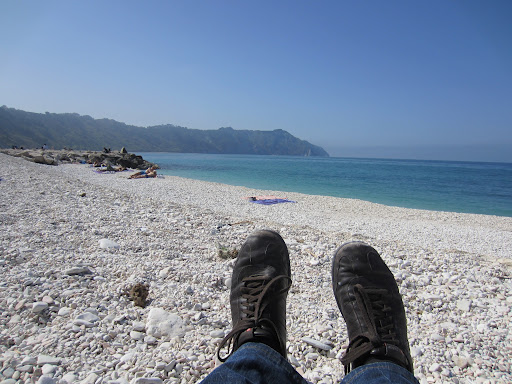
After six weeks in Italian wine regions I have reached a crossroads, and have developed some interesting theories and anomalies. One of these theories is about what the best wines in Italy are. What these wines should not be is purely statement wines, as this is not France. They should not be designed like something else, they should be themselves and proud of it. They should be made with indigenous grapes, particular to that area as often as possible. The wines don’t necessarily need to be a single variety, but the blend should make sense and express the origin. Some of the best wines I have tasted have had little to no oak treatment, avoiding the temptation to be matured for long periods of time in brand new medium toasted French barriques. I am by no means suggesting that this process is not good; I just feel it is not true to the wines here. The red wines should not be heavily extracted, but ultimately they should be balanced in fruit, alcohol and tannin. The white wines similarly shouldn’t be too rich and complex in malolactic, using oak only when necessary and again achieving balance. The wines should respect the traditions and origins of the variety and area, but utilise technology to merely observe and coax, rather than to intervene and dictate. Most importantly the wine should be approachable but not simple. The best wines are seriously made, but should not be taken too seriously. After all, wine is intended to be enjoyed with people and food, and too much emphasis placed on wines inevitably leads to disappointment and increased prices. Hopefully Italian wine won’t continue to lose its sense of place and personality, as the world needs the wines of Italy to demystify wine, and make it clear that not every wine has to be an ethereal experience. Variety is the spice of life, which drives the winery I visited today.

Porto Nova beach

Continue reading

2 Comments

Filed under Winery Visits

Roses are red, violets are blue (Marche, Italy – Day One)

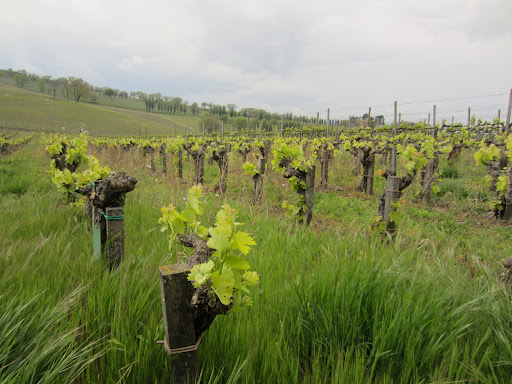
Coming from Australia and being a wine drinker has its perks but also its disadvantages. As a wine-producing country we make more than enough wine to consumer ourselves. In actual fact, we produce so much that more Australian wine is exported than consumed within the country. Most of the wine is fairly basic approachable wine, a lot of which gets exported and has subsequently led to Australian wine being assumed to be all the same. This is of course not the case, as Australia is an extremely large country with a very wide variety of climates and regions. Thus Australia is quite possibly the most diverse producer of wine in the world, and Australian consumers now have access to an endless number of varieties and styles from over 100 regions. Like many other New World wine producers the vast majority of the wine is made from varieties of French origin, but unlike others we now grow a range of Italian, Spanish, Portuguese and even more obscure Eastern European varieties. Because of the accessibility and quality of the wines produced locally, Australia is not a large importer of wine, apart for that from New Zealand. The wines we do import are generally those we can’t produce ourselves, and are of a much higher quality. Thus in the past most of the wine was from the best regions in France, some from Italy and Germany, and less from Spain and Portugal. This has meant that many varieties and regions from around Europe are largely unheard of in Australia that may be better known elsewhere. This leads me to my point that it was necessary for me to actually come to the regions that are unfamiliar, to learn about these varieties and styles, because as the quality of wine improves new wines will become more available around the world.

Newly forming bunches pre-capfall

Continue reading

Leave a comment

Filed under Winery Visits

My house in Umbria (Umbria, Italy – Day Two)

According to my host the previous day, Orvieto is not traditionally considered part of Umbria, as it is closer to Lazio and Tuscany with an Etruscan heritage. Central Umbria had a much more rustic history, being very simple farmers. This part of Umbria has garnered a lot more attention recently thanks to their red wines, most notably in the Montefalco area where the sagrantino grape is king. In the past Sagrantino di Montefalco was a passito sweet wine that was consumed as a table wine with food. It was traditionally the wine that would be drunk with breakfast on Easter Sunday each year, as the first wine drunk after lent. The breakfast was naturally very hearty, including slow-roasted lamb, cured meats and egg, and would last several hours. Back in the 1970s they began to introduce viticultural practices from other parts of Europe in Umbria, and this changed grape and wine production in the region. With the former trellising systems there were high volumes of grapes produced, which meant to achieve the ripeness necessary for the sweet wines in particular, the harvest was usually not until late October. With new pruning practices introduced and more intense plantings, yields were reduced and ripening occurred earlier, with harvests beginning in September. Thus began the serious production of dry red wines from one of the most tannic red varieties possible. Sagrantino is tough to grow, but is quite malleable in terms of ripeness levels and vinification practices, and from what I tasted there is no defined style as yet, it is up to the producer. As the understanding of the variety and the terroir improves so will the quality of the wines.

Bush-trained sagrantino vines

Continue reading

Leave a comment

Filed under Winery Visits

You’d never know (Umbria, Italy – Day One)

When you think about the most impressive and unique wine towns in the world, there are some that immediately spring to mind. Not necessarily for the quality of the wines, that goes without saying for many, but for a combination of other factors. Chateauneuf-du-Pape and St. Emilion for example are gorgeous old villages that sit on top of hills with vineyards surrounding them. Montalicino sits in the midst of forests and vineyards, with spectacular views of the Tuscan countryside thanks to the altitude. Villages in Alba like Serralunga d’Alba and Castiglione Falleto seem to be perched on the side of hills about to fall off. Traben-Trarbach and Bernkastel-Kues sit on opposite sides of the Mosel River, connected by historic bridges. Cafayate in the Salta region of Argentina is so isolated and small you would never know it was there, and feels like a Wild West town. Nothing could prepare me for Orvieto in southwestern Umbria, near the border of Tuscany and Lazio. The geological origins of the area are a combination of volcanic and inland sea, and sit on the famous Tiber River. The village itself sits on top of prehistoric rock, and was once a medieval castle. Inhabitants have not only built homes amongst the narrow cobblestone streets, but they also used the rock like a natural city wall and carved passages and cellars into it. The population exceeded the village long ago, and residential areas have spilled out into the surrounds underneath. In the past the region was famous for the quality of the white wines, but became associated with very simple fruit driven wines many years ago. Small producers are attempting to return the region to its former glory, and one such producer is Palazzone who I visited to learn more about the region.

The majestic village of Orvieto

Continue reading

Leave a comment

Filed under Winery Visits

A slightly different model (Tuscany, Italy – Day Five)

Looking back over the past few weeks in Italy there were certain trends that I have identified in hindsight. One of these trends was who I was hosted by in wineries depending on the region. In Alto Adige, Romagna and Valpolicella my hosts varied, in the latter two regions I was only there for a short time. In all of the other regions – or more specifically sub-regions – I was commonly hosted by a person of similar position. For example when I was in Friuli many of my hosts were one of the children of the owner/founder of the winery, who are now heavily involved with different elements of the business. When I was in Piedmont, more often than not I was hosted by either the winemaker or the owner/winemaker. In both of these cases the host is able to provide first-hand insights into the specifics of the winery, and are well prepared to answer any of my probing questions. As you could imagine, Tuscany is the most visited region in Italy by tourists, particularly English speaking tourists, and as such there are dedicated individuals to welcome these guests. In many instances this week I was hosted by these individuals, sometimes privately and sometimes with others. Because I have not only experience with wine education of this nature and also will continue to make this an important part of career, I don’t really mind listening in to different approaches to wine communication. Being somewhat selfish however, it is difficult to take a lot away from these experiences as most of the information provided I already know, and I don’t want to intervene too much on the tour. If I am honest I would think that wineries would take me a little more seriously than this, as I am not a tourist and am going to great expense to visit the region and winery. I don’t feel it is appropriate to ask for specific hosts as any invitation to visit is welcome, but I would hope that wineries I request to visit treat it as an opportunity. Montalcino is possibly the most beautiful part of Tuscany I visited, and the wines are out of this world, but unfortunately I didn’t learn a lot about this complicated wine and was a little disappointed at not being taken more seriously.
The fort of Montalcino

Continue reading

2 Comments

Filed under Winery Visits

Who is Kaiser Soze? (Tuscany, Italy – Day Four)

When you hear names of regions and places for wines, many things may come to mind. Very rarely are you able to associate a specific wine or style with a specific place, but some famous examples are Champagne, Burgundy, Mosel, Rioja, Barolo and Chianti. It is not difficult to see why this phenomenon is common in the vast majority of regions outside of Europe, as the focus on producing regionally distinct wines from specific regions has only been a recent occurrence. In many cases entire countries that may have a huge variety of climates are associated with a particular variety, such as Australia with shiraz, New Zealand with sauvignon blanc, Chile with merlot, Argentina with malbec, and South Africa with pinotage. Anyone from these countries will happily tell you that this does not reflect the entire production, as they produce many more varieties and many more styles even with the same variety. This phenomenon is also common in Europe for a range of reasons. This may be because a range of different varieties are grown but no one or two are considered the best, it may be because the law allows much leeway for blending other varieties, or perhaps the wines are simply not good enough. In many countries this is further compounded by the setbacks in the first half of the 20th century, with most regions rediscovering the right variety for the best sites, and re-establishing many of the winemaking traditions. With so many regions in Europe, with some much bigger and more diverse than others, it is easy to get lost. Thus it is important to establish regional identity and distinction, rather than produce the same wines as everywhere else. Montepulciano is one such region that lacks clear regional identity, in spite of the fact that the most common grape grown is sangiovese.
New shoots on old vines in Montepulciano

Continue reading

Leave a comment

Filed under Winery Visits

Chianti to coast (Tuscany, Italy – Day Three)

So far on my journey it’s been a wonderful experience meeting people from each winery and discovering their similar but also different philosophies. Peoples’ philosophies may relate to the management of their vineyards, such as whether they use sustainable practices, are organic or biodynamic. In the winery they may change how they use equipment and additives, what their maturation program is, and how they have designed the layout of their facility. Wineries have different approaches to how they brand and communicate their wines, and also how they welcome visitors to their wineries. The thing to remember is that no one philosophy is the best or right one, as every country, region, producer and audience/market is different. What is most important is to select the right approach for that winery and place, and this is how I have determined to assess whether the philosophy has been successful. Within the space of one day I visited four wineries that had similar but different philosophies, but were all successful in themselves and offer something different. Between the first and last winery I had covered a fair amount of ground, leaving very early and finishing late.
The Black Rooster greets every day in Chianti Classico

Continue reading

Leave a comment

Filed under Winery Visits