Monthly Archives: June 2012

Dominio de Pingus – 19/06/2012

Flor de Pingus 2010
Dark intense fruits, quite an amazing amount of savoury notes for such a vibrant flotal nose. Juicy ripe red and black fruits, very slightly spicy, very intense concentration, bold and full in the mid-palate, dense firm yet fresh and bright tannins. Finesse yet power, needs a few years in bottle to soften and open up. Tense and tightly coiled. Not too oaky, nor too hot and jammy.

Pingus 2010
Darker more concentrated colour, very intense and bright in purple vermillion. Toasted roasted ripe and raisined, dense impenetrable dark fruits, sweet savoury molasses notes, black sweet spices, some sweet balsamic reduction notes. One of the most concentrated wines I have tasted on my trip, not heavy exactly, but incredibly tannic, fruit powerful, hot and powerful. Warm climate and 2-3 tonnes per hectare make this an intense experience. Born this way, not made this way. Some very slight citrus notes on the back, still retaining some freshness of acids. I appreciate the concentration, but I don’t like it.

The 2009 Pingus, what’s left of it anyway

Leave a comment

Filed under Tasting Notes

Antidoto – 18/06/2012

2011 Limestone soils (20% of blend)
Intense colour and aromatics, very spicy and blackcurrant. Looking quite toasty and very dark in fruit. Wondrful concentration and full soft tannins, depth and integrity but plenty of acids. Lifted and structured.

2011 Sandy river stone soils (40% of blend)
Brighter more floral and fresher fruit aromatics, less earth and spice. More intensity of acidity and freshness, very focused down the middle of the palate, power yet restraint, excellent balance but a tad undeveloped. Racier somehow.

2011 Clay soils (40% of blend)
Dirtier darker, more rustic and wild. Soft full bold mouth-filling, broad juicy, very expressive dark fruits, approachable generous tannins, not the same level of drive and focus, the meat of it. Nice lengthy tannins.

2011 Antidoto
A little shy, but wonderfully intense and brooding, very dark but not heavy or oaky. Nice clarity, focus, wonderful freshness of red and black fruits, juicy and vibrant but considered and contemplative. Exceptionally young, quite tight and focused, components working in perfect harmony.

2011 Dominio de Es
Dark juicy sweet black fruit, wonderful lift and vibrancy, more concentration and mature tannins, reacting with the oak a little more somehow. Too early to see the character, quite locked away in concentration, would like to see it in a few more years.

Bertrand Sourdais examines one of his vines

Leave a comment

Filed under Tasting Notes

Cillar de Silos – 18/06/2012

El Quintanal Verdejo 2011 (Rueda)
Crisp grassy SB salty focused ripe tropical notes. Good light texture and weight, approachable and fresh, good balanced purity of fruit. Some nice viscosity and volume, fresh aperetivo wine but great with food too.

Rosado de Silos 2011 (100% tempranillo, 5-10% is the top grapes’ pressings)
Wonderfully aromatic, very rich and creamy nose, lovely candied strawberries and cherries, some red liquorice and blackcurrants too. Bright fresh, fruit sweet and creamy texture, full in flavour and very easy to drink, but nice structure and lightness. Definitely a fruit-sweet appearance, but well balanced and food-friendly.

El Quintanal Tempranillo 2011 (Ribera del Duero)
Dark yet mellow notes on the nose, ripe black fruits and some earth and spice notes. Bold yet soft and full voluptuous tannins, very fresh and light, easy to drink, plenty of approachable attractive fruits, but relatively good structure and balance. Simple yet structured.

Joven de Silos 2011
Dark subtle closed fruit at the moment. Some concentrated dark fruits, a little bit of dried spices, some fruit sweetness on the back, good character and balance. Acid freshness holding things together, a tad exuberant and warm at the moment.

Cillar de Silos 2009 (Crianza)
Bright intense nose, very beautiful dark yet fresh fruits, very subtle oak influence, a little nutty creaminess. Quite tight and focused, very locked up fruit, slightly warm and oaky but only because it is a little reductive. Certainly a textural structured wine.

Torresilo 2008
Vey serious intense but also subtle aromas, red fruits, red earth, mature and integrated oak. Focused and driven, warm on the back of the palate, still young. Finesse and elegance but also power, not unlike a Barbaresco. Juicy dark fruits but fantastic acids and freshness, great balance. Lot’s of ageing potential.

Torresilo 2009
Slightly darker more intense colour. More reductive closed dark fruits, less subtle oak aromas for the moment. Sweeter tannins, more concentrated dark fruits, less focus, more approachability. Fuller more expressive flavour, not the same structure. Very agreeable dark fruit appreciation, great wine for many people.

Flor de Silos 2007
Seductive dark fruits and floral aromas, some toast but also savoury elements, quite an intense experience. Dark and soft, velvety tannin structure but still wonderful structure. Dark oak elements but not adding to the sweetness of the fruit profile. Very voluptuous round tannins, more new oak influence.

Flor de Silos 2005
Wonderful concentration, excellent maturity, density and richness, dark fruits, ripe florals, chocolate spice. Wonderful depth and complexity, bright most definitely and a classic style, but developing some wonderful tertiary elements, some dusty chocolate and balsamic notes. Still has a slightly sweet profile on the front, but fading nicely.

Flor de Silos 2004
Wow, wonderful deep and intense, not as full on the dark fruits, some serious savoury characters. Locked away tight, some creamy texture and retaining some youthful oak. At least 20 years cellaring potential. Amazing concentration, intensity and focus, structure depth, lot’s of expression and power. More youthful than the 2005. An absolute classic.
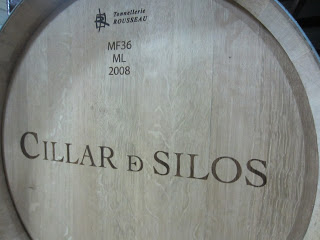
A barrel of the good stuff

Leave a comment

Filed under Tasting Notes

The Spanish wine Renaissance (Navarra, Spain)

More than any country I have been to in Europe, Spain seems to be going through a profound and significant evolution. In the distant past viticulture was pretty widespread across many parts of the country, but due to various reasons (Spanish Inquisitions, revolutions, civil wars, phylloxera) vineyards were left abandoned until the 1960s. Since the 1970s with the global increase in demand for premium wines, often in new markets like North America, Asia and Eastern Europe, a lot of investment has gone into establishing and re-establishing viticultural areas across the country. There are many large companies spearheading this, such as the Torres family, but there are also a number of smaller producers that are developing in new areas after gaining reputations in other areas. One of these producers I had visited the previous day, and I got the chance to visit their estate in the Navarra D.O.

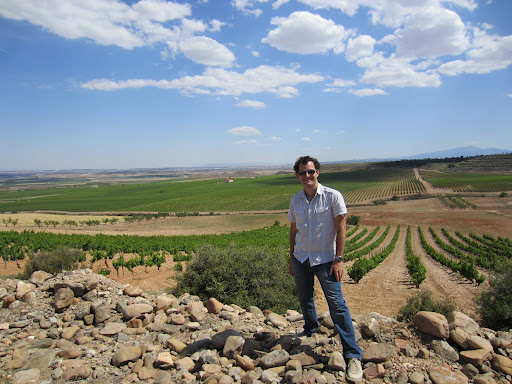
High above the village of Artazu in Navarra

Continue reading

Leave a comment

Filed under Winery Visits

South by South-East (Rioja, Spain – Day Four)

It’s funny how everyone’s concept of quality is different. In New World wine-producing countries the only laws and restrictions we have on our wines relate to labelling, whereby if we label our wines as being from a variety, region and/or vintage, they must be a minimum level (e.g. a minimum 85% in Australia). This doesn’t mean we have to use these minimums, we can always not indicate any of these things on the label. In Europe on the other hand, most of the wine regions and countries have established sometimes complicated systems and laws governing viticulture and wine production to maintain and in some cases guarantee quality. Take the Rioja Denominacion de Origen Calficada (DOCa, the only one in Spain not including the Priorat DOCQ) for example. The classification relates to red wines, and limits the maximum yield per hectare to 6.5 tonnes, and only allows tempranillo, graciano, garnacha tinto and mazuelo. There are then four quality designations that are determined based on the barrel and bottle ageing, from the young/Joven wines, to Crianza (minimum one year in oak, total two years before release), Reserva (minimum one year in barrel, total three years before release), and Gran Reserva (minimum two years in barrel, minimum three years in bottle). This comes back to my initial comment, that quality is partly subjective and somewhat controversial, as many producers forego the system in favour of less oak ageing, and they would be considered far superior in quality compared to others. Simply labelling a wine as Gran Reserva is no indication of quality at the end of the day. Like any wine (or product for that matter) regardless of origin , all you can do is trust the producer, but unfortunately you can’t tell the quality of a wine when it is the bottle.

Above Rioja Orientale vineyards near Alfaro

Continue reading

Leave a comment

Filed under Winery Visits

What’s the deal? (Rioja, Spain – Day Three)

Despite the fact that the Rioja region only runs for about 130 km, it is an unbelievably diverse region geologically and climatically, not to mention the fat that it actually crosses three political regions of La Rioja, Basque and Navarra. The region follows the Ebra River and which sits between the Cantabrian Mountains to the northeast and another range to the South-West, and has a wide valley ideal for the cultivation of a range of agricultural products. The climate is quite interesting, as it is a combination of Atlantic, Mediterranean and Continental. They are protected from rain coming from the north so it is very dry, and as they have cool air sucked up the valley from the Mediterranean so it is relatively cool at night. The micro-climate depends on a number of factors, including elevation, aspect and soil, the latter of which varying significantly from alluvial, to calcareous, to clay, limestone and chalk. The fact that most wine in Rioja is blended from a great range of these individual terroirs means that you are losing a lot of the nuances, but luckily there are estates like the three I visited today who are focusing on village and single vineyard wines in the future.

Rioja Alavesa as depicted by an artist that lived at Remelluri

Continue reading

Leave a comment

Filed under Winery Visits

A healthy mix (Rioja, Spain – Day Two)

So here it is; Rioja is a big deal. With over 14,000 vineyards across 65,000 hectares it is the largest producing region in Spain. It is by no means the largest in area though, only stretching for 130 km from Haro to Alfaro, the vineyard planting is possibly the densest in Spain. Although there are 14,000 vineyards, there are only 583 business with a license to bottle, meaning there are many more growers than producers, like Champagne. Also like Champagne there are quite a few large producers, but large here means for than one million cases. Vineyards are spread across the three viticultural sub-regions of Rioja Alta, Rioja Alavesa and Rioja Orientale, and generally wine is blended across the three in different volumes. Rioja wine is the most exported and consumed around the world, and would most likely be the first region that comes to mind when considering Spanish wine regions. The three appointments I had on my second day in the region were in the three main type of winery; one large commercial winery, one mid-sized modern negociant, and one iconic super-premium producer.

Above Rioja Alavesa

Continue reading

Leave a comment

Filed under Winery Visits

Txomin Etxaniz – 15/06/2012

Txomin Etxaniz Txakoli White 2011 (85% Hondarrabi Zuri [white], 15% Hondarrabi Beltza [black])
Nice crisp green fruits, almost like a sparkling viura/macabeu, some herbal elements. Lovely spritz on the mouth with some very delicate creaminess, very tight and crisp, mouth-puckering aperetivo style wine, perfect with salty seafood tapas, very subtle R/S roundness, but a core of green citrus fruits.

Txakoli Rose 2011 (50% Hondarrabi Zuri [white] , 50%  Hondarrabi Beltza [black])
Pale salmon colour, with the same delicate spritz. Slightly more nutty and herbal, green red fruits. A tad bitter with the tannins, balanced and fresh but lacking the zing of the white, a little dull in comparison.

Txomin Etxaniz Txakoli 2011

Leave a comment

Filed under Tasting Notes

Artazuri – 15/06/2012

Rosado Garnacha 2011
Not too dark in colour, but not light either. Good expressive combination of fresh red fruits – cherries, raspberries, pomegranates – with some mineral savoury elements, and some cheesy elements too. Fresh mouthfeel, quite crisp with some red citrus notes to add to the mix. A little fruit sweetness. Texture balance approachability, adaptability with food.

Tinto Garnacha 2011
Nice dark dusty red and black fruit, some spicy elements as well, exactly what a typical Spanish garnacha should be. Soft and light but plenty of vibrancy of fruit and freshness, approachability and breadth, but focus and drive as well. Very good uncomplicated wine, easy drinking yet with character and personality.

Santa Cruz de Artazu 2009
Deep dark and oaky nose, quite toasty and caramelly, dark fruits and intense floral concentration. A lot more tannin and oak concentration on the palate, looking very youthful and hot, a product of the climate and vintage, and possibly age of the vines. Needs more time in bottle to show the complexity, at the moment slightly dominated by sweetness and oak. Classic powerful Spanish garnacha from 2009.

Santa Cruz de Artazu 2010 (tank sample)
More complexity, less overt fruit and oak influence on the nose, more interesting toasty notes (more French oak?), quite locked up for now, needs a year in bottle. Better balance and integration, better structure and concentration. Looking quite hot and ripe but in a more complex way. Very intense but better savoury elements and balance on the palate, powerful yet a lot more potential.

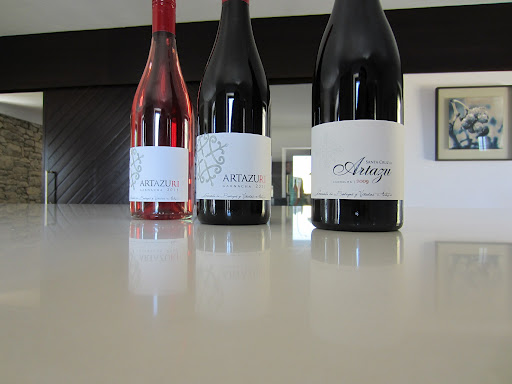
The Artazuri range

Leave a comment

Filed under Tasting Notes

The rain in Spain (Rioja, Spain – Day One)

What a shame that the weekend I happened to be in one of the best beach towns in Spain – during June (aka summer) I might add –  it was raining. This was particularly disappointing considering how hot it was the past week in Priorat and Penedes; why couldn’t I have brought it with me? Adding to my luck I then took it to Rioja with me the following Monday morning, but I’ll come back to that. I managed to get over the poor weather in San Sebastian by hitting the bars (a bit hard), and also the tapas (even harder). There is a good reason why this town is considered to be one of the best to visit in Spain, as the old town has a very extreme concentration of night spots. I sampled a range of pinchos from various bars, and also popped into one of the top wine bars in town, A Fugo Negro, where I tried some wines from a number of regions in Spain, as well as a sensational ceviche dish. On the Monday I hit the dusty (more wet actually) trail for Rioja, less than two hours south-west, for my first and second appointments in the icon region of Spain.

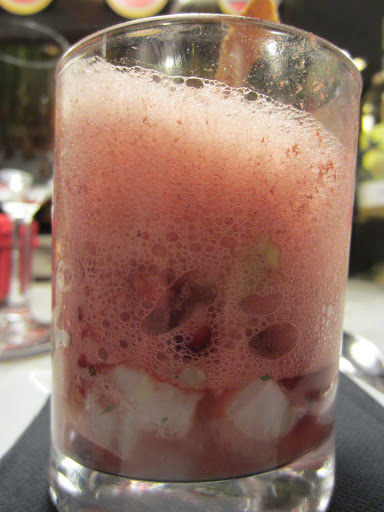
Ceviche with pomegranate seeds and strawberry foam at A Fugo Negro

Continue reading

Leave a comment

Filed under Winery Visits