When I was planning my trip, calculating where I wanted to go and how long to spend there, I was generally looking at maps in the World Atlas of Wine, and plotting a course. The dates I put into my itinerary would often have little relevance, apart from being in regions during the week (to try to meet with winemakers/owners), and weekends in cities. This meant I wasn’t taking into account any public holidays in each individual country, and have come up against some complications. There is a national holiday that is celebrated in many South American countries on the 8th of December, to commemorate the Virgin Mary. As it fell on a Thursday this year many people didn’t work on the Friday and took a four-day weekend. So partly for this reason, I had no appointments for four days. This put a bit of a crimp on my travels, so all I could really do was drive through the regions.
Tag Archives: South America
Now this is hospitality! (Colchagua Valley, Chile)
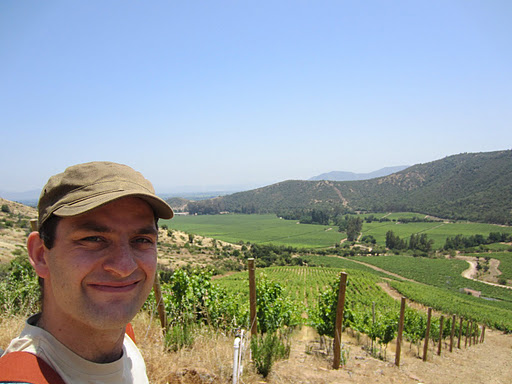
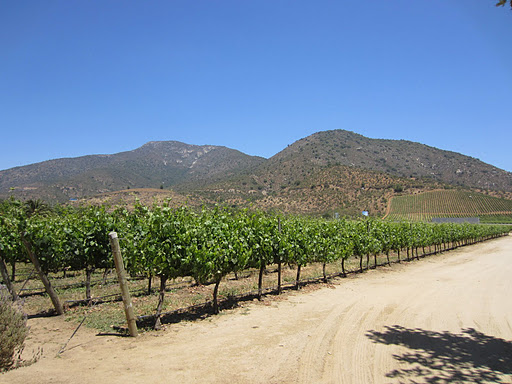
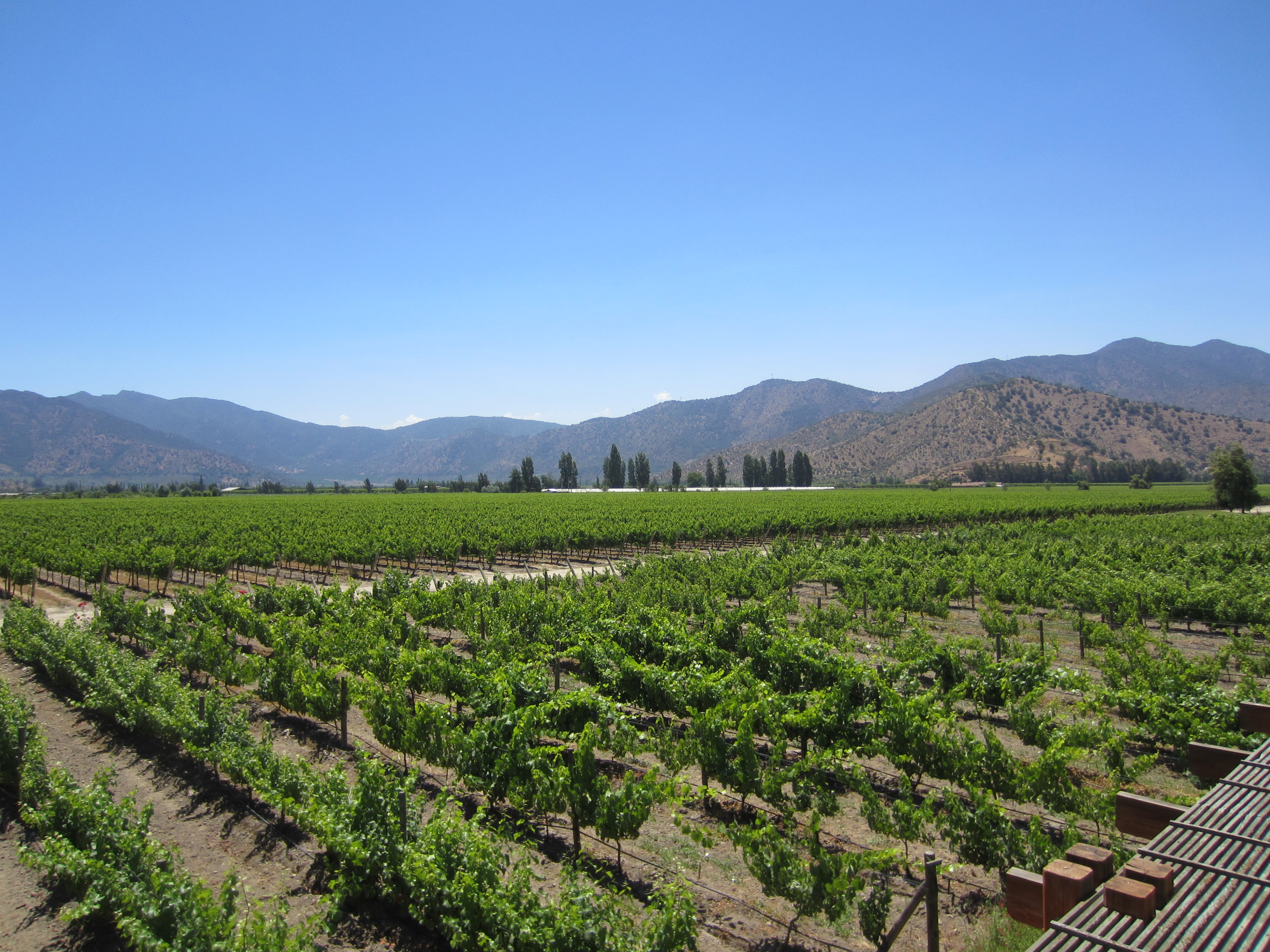
I tell you what, if it weren’t bad enough that Chilean wines are poised to bring the world to it’s knees, they are also poised to bring the world TO Chile, thanks to wine tourism. Whilst you can probably find some similar experiences in other countries, particularly in California where wine tourism is a billion dollar industry, there is nothing like the value of wine tourism here, and the sheer impact of the environment. Not to mention the fact that Chileans are genuinely warm and welcoming to others, whereas in most western countries hospitality is merely about tips and gloss. Hosts are knowledgeable, respectful, modest and engaging. At several times during my stay so far, and no more so than in Colchagua, did I say to myself “it doesn’t get better than this.”
Filed under Winery Visits
Boutique wine revolution (San Antonio & Leyda Valley, Chile)
A common question posed to me before I left Australia (granted by non-industry folks), was “15 months of wine tasting? Won’t you be sick of wine at the end of it?” My response is what many who work with wine would be. “Not a chance. When you are working with wine you are tasting all the time, and as every wine is different there is always a new experience to be had.” This is even more true in my case, as I am actually going to the source. Thus, just like every wine is different, every region, vineyard, winery, winemaker, and experience are different. Visiting the regions in Chile, without any expectations or preconceived notions, has been eye-opening to say the least. They are truly blessed with a wide variety of climates and soil types, and the rest of the world should keep an eye on Chile. As they gain more experience and come to terms with their unique terroir, the wines will just get better and better. The San Antonio & Leyda region is not dissimilar to Casablanca to the North, in terms of its proximity to the coast and focus on white varieties. The difference in climate although subtle is very noticeable; it is much cooler here than in Casablanca. This difference has a profound effect on the wines, particularly the sauvignon blancs, arguably the most important variety in both regions. Leyda was opened up fairly recently, by the introduction of a pipeline that would carry water from the Maipo River to provide necessary irrigation. The region has grown quickly, and is now at capacity, as any new plantings would require another water source. This is probably why there are about 10 times more vineyard hectares planted in Casablanca which has better access to water.
Filed under Winery Visits
Play it again, Sam (Casablanca Valley, Chile)
All puns aside, the Casablanca Valley is one of several newer regions in Chile getting some serious attention. In the 1980s it was discovered by a former Concha y Toro partner as a potential new white wine region. When Concha y Toro told him he was insane he left and established his own vineyards in the region, predominantly sauvignon blanc. After seeing the results of the early wines, Concha y Toro and many other large wineries began to plant their own vineyards in the region. There are only 11 wineries in the region, but there are almost 4,000 hectares planted. The maths speaks for itself.
Filed under Winery Visits
Timing is everything (Aconcagua Valley, Chile)
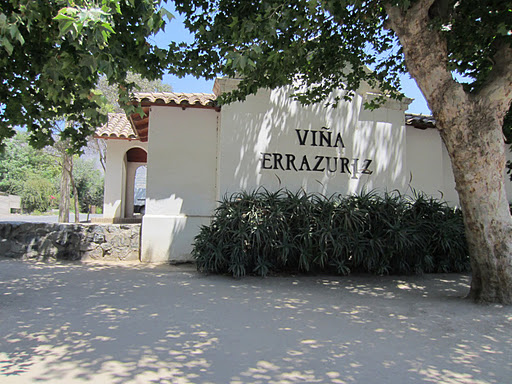
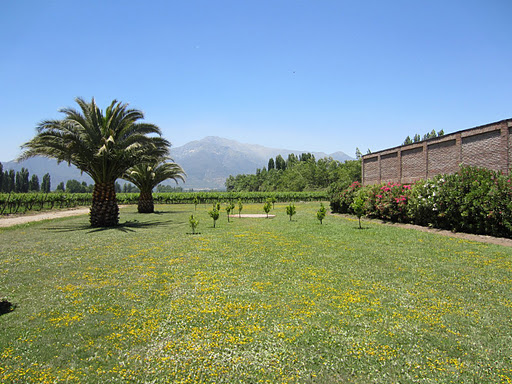
Well after several days in Santiago and surrounds getting lost, stuck in traffic and generally frustrated, I was amazed to actually get to my appointment in the Aconcagua Valley early! The drive out was very nice, and I was glad to get out of the hustle and bustle. The winery in question was Errazuriz, another large winery that focuses on premium wines and in this case exports 95% of their products. They have an illustrious background, being one of the wineries originally established back in the mid-1800s by wealthy industrialists to create Bordeaux style wineries. Whilst the original building was destroyed in the earthquake of 1906, the rebuilt house still exists, and was designed with a bottling line and extended cellar.
Filed under Winery Visits
Reminding myself why I’m doing this (Maipo Valley, Chile – Day Three)
Frustrations and difficulties continued on the roads of Santiago, resulting in me being almost an hour late for my only appointment for the day. It reflects poorly on myself, and I feel really guilty that I am keeping people waiting. Leaving Santiago should be much easier, but I’m not holding my breath, as the navigator just doesn’t help at all. It’s a little bit funny when you look at my tracking and see that there is a lot of circling and wrong turns, and I’ve covered a lot of ground in one city. The second winery recommended to me by Daniela Penno from Wines of Chile and Argentina was Santa Rita, located in the Alto Jahuel, Buin in the Maipo Valley. The winery was the first to produce registered wines in Chile, and the estate is one of the oldest in the country. It dates back to when land was awarded to wealthy families (usually those making their fortunes in mining), to turn into haciendas. The purpose of the hacienda was to run agriculture and allow workers to live on the property that were provided for by the owners. Thus many estates such as Santa Rita, Santa Carolina and Concha y Toro would have communities living on the estate, complete with schools and churches. An important part of Chile’s history occurred on the estate, when 120 escaping revolutionary soldiers were hidden in the cellars. From here they escaped from the advancing Spanish army across the Andes into Argentina, where they raised another army to return and win freedom for Chile several years later.
Filed under Winery Visits
Christopher Columbus, you ain’t seen nothing (Maipo Valley, Chile – Day Two)
Like I was saying, it’s really hard to get around in Santiago in a car. It’s bad enough that roads make no sense and drivers seem to have no sense, but my navigator won’t even tell me what roads to go on! A passenger in the car today would have been appalled at the expletives coming out of my mouth in sheer frustration. If anyone knows anything about Garmin Nuvi 1300s please let me know because I can’t take much more of this. It took me 1.5 hours to travel 30km today! It almost ruins the spectacular scenery of the Andes Mountains towering over the Maipo Valley.
Filed under Winery Visits
City of Life (Maipo Valley, Chile – Day One)
What a difference a day makes! It most certainly is a big change going from North America to South, not just because of the language difficulties, but the difference in setting. Adding on the difference in temperature and hours of daylight and it makes for an interesting transition. On first impressions Santiago seems like a relatively poor city in a developing kind of way, and from a certain perspective it is. Having travelled directly from New York City this is a somewhat unfair comparison. On closer inspection Santiago is a vibrant, bustling and growing city, and is as modern as many in Asia or Europe. Just be careful of anything valuable within easy reach, as it is likely to be snatched away, as I witnessed first hand. I won’t bore you with details about what I got up to in Santiago, because it’s pretty much the same stuff as what everyone does when they get here. If you haven’t already visited I do recommend making the trip, as it is an eye-opening experience.
Filed under Winery Visits