Category Archives: Winery Visits

When I have visited wineries

“Marsala and coke, good choice!” (Sicily, Italy – Day Three)

When I think of Marsala, usually the first thing that comes to mind is the quote used as the title of this post, from the Australian film Chopper starring Eric Bana. The quote comes from a scene in a nightclub where Chopper’s girlfriend orders a marsala and coke, to which the character Neville Bartos congratulates her on the wise decision. It wasn’t until I learnt what marsala actually was that I realised the cultural significance of this seemingly innocent exchange. Marsala is a wine coming from the town of the same name in the south-western corner of Sicily, made usually from white grape varieties (partly explaining why there are more vineyards planted to white than red on the island), and fortified similar to sherry. The wine was discovered by an Englishmen, much like port and sherry were, and were fortified and sweetened to appeal to the English market and allow them to survive the transportation. Marsala at one point was a very famous wine, and many houses were established in the 19th century, some of them English. As demand and production increased, the quality went down and marsala began to not be taken very seriously, much like other fortified wines. Unlike port and sherry the reaction was not to increase quality, but to introduce new flavours like egg and almond, and it was about this time that in Australia marsala was used in one of two ways. It was either used as a mixer in bars, purely for its alcoholic function, or in cooking. Now it is only really used for the latter, and the market is tiny. There are still dedicated houses that produce reasonable volumes of commercial marsalas with a little premium sometimes aged wines, and there are very small and passionate producers fighting an uphill battle to return the Marsala name to its former glory. Unfortunately I couldn’t find any marsala producers to welcome me, so I got to see the town by the seaside and catch up with an Italian wine blogger and journalist I had met in Vittoria for dinner. I also visited one of the most famous modern Sicilian wine brands, Donnafugata.
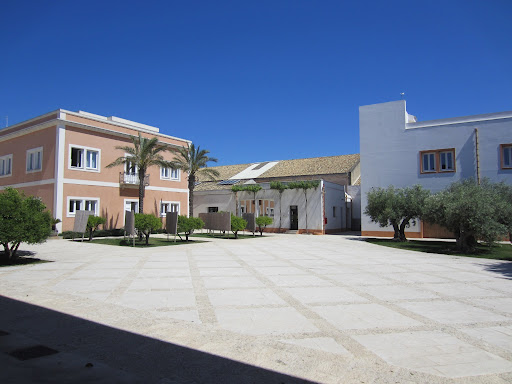
Donnafugata winery in Marsala

Continue reading

Leave a comment

Filed under Winery Visits

These things happpen (Sicily, Italy – Day Two)

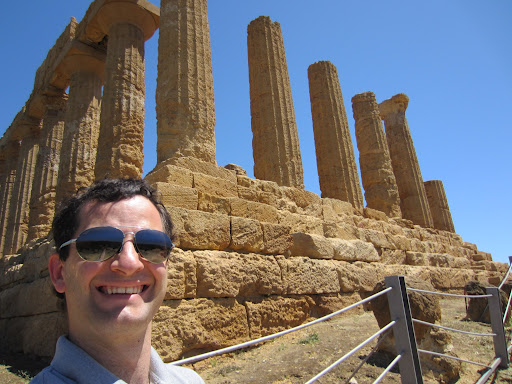
Well I guess it’s to be expected that when you spend about 13 months driving around the world, with already at least 50,000km driven across three continents, there are going to be complications with cars. In a rental car in the Salta region of Argentina I had a navigator that wouldn’t charge, and driving on an unsealed national highway I got a puncture without realising, damaged the wheel and had to pay $200 for a new one. In Germany I attempted to buy a used car far too cheaply, that turned out to be a lemon and lasted only 4,000km. Thus I was forced to rent a car in Milan that I would return in Palermo (Sicily), driving for 32 days across 11 regions, then fly back north for the next leg in the South of France. I accidentally booked the return date a week too early, and had to have it amended over the phone. I didn’t realise they changed the terms, so that rather than having unlimited km I was restricted to 4,800km, and was charged for an additional 332 km. With only three days remaining, the Fiat 500 broke down on the southern coast of Sicily, had to be towed back to Gela where I had to stay in a hotel for the night, then get a taxi to a town an hour away to collect a replacement rental car. So I lost a night and half a day of wasted time, and was charged significantly extra for a completely different contract, additional fuel and kilometres. I also wasn’t reimbursed in either office in Sicily as promised, so am out almost 200 euro, which I now have to try to get back from customer service. The lesson learnt from both rental car experiences is never trust Europcar, as they were the company in both cases. I should have known better. It was definitely worth the drive to Agrigento before my appointment, as the Ancient Greek ruins are breathtaking as the photo below will support. The province of Agrigento is very warm, dry and relatively flat, so ideal for viticulture where the majority of fruit comes from in Sicily.

The Valley of Temples in Agrigento

Continue reading

Leave a comment

Filed under Winery Visits

Isle be there (Sicily, Italy – Day One)

Thus I have arrived to my eighth and final week in Italy (for now), and I am doing so in quite possibly the most diverse and misunderstood region in the country; Sicily. After spending the weekend in the chaotic city of pizza, Napoli, I boarded the overnight ferry to Palermo. The ride was uneventful, apart from some terrible service for overpriced pizza, but I am glad I paid a little extra for a berth in a cabin, as trying to sleep out in the halls would have been challenging. The ferry arrived an hour earlier than indicated, so when I disembarked in Palermo it was 7:00am and of course nothing was open, so I hit the road. My goal was Faro, a region very close to Messina, where I had an appointment with a very small producer. Unfortunately the address I had failed to get me to the winery and the contact number had similar problems. Therefore after several hours I was forced to abandon this plan with great disappointment, and head south through the Etna region where I unfortunately had no appointments. It was fascinating to see fossilised volcanic lava on the sides of the mountain, and hard to believe that vineyards are planted metres away from this lava. It was a shame that I didn’t visit any producers here, as it would have been interesting to learn more about the specific viticulture and interactions of the varieties with the environment. I look forward to the chance to taste some wines from this part of the island, and hopefully I will be able to visit again. From what I have seen so far, Sicily is most definitely different to mainland Italy, but then again, each region is different from each other. Like in other parts of Italy it is not so easy to get around; the roads are not in great condition, there is often traffic, rarely is there a direct route between places that you don’t have to pay for, and the landscape being hilly also makes for slow-going. But I made it to Vittoria, for three sensational visits on my second but first day in Sicily.

Me at Mount Etna

Continue reading

Leave a comment

Filed under Winery Visits

The new wave (Puglia, Italy – Day Three)

Probably the most exciting thing to discover about Italy is the new movement sweeping the wine industry. Wine production in every region has well and truly moved into the 21st century of wine production in various ways. The wine industry has well and truly moved out of the past, where there were many growers and vineyards mostly providing their high yield fruit to cooperatives to produce high volume simple wines to mass markets. Hygiene and technology have been well established in the vast majority of wineries to produce clean, stable and wines that are approachable and pleasant to a much wider range of tastes and markets. Taking inspiration from the French influence on the rest of the world, Italian growers have a much better understanding of their terroir than ever before. More importantly they now know much more about how their indigenous cultivars perform in their environments and sites, and how new practices in the vineyard can improve the quality of these unique varieties. The new wave is about making terroir wines that are made from one or more varieties that are the best reflection of their origin. We are in a golden age of Italian wine, and now is the best time to get involved with them as a consumer because as the quality continues to improve and the demand around the world increases, the prices won’t always be this affordable. The final two producers I visited in Puglia are part of this new wave movement, working very closely with growers in the region to provide them with the best fruit possible to make their wines in a modern yet respectful and traditional way.

Basilicata di Santa Croche

Continue reading

Leave a comment

Filed under Winery Visits

Another world (Puglia, Italy – Day Two)

The title of this post says it all; the Puglia region may as well be an entirely different country compared to most of the regions that I have visited in the last six weeks. It is a wide-open, fertile yet relatively dry region that has no problem growing a wide variety of crops, including enough grapes for it to rank in the top three largest producers. From north to south it is less than 100 km wide, but is over 400 km long, which makes it diverse not only geographically and climatically, but also culturally as well. There are dozens of indigenous grapes, some barely grown any more, and many others making a comeback. At the highest points the elevation only reaches approximately 400m above sea level, and the aspects of any hills are very gentle compared to their neighbours to the north. The soil types are commonly rich red and brown soils, often including calcareous and limestone based deposits. To try to summarise Puglia in one short paragraph does it a disservice, and it would take many weeks or months to better understand it. Unfortunately I only had three days, and regretfully had a low success rate in arranging appointments. So it was with a little disappointment but also interest that I continued south from Lucera towards Salento, but stopping along the way at Rivera, located in the middle of the region.

Castel del Monte

Continue reading

Leave a comment

Filed under Winery Visits

What’s your flavour? (Puglia, Italy – Day One)

Something quite interesting has happened to my tastes over the past six weeks in Italy; I think I have become anti-oak. I think this has been in reaction to tasting so many new wines made from unfamiliar varieties, and my desire to see the subtleties and nuances of each variety without the interference of oak treatment. In general the wines where the oak has worked for it have been made from or included more familiar French varieties, which perhaps suggests I am merely unfamiliar with how oak reacts with these unfamiliar varieties. The wines in Italy have been exceptional, and have got me really excited for the future of Italian wines, as by all accounts the quality of the wines and the understanding of the varieties and terroir have only been happening over the past 20 or so years. In no way am I suggesting that the distracting use of oak is prevalent in Italy, in fact it is quite uncommon. My assumption is that because of the excitement I have felt tasting more ‘traditional’ wines made from indigenous varieties where little to no oak is used, I have been uninspired by wines that use too much new oak for too long that give them a more ‘modern’ and ‘international’ flavour that whilst not necessarily bad are boring and like many others. Too often I see aromas of chocolate and banana (a tad strange, but unmistakable) which immediately turn me off, and then on the palate comes the vanilla and coconut. This makes it difficult for me to assess and come to terms with such unique varieties as montepulciano, lagrein, sagrantino and nero di troia. Whilst I totally agree that I must become more familiar with these varieties and regions before passing judgement, the predilection for over-use of oak is unmistakable and in my opinion unforgivable. Allow the flavours to shine through, speaking for themselves and seducing new consumers all over the world, as nature is the champion rather than the winemaker in my opinion.

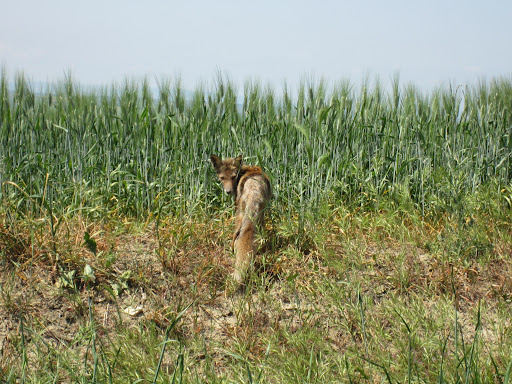
A friendly observer on the way to Puglia

Continue reading

Leave a comment

Filed under Winery Visits

People power (Abruzzo, Italy – Day Two)

In my humble opinion, it takes three things and only three to make great wine; all other elements merely support the others. The first is of course the environment, which includes both the climate/weather and the actual earth & surrounding vegetation. The second element is the vine itself, and ensuring that the right variety is planted in the right location. The third element is people, because everything each person does towards a wine leaves an impact. What elements you use to produce the wine is somewhat irrelevant, and is completely up to the producer. At the end of the day, wine is made using the same process of fermentation, regardless of where you are in the world. People may enter the business of wine from many different backgrounds, be they agricultural, business, marketing, sales, or any other unique origin. Many people are lovers of great wine, many enter the business to make money, some may inherit or take after their parents, and still more may desire a complete change of scenery. In many cases people may produce wine around their day-to-day profession, growing grapes and/or making wine as a hobby. Eventually they may leave their other profession to focus solely on the wine, and others may employ people to handle the production of the wine. Regardless of people’s backgrounds or motives, the ultimate prerequisite to work with great wine is passion and commitment, as wine is not a short-term investment, nor are you likely to achieve overnight success. In my quest I have met so many different people who have all left their mark, regardless of their level of involvement or responsibilities. My final visit for Abruzzo was with a family of noble origins, not the first and probably not the last of my trip.

Barone di Valforte vineyards

Continue reading

Leave a comment

Filed under Winery Visits

Express yourself (Abruzzo, Italy – Day One)

One of the things I have noticed on my trip visiting wine regions is that the best wines come from vineyards planted on a slope. There are exceptions to this of course, but these wines are generally not necessarily of elegance, nor do they come from cool climate regions. All of the regions I have visited in Italy so far, including Tuscany and Valpolicella, have steep and/or terraced vineyards where the best fruit tends to come from. In every case the fruit grown in vineyards on valley floors or flat lands provide volume and approachability. What varies of course is the steepness, elevation, exposition and depth of the soils and this in turn reacts with the particular variety and micro-climates. The fascinating thing about Italy which I didn’t realise is that the entire length of the mainland has a mountain range through it, known as the Appenino Mountains. These mountains are quite wild and imposing between Lazio and Abruzzo/Le Marche, a fact I discovered quite well when I drove from the Adriatic Coast to Rome and back for the weekend. Much like the Great Dividing Range up the east coast of Australia, or the Rockies/Andes Mountains that travels the entire west coast of the Americas, this allows viticulture to be quite diverse and high quality along them. Even in Mediterranean climates like in Abruzzo, you can easily produce red and white wines of elegance and structure, but plenty of fruit and tannin. How one expresses the climate, soils and native varieties is ultimately up to the producer, as I was to discover on my first day in the Abruzzo region.

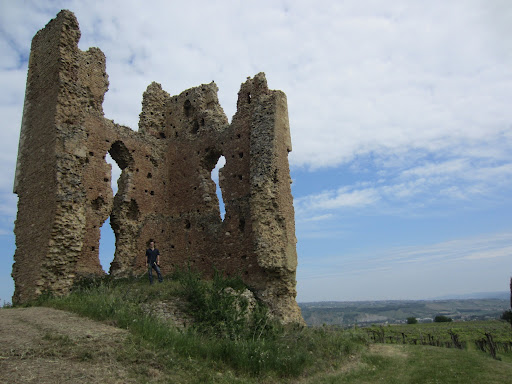
Me in the 11th century tower on the Torre Raone estate in Abruzzo

Continue reading

Leave a comment

Filed under Winery Visits

Are you serious? (Marche, Italy – Day Two)

After six weeks in Italian wine regions I have reached a crossroads, and have developed some interesting theories and anomalies. One of these theories is about what the best wines in Italy are. What these wines should not be is purely statement wines, as this is not France. They should not be designed like something else, they should be themselves and proud of it. They should be made with indigenous grapes, particular to that area as often as possible. The wines don’t necessarily need to be a single variety, but the blend should make sense and express the origin. Some of the best wines I have tasted have had little to no oak treatment, avoiding the temptation to be matured for long periods of time in brand new medium toasted French barriques. I am by no means suggesting that this process is not good; I just feel it is not true to the wines here. The red wines should not be heavily extracted, but ultimately they should be balanced in fruit, alcohol and tannin. The white wines similarly shouldn’t be too rich and complex in malolactic, using oak only when necessary and again achieving balance. The wines should respect the traditions and origins of the variety and area, but utilise technology to merely observe and coax, rather than to intervene and dictate. Most importantly the wine should be approachable but not simple. The best wines are seriously made, but should not be taken too seriously. After all, wine is intended to be enjoyed with people and food, and too much emphasis placed on wines inevitably leads to disappointment and increased prices. Hopefully Italian wine won’t continue to lose its sense of place and personality, as the world needs the wines of Italy to demystify wine, and make it clear that not every wine has to be an ethereal experience. Variety is the spice of life, which drives the winery I visited today.

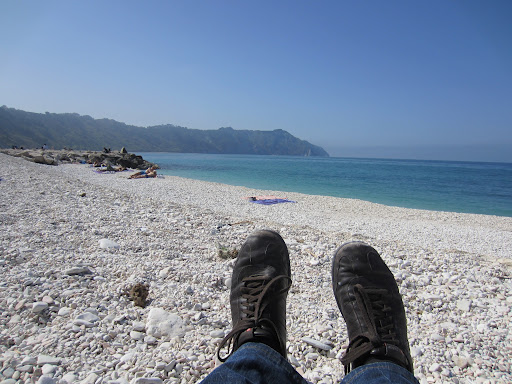
Porto Nova beach

Continue reading

2 Comments

Filed under Winery Visits

Roses are red, violets are blue (Marche, Italy – Day One)

Coming from Australia and being a wine drinker has its perks but also its disadvantages. As a wine-producing country we make more than enough wine to consumer ourselves. In actual fact, we produce so much that more Australian wine is exported than consumed within the country. Most of the wine is fairly basic approachable wine, a lot of which gets exported and has subsequently led to Australian wine being assumed to be all the same. This is of course not the case, as Australia is an extremely large country with a very wide variety of climates and regions. Thus Australia is quite possibly the most diverse producer of wine in the world, and Australian consumers now have access to an endless number of varieties and styles from over 100 regions. Like many other New World wine producers the vast majority of the wine is made from varieties of French origin, but unlike others we now grow a range of Italian, Spanish, Portuguese and even more obscure Eastern European varieties. Because of the accessibility and quality of the wines produced locally, Australia is not a large importer of wine, apart for that from New Zealand. The wines we do import are generally those we can’t produce ourselves, and are of a much higher quality. Thus in the past most of the wine was from the best regions in France, some from Italy and Germany, and less from Spain and Portugal. This has meant that many varieties and regions from around Europe are largely unheard of in Australia that may be better known elsewhere. This leads me to my point that it was necessary for me to actually come to the regions that are unfamiliar, to learn about these varieties and styles, because as the quality of wine improves new wines will become more available around the world.

Newly forming bunches pre-capfall

Continue reading

Leave a comment

Filed under Winery Visits