Tag Archives: Portugal

Lavradores de Feitoria – 17/07/2012

Tres Bagos Branco 2011
Open clean and pure fruit aromas, some salty leesy notes, slightly toasty and flinty. Initially brisk on the palate, but then quite broad and expressive, textural and ripe with some nice sharp green notes. Good tropical profile, some ripe pear and citrus notes. Body depth, pretty easy drinking stuff.

Meruge Branco 2010 (viuzinho, fermented in Portuguese oak)
Roasted walnut and burnt vanilla aromas, ripe creamy citrus fruit. Soft and subtle, smooth and long, round and very delicate, a lot of complexity and depth. Quite shy and reserved, the oak and ripeness is subduing the wine for now. Hopefully it will open up. A tad overworked.

Tres Bagos Tinto 2008
Nice ripe dark fruit, black olive tapenade, some soy and dark spice elements, ripe but focused fruit. Intense full, warm and ripe but fresh and approachable, good vibrant character with balance and integration. Some appealing warmth on the front fades nicely.

Quinta da Costa das Aguaneiras 2008 (south-facing under 200m)
Quite oaky and robust, sweet toasty smoky, roasted nuts and dried flowers. Really intense and full, but soft and supple on the back. Pretty much cooked wine, too modern and stylised, lacking subtlety but it does have some structure. I’m not sure it will age.

Meruge Tinto 2008 (400m altitude north-facing, tinta roriz made in lagare)
lighter more classic tempranillo colour. Soft light fruit sweet and silky focused tannins, intense bright and focused, fresh but mature ripe fruit and tannins, oak could be paired back perhaps. Good power and structure, but the oak is giving it too much sweetness.

Tres Bagos Grande Escolha 2008
Classic Douro nose, really good expressive dark fruits but the promise of something more that isn’t oak. Old vines, good maturity, low yield, healthy extraction, balance elegance, potential and structure, but drinkable now and into the future. Still quite modern, but very good modern.

Tres Bagos Grande Escolha 2009
Perfect expression of 2009, balance structure, density but ripe and full dark fruit characters. Won’t last as long as 2008, but looking pretty damn good now.
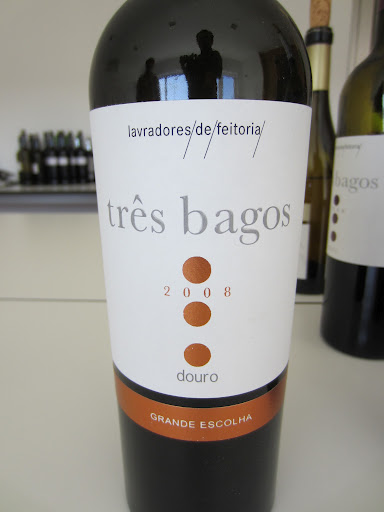
Lavradores de Feitoria Tres Bagos Grande Escolha 2008

Leave a comment

Filed under Tasting Notes

Quinta do Noval – 16/07/2012

Cedro do Noval (Vinho Regional Duriense (30% syrah, touriga nacional, touriga franca, tinto roriz)
Bright purple colour, intense but not heavy in colour. Bright juicy yet spicy dark fruit aromas, some interesting floral notes. Fresh full-flavoured clean, great acidity and intensity of fruit. Balanced approachable but structured and with personality.

Quinta do Noval Douro DOC 2008
More intense purple, more extraction and depth. Smoky toasty notes of dark berries, more intense and extractive on the nose. Very intense and dark on the palate, but surprisingly fresh and lifted on the palate. Crunchy toast oak adding to texture but not adding any sweetness. Intense but complex elegant and structured. Still a bit tight.

Noval Black Reserve
Soft jubey plummy cassis and blackcurrant. Intense full and spicy warm, fresh finish and balanced alcohol and sweetness, velvety and dense but clean and juicy, well structured and worth ageing a little bit.

Quinta do Noval LBV 2005
Rounder and fuller, sitting more in the mid-palate. Better balance throughout and extension on the back of the palate, slightly more savoury maturity, serious considered port wine, powerful yet haunting.

Noval ten-year old
nice sweet nutty and toasty dry red fruits and carob spice. Bold yet smooth, very casky and nutty in youth, bright and fresh, clean yet complex, balanced and pure. Excellent clarity of purpose.

Noval twenty year old
Denser fuller and more viscous, more subtle nut characters, almost an almond Magnum flavour to it, nice texture. Opulent rich and yet focused and toasty. Not quite enough difference between 10 and 20 in my opinion.

Quinta do Noval 2008 VP
Spicy mulberry clove green pepper notes. Really intense and not sweet, dry full and powerful, broad yet focused and structured, balanced and long on the palate, but obviously far too young and in need of a lot of time in bottle. A wine too early to see much expression.

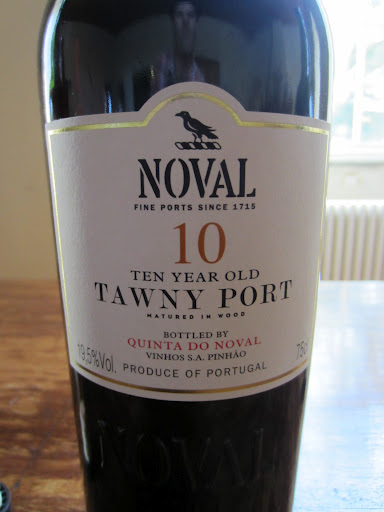
Noval Ten Year Old Tawny Port

Leave a comment

Filed under Tasting Notes

Quinta do Vale Meao – 16/07/2012

Meandro 2010
Wonderfully intense purple colour, very deep. Very aromatic spicy black fruit, concentrated and intense on the nose, complex and somewhat closed at the moment. Very soft supple very focused and nice firm tannins, subtle fruit slightly disagreeing with the nose, balanced and well integrated, supporting oak not influencing at all.

Vale Meao 2009
More rustic earthy stalky and brown on the nose, slightly dusty dark red fruits. More intense and fruit sweet, dark and certainly a big influence of new French oak, persistent and concentrated but elegant and full without weight or heat. Will benefit with some time in bottle.

Vintage Port 2002
Less obviously porty on the nose, nice bright dark red fruit aromas with some very subtle toasty smoky notes. Beautifully tight and concentrated, elegant and balanced with finesse and structure, focus and drive. Not heavy or alcoholic until the very back of the palate, well integrated tannins.

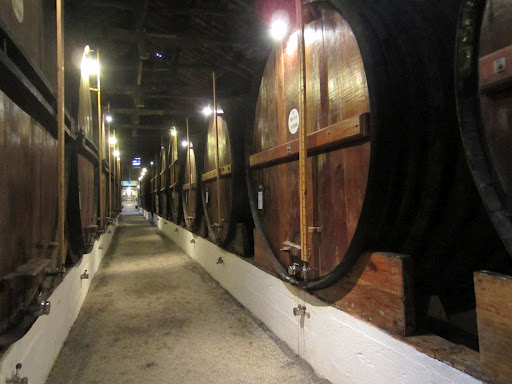
Oak fermentation vats at Quinta do Vale Meao

Leave a comment

Filed under Tasting Notes

Déjà vu (Douro Valley, Portugal – Day One)

After six months visiting wine regions in Europe I feel like I am beginning to come full circle. Every major wine-producing country has been covered, and with the exception of Bordeaux (next week) and Burgundy (the end of the year), every important wine region has been visited. The experience and knowledge I have acquired since the beginning of the year scares me slightly, and I hate the idea that I am becoming jaded with my knowledge of wine. I think the time I have planned in the UK and Ireland through August will do me some good, as it will refresh me for working vintage in Germany from mid-September. Probably the main reason that I am feeling a sense of déjà vu is the similarities that the Douro Valley has with the Mosel Valley, which I visited all the way back at the end of January. The way the calm and wide river makes its slow progress to the Atlantic Ocean is hauntingly similar to the Mosel, as well as the deep valley with steep slopes planted with terraced vineyards. They even have some slate/schist here, but a lot more granite and even limestone. There is obviously one glaring difference which is the climate. It is very hot here, often reaching well over 40 degrees in summer, whereas the Mosel is not. When I was in the Mosel it wasn’t getting over zero degrees; on my first day in the Douro it got up to 39 degrees. So a little bit different. I came here to not only actually see the vineyards where the port wine comes from, but to also explore a rapidly growing part of the Douro for dry table wines, getting quite a following.
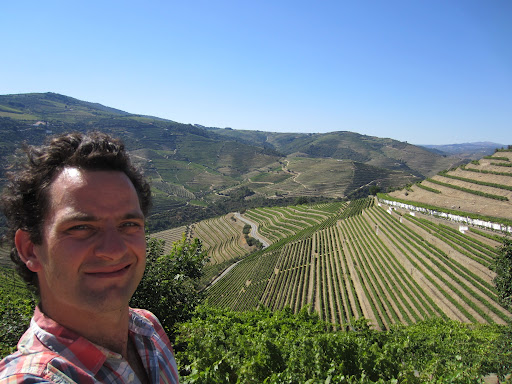
High above the vineyards of the Douro

Continue reading

Leave a comment

Filed under Winery Visits

Porto to the past (Porto, Portugal – Day Two)

In case you weren’t aware (and I certainly wasn’t), the Douro Valley where port wine is produced was the first officially demarcated viticultural areas in the world in 1756, although Chianti and Tokaji were regionally defined but not regulated before this. The actual viticulture and initial fermentation is no different to any other red wine, but the fruit can tend to be a little riper with more natural sugar in it. After the fortification the wine used to travel down the river on boats in barrels, but today the wine travels on the road in climate controlled tanks. When you visit Vila Nova de Gaia on the left bank of the Douro in Porto, you can still see the barcos rabelos moored and floating, and now they are only used for racing and tourism. British merchants were permitted to import port at a low duty in 1703 which led to the wine gaining much popularity, partly because the war with France deprived English wine drinkers of French wine. The English involvement in the port trade grew much like in sherry, and still remains today in the names of many port shippers such as Cockburn, Croft, Gould, Osborne, Offley, Sandeman, Taylor, Graham, Dow and Warre, the last three of which are owned by the same family and I had the chance to taste on my second day in Porto.

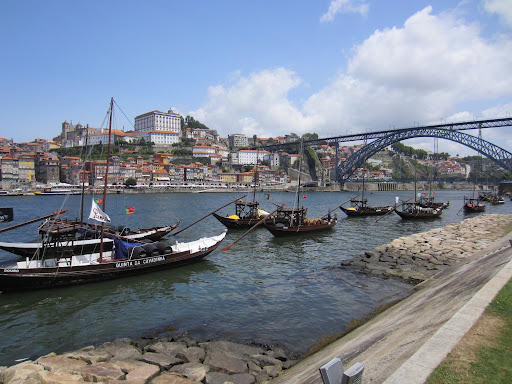
Port boats docked in Villa Nova de Gaia

Continue reading

Leave a comment

Filed under Winery Visits

Hard a’ port (Porto, Portugal – Day One)

Only a week a go I was talking about a style of wine considered to be very old-fashioned and makes one think of old British movies. This wine was sherry, and it is interesting that about two weeks later I am here where they produce the other wine that comes to mind which is port. Sherry and port share a few things in common apart from being thought of as an old persons drink. Firstly they are both fortified wines, but in the case of port the fortification is made during the fermentation to stop it and retain a residual sugar, whereas sherry with the exception of pedro ximenez and muscatel are fortified after the fermentation. Secondly the fortification was important for the transportation and spread of port as it was for sherry, but it was actually British wine merchants who introduced the process into port whereas the Moors introduced it in sherry. The third similarity is with the fact that like dry sherries, cask-aged port doesn’t age in the bottle and should be consumed pretty soon after bottling, whereas vintage port ages in the bottle and can keep for a very long time indeed. The first fundamental difference between the two is that the vast majority of port is made from red grapes, whereas more sherry is made from white grapes. Along the same lines, almost all port is sweet whereas the majority of sherry is either dry or medium-dry. Like sherry however, port is also undervalued and underappreciated, and the best examples are truly exceptional wines regardless of their style.

The port halls of Taylor’s

Continue reading

Leave a comment

Filed under Winery Visits

Warre’s – 14/07/2012

Warrior Ruby Reserve
Nice spicy black fruits, Christmas style wine, very slight floral elements. Soft sweet brightness, smooth and long, nice and velvety and rich, nicely balanced sweetness. Brightness, sweetness and really approachable, exactly what you want from a ruby port.

LBV 2001 Unfiltered
Nice ruby creamy bright nose, showing some nutty characters, quite concentrated. Rolling flavours, quite complex, sweetness of ripe red fruits with a very creamy nutty texture, showing some nice characters of maturity, robust and full on the palate, good acids tying things together.

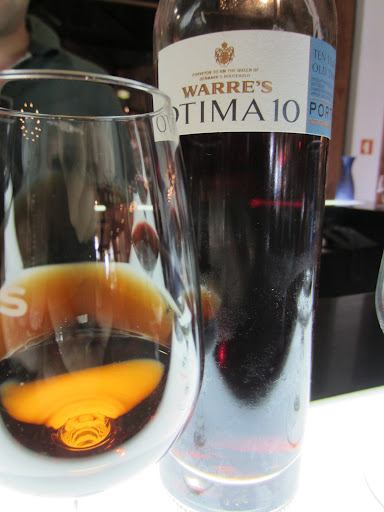
Otima 10 year old
Very subtle and smoky caramel. Crisp fresh and bright amazingly, tight and oxidative almost like an amontillado. Very intense and note really that sweet until very late on the palate. A very unique port wine.

Quinta da Cavadinha VP 1989|
Colour already starting to tawny up in colour. Almost like an old wine rather than an old port, fresh soft focused not sweet vey much, smooth yet brisk, showing its age.

Warre’s Otima 10 year old Tawny

Leave a comment

Filed under Tasting Notes

Graham’s – 14/07/2012

Six Grapes Reserve Port
Much more oxidative barrel elements, slight smoky characters, mature and more still wine notes on the nose. You can see the VP character in this wine. Soft bright but complex on the palate with some interesting sea influence, perhaps from the ageing? Velvety again, but more complex and savoury.

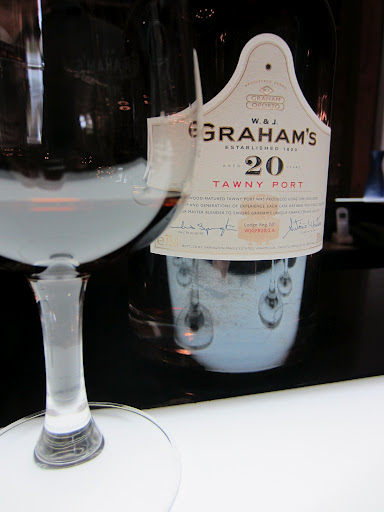
20 year old Tawny
Lovely intense golden caramel colour. Subtle smoky whiskey like nose, very casky and complex. Nutty texture and complexity, a little fiery and creamy, very long and opulent, good concentration, balance and still retaining freshness after all these years.

VP 2003
Deep intense dark but not expressive, very closed and young. Bold intense sweet, quite broad and simple, I’m not convinced this should have been a vintage year. There is absolutely no structure.

Graham’s 20 year old Tawny

Leave a comment

Filed under Tasting Notes

The future starts here (Dao, Portugal – Day Two)

Knowing so little about Portuguese wine everything I am experiencing is new to me. With such an objective opinion of wine and the wine industry here, I am open to different ideas and I have been developing some ideas which may or may not be particularly accurate. One of the first things I noticed about wine in Portugal compared to other European countries is that more premium wines tend to be a little more expensive, particularly in restaurants where they have pretty much the same markup as in Australia. The second thing I have noticed is that there is a big difference between commercially produced wines and more premium boutique wines both in terms of quality and volume, but there seems to be a huge gap in the middle with very few medium-sized wineries. The third thing I have noticed is a lack of cooperation between wineries, which I experienced when visiting one winery and them talking in a slightly negative or condescending way about other wineries. Obviously these wines are competing with each other, but perhaps they need to look a little bigger and consider that they are actually competing with other product categories like beer, spirits and countless non-alcoholic beverages. You also can’t ignore the trend for the best Portuguese wines to be consumed within Portugal, with port the only exception. All of these reasons combine to create a situation where very few outside the country know how good the wines are, and as such not much is exported in a profitable way. Hopefully this will change as new groups have been established to promote the wines around the world. The two wineries I visited on my second day in the Dao region are probably the most important for the region in the export markets.

Sandy granitic soils in Dao

Continue reading

1 Comment

Filed under Winery Visits

Terroir hunter (Dao, Portugal – Day One)

The Dao and Bairrada geographical regions are part of the same political region in Portugal known as Beiras. I don’t recommend mentioning that with them, as the two regions couldn’t be more different from each other in a great many ways. Firstly the Dao region is more continental in climate than the Bairrada which is closer to the Atlantic Coast, and thus has more temperature variations between day and night time. Secondly the Dao region is higher in altitude sitting at over 250 m above sea level, whereas the Bairrada isn’t much more than 100m. Thirdly the region works with very different grape varieties; the Dao is much more known for red wines whereas Bairrada produces sparkling wine in high volumes, with red and white wines occupying a smaller piece of the pie. The wine styles are quite different, with the maritime wines of Bairrada being more linear, fresh and crisp and the wines of Dao being fuller and more robust. The final difference is in the landscape itself, as the Dao is much more wild and rugged, reminding me of the Grampians in Victoria where I come from. The Dao is a valley formed over time like a big bowl, and in this protected climate the touriga nacional grape is the undisputed king.
The Intrepid Wino in a medieval lagare in the Dao, Portugal

Continue reading

2 Comments

Filed under Winery Visits