Tag Archives: Europe

Living on the edge (Bairrada, Portugal – Day One)

I could have picked a lot worse places to celebrate entering my fourth decade on the planet than Lisbon, a city that lives up to its status as a European capital city. Much alcohol and little sleep was enjoyed over the weekend, and many visits to the Bairro Alto part of the old town as well. Whilst it was nice having five days off from the wine as I celebrated my 30th birthday, it was almost relief to get back into the familiar territory of visiting wine regions. The only problem with that idea is the fact that I know almost nothing about Portuguese wine, even the most famous one of all, port. I’m always up for a challenge, and relished the chance to learn about a country not really appreciated outside their borders, mostly because they aren’t great at promoting their regionally distinct premium wines, and partly because most of the good stuff is consumed within the country. I chose to visit only three regions which represent the top quality wines and are all in the northern part of the country within Oporto, the second largest city. The first was the coastal region of Bairrada, which has been known for its sparkling wines for many years but is starting to gain recognition for its red wines made from the indigenous baga variety.
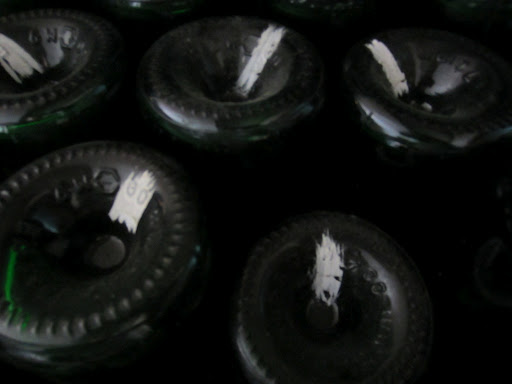
Traditional method sparkling wines at Sidonio de Sousa

Continue reading

Leave a comment

Filed under Winery Visits

The Sherry Revolution (Jerez, Spain – Day Two)

As I talked about in my previous post, most people think sweet when they think sherry, but there is far more to it. Different styles were developed over time, but essentially the principle of the fortification process was to allow the wines to age in an oxidative process whereby barrels were not completely filled and in the case of the dry styles a thin layer of yeast was allowed to form on the surface of the wine known as flor. With the sweeter and higher alcohol wines this flor does not exist and are thus more oxidative in nature, and often age for longer both in solera and bottle. After all, if the wine is already oxidised in the barrel it hardly matters if you drink it several months after opening the bottle. With the sherry rainbow of styles on offer, it actually means that sherry is a versatile and unique companion to food. Possibly one of the most famous food matches with manzanilla for example, is freshly grilled sardines which are very salty and pair perfectly with the fresh acids of the sherry. There is currently a sherry revolution as new generations are discovering this ancient wine style, most notably in London and New York. Several wine experts still maintain that sherry is woefully undervalued and I couldn’t agree more. It just takes a little while to understand the wine, and shake the image of it being for old fuddy-duddies.
Can you tell I’m missing home?

Continue reading

Leave a comment

Filed under Winery Visits

Hitting the flor (Jerez, Spain – Day One)

What comes to mind when you hear the word sherry? Depending on where you are from, the most likely response is little old ladies of British descent sipping on sweet wine out of small glasses. Considering the history of this particular wine this image is makes a lot of sense, but certainly isn’t 100% accurate. There is a certain irony in the fact that many of the sweet wines in the world were actually heavily targeted towards the British markets of the past, possibly none more so than sherry. They even designed specialty wines for them, most notably cream sherry which is still today the most familiar style to consumers in many parts of the world. Sherry wine as it is today is one of the oldest wine styles in the world, dating back to the Moors who introduced distillation and fortification over a thousand years ago. The British fell in love with the wine after Francis Drake sacked Cadiz and took several thousand casks back to England, and since then the UK has been their biggest market. To maintain consistency a system was devised to always have a constant supply, and this was the solera system. A minimum of four rows of barrels were stacked, and a minimum of three times a year the barrels are filled one-third from the top down. In the past this was done by hand using jugs, but today the wine is transferred to tanks and blended before being passed down. Therefore you can bottle sherry three times a year, which is important for the drier styles which are much better when they are fresh. With the higher alcohol fortification the wine can live longer in the bottle even after opening, which is why it is so common to find really old bottles in your grandparents bars. But the dry styles really need to be drunk within six months of bottling, as they tend to become a bit tired. Not easy for us down in Australia, hence my desire to taste from the solera when I visited. The two producers I visited are some of the oldest and most important in the region.

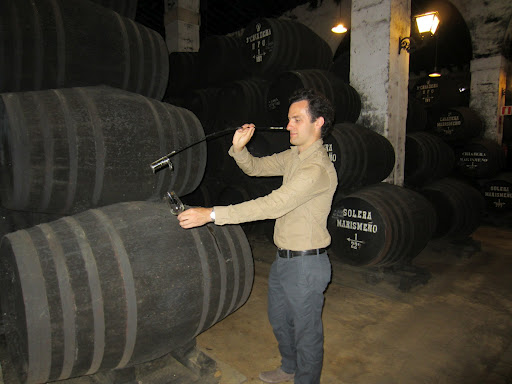
The first of many attempts to remove some sherry from the solera

Continue reading

Leave a comment

Filed under Winery Visits

Luis Pato – 9/07/2012

Barrel tasting with Luis;

The bical had wonderful structure and balance, not going purely for fruit notes. At 13% alcohol it was mouth-filling but had great minerality and extension on the palate.

The baga wines varied between barrels, the sandy soils tended to have more focused structure and tannins through the middle of the palate, brighter more restrained red fruits and purity, as well as some subtle spice and pepper characters. The chalky clay soils were a little fuller and broader with darker fruit, less spice and more tannin but in a more mellow profile.

The touriga nacional was soft and full, quite grippy in tannins and good concentration, full and expressive without the same structure and ageing potential as the baga wines.

Finished wines with lunch;

Casta Baga Bruto 2010
A nice dark pink colour. Good texture and weight, bright berry fruit, fresh finish. Balance and liveliness.

Vinhas Velhas 2010 (cerceal, sercialinho)
Light pale fruit aromatics. Fresh lime Riesling influenced fruit with a little more depth and character, less minerality. Fresh vibrant but wonderful character.
Vinha (vineyard) Pan 2008 (baga chalky-clay soil)
Very tight on the palate, aromatically a little off, focus light palate, not expressing much, I don’t think the bottle is showing well.
Luis started this cellar after a visit to Melbourne in 2002

Leave a comment

Filed under Tasting Notes

Sidonio de Sousa – 9/07/2012

Rose Brut Nature 2010 (two hours skin contact)
Very bright and fresh green red berries, hints of floral but actually quite herbaceous. Ripe ruby red fruits, impression of sweetness but its just the fruit. Light fresh, fairly broad for a traditional method sparkling wine. Quite an interesting profile.

Branco Brut Nature 2010 (bical, maria gomes, arinto)
Nice clean citrus nose, a little mineral influence, but very little autolysis. Bright fruity apples and citrus elements, clean pure and focused on the palate. Good balance and nice finish as well.

Tinto Brut Nature Baga Super Reserva 1999 (disgorged 2011)
Traces of large barrel aged oxidative influence and bottle age combination. Wonderfully ripe bright fruit, but without the dosage looks savoury, meaty and dry. Nice and soft and mellow, not at all heavy or cloying, tannins softened with age.

Reserva Baga 2008 (one year large old barrels, 2-3 years in bottle)
Rustic, a little wild, slightly smoky meaty, quite tight and closed, earthy herbal green influence, very shy fruit. Soft chewy juicy cooked tannins, bold full round, opulent and assured but quite different. Certainly designed for ageing, not showing amazingly at the moment. Certainly an influence from the fermentation process, slightly volatile.

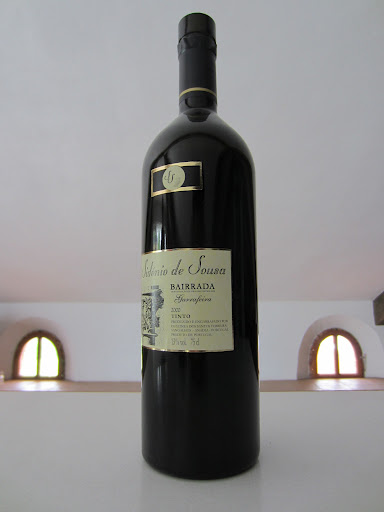
Garrafeira Baga 2000
Wild earthy volcanic, complicated aromas, basalt flintiness, some liquorice and dried chrysanthemums. Dense bolder drier, much more mature (obviously), bolder and more powerful but not necessarily aggressive. Structure up the wazoo, but unique fruit characters.

The top wine, patiently ageing away, already 12 years old

Leave a comment

Filed under Tasting Notes

Sea change (Malaga, Spain)

What motivates people to step away from their comfort zones and start a new adventure in an unfamiliar place? This is a question that I ask myself quite regularly as I make my journey around the world, and encounter people who somehow have ended up somewhere far from their roots, much like myself. In my travels I have encountered viticulturalists and winemakers who are working in a region or country not their own, mostly for the love and challenge of great wine. Everything from Kiwis in the United States, South Africans in Canada, to Swiss in Germany and Spain, and Germans in Italy. And without question there are French everywhere, which is probably to do with the fact that outside of France there are more opportunities to create a reputation for themselves and build something from the ground up. This has particularly been the case in Spain, with at least six wineries I have visited being either founded by a French winemaker or at least employing one.

A cortijo where moscatel grapes are left to dry in the sun

2 Comments

Filed under Winery Visits

Vote for pedro (Montilla-Moriles, Spain)

Quite often on my trip I show my ignorance and/or naivety when it comes to wine. This isn’t hard to believe considering how big the wine world is, how many wineries and how many regions there are. It was one of the first things that excited me about working with wine, is that it is essentially impossible to know everything about wine, but I liked the challenge regardless. Sometimes these instances are a little more embarrassing, such as not knowing what the whole left bank-right bank thing referred to. My former employer King & Godfree prides itself on the range of fortified wines it stocks, particularly their sherries, so I was familiar with the different styles and many of the better known houses. So when I got in contact with one of my favourite producers noting my dates in Jerez, I was very embarrassed to discover that they aren’t even in the same province. The surprises didn’t stop there, as I had one of my most enlightening visits in Spain.
Dreams can come true

Continue reading

Leave a comment

Filed under Winery Visits

The heat is on (Yecla, Spain)

I’d just like to point out a few things about myself and where I come from. It is true that I come from Australia, which is very hot and dry and is famous for the outback and the beaches, the latter I am familiar with but not the former. I’ve spent 29 summers in Australia, and I know how hot it can get. The part of Australia I am from is far from the hottest in the country, and is actually more famous for the rain. Particularly in winter it can get pretty chilly (rarely below zero), and doesn’t fit the image of Australia that most people may have. Thus I was somewhat unprepared for example, for the desert like conditions of Mendoza in Argentina, where the sun beats mercilessly down for 16 hours a day with very little respite or anywhere to hide. Nor was I prepared for southern Spain, particularly in the centre of the country, where you can easy go through six t-shirts in a day through sweat alone. Priorat and Montsant were pretty hot, but this was worse because it seems much drier. In a way it did remind me of some very well-known regions in Australia, and I wasn’t surprised that famed Barossa winemaker Chris Ringland is actually making wine in this part of Spain. What did surprise me is that there hasn’t been more investment in the Yecla region, as the potential to make the kind of wines the markets are crying out for is outrageous. With very little time to spend I was able to visit the cooperative winery, which is doing an outstanding job bringing Yecla to Spain and the world.
Sadly it is empty

Continue reading

Leave a comment

Filed under Winery Visits

Resurrection (Alicante, Spain)

Alicante just ain’t what it used to be. At one point it boasted one of the most important wines of Europe, found in cellars of royal families, even referenced in books by Alexandre Dumas. Back in these day most wine was being sold in bulk to other parts of Europe to be bottled or blended with other wines, but this changed at the end of the 19th Century. The first enemy was the phylloxera epidemic, and the second was changes in markets and politics domestically and overseas. There are two main areas for viticulture in Alicante, and they each have a major indigenous variety. Closer to the coast where it is lower in altitude and a bit warmer and more humid grows moscatel, used to make sweet wines. Further away from the coast is where you find a bigger range of varieties, most importantly monastrell. I visited two estates in Alicante that represent a resurgence in interest in the region, but one is in a modern and the other a traditional model.
Fireworks over the beach in Alicante

Continue reading

Leave a comment

Filed under Winery Visits

Gonzalez Byass – 03/07/2012

Tio Pepe
Fresh apples, toasty brioche quite doughey, bright pale nose. Very fresh and intense fruit forward, bright acids, very little rancio influence, nice texture, and good clean finish. Very nicely balanced and approachable.

Del Duque Amontillado Viejo (30 years)
Creamy toffee burnt caramelised butter, caramel fudge. Creamy smooth sweet texture but dry flavours. Very complex, evolves across the palate, fairly intense, quite hot but relatively well integrated, showing some toasty barrel characters.

Apostoles Palo Cortado Viejo
Deeper darker caramel and toffee notes, slightly smoky toasty roasted nut aromas. Sweet viscous texture, very warm and rich on the palate, toasty almond biscuit caramel, hazelnuts walnuts, caramel brittle.

Matusalem Oloroso Dulce Viejo
A suprising amount of freshness, very late toasty smoky (almost whiskey cask). Very raisined, very rummy, very spirity in general.

Noe Pedro Ximenez Viejo
Interesting balsamic notes, very mature complex characters, looking a lot less sweet than younger ones, a lot less raisin notes, toasty deep dark chocolate characters, complex slightly savoury raisin characters.

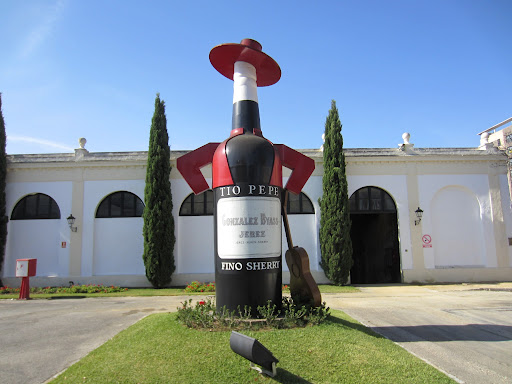
That’s a big bottle of Tio Pepe

Leave a comment

Filed under Tasting Notes