Tag Archives: Europe

Vintage 2012 – Day Two

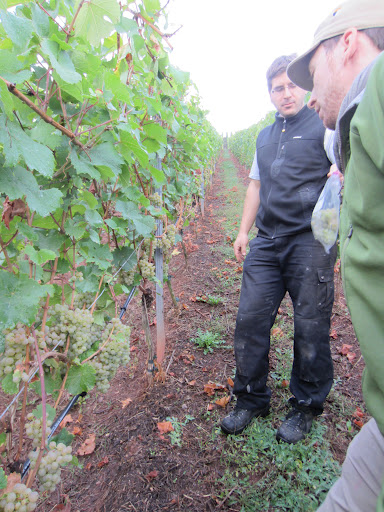
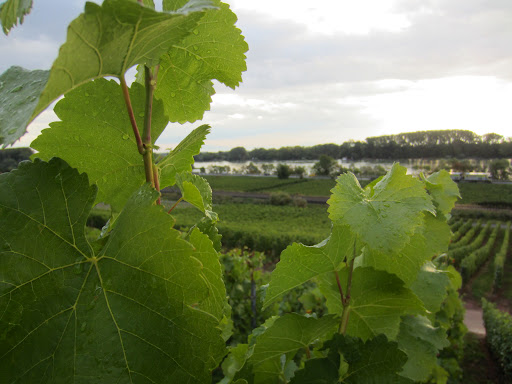
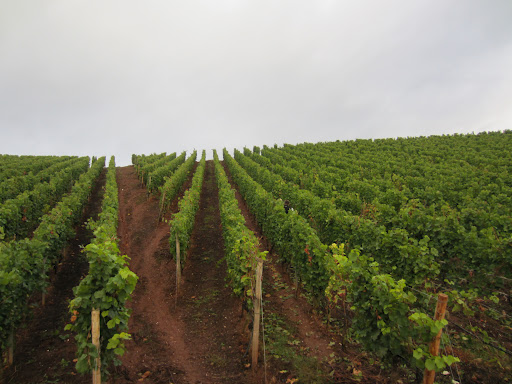
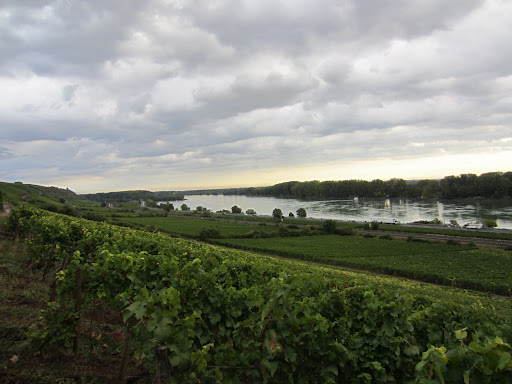
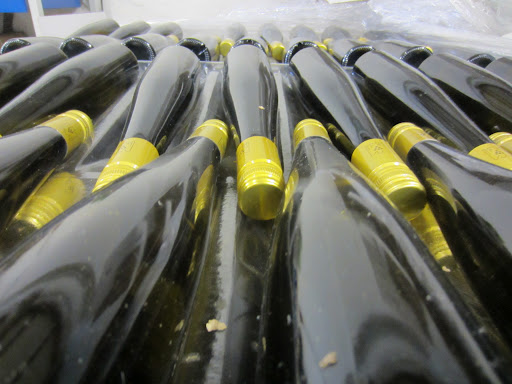
Today Johannes Joachim and I went out into a number of parcels tasting fruit and looking at the health of the grapes. Samples of some parcels were taken for analysis back at the winery which yielded some interesting data. The afternoon I helped in the packaging line again for an order soon to depart. Here are a few photos.

Joachim and Johannes discussing
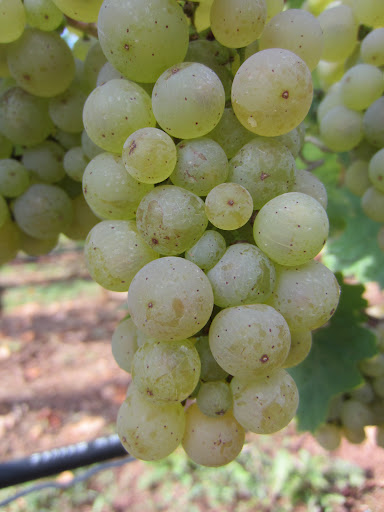
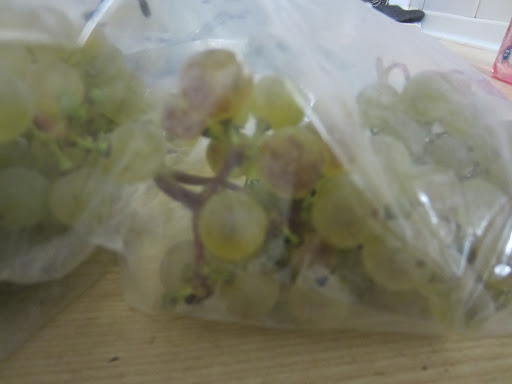
I’ve got a lovely bunch of riesling grapes
Joachim takes some samples of riesling in Rothenberg
Lovely mild day in the Rheinhessen
Taking notes on the tastings of fruit
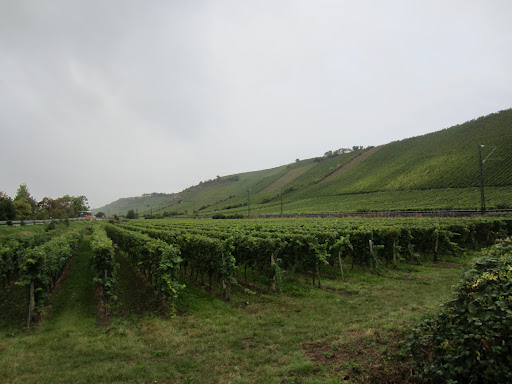
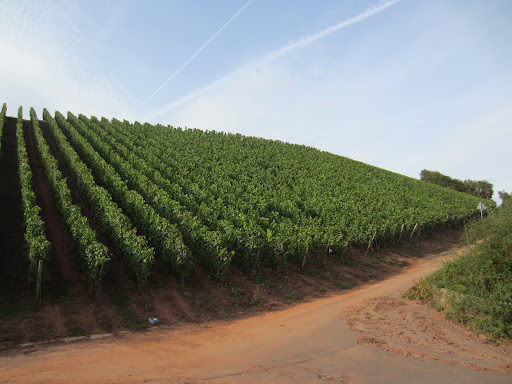
The Pettental vineyard
My second favourite river in the world
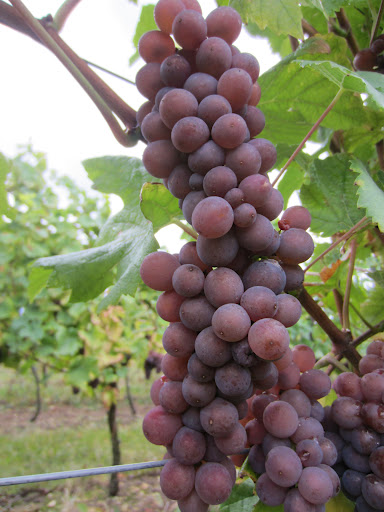
Grauburgunder, also known as pinot gris, or pinot grigio
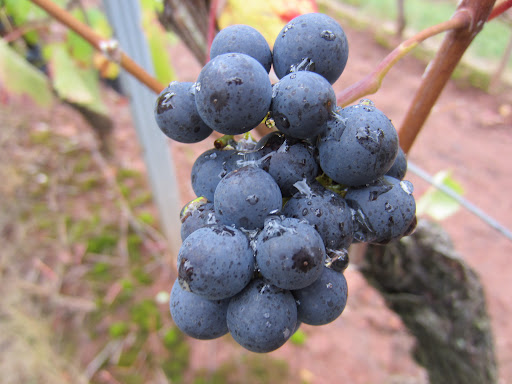
Something called portugese; no-one knows what it is exactly
A tiny little bunch of pinot meunier called schwarz (black) rielsing here
Measuring the oechsle

Leave a comment

Filed under Vintage

Vintage 2012 – Day One

Day One and we were harvesting some low sugar high acid fruit for some light alcohol wines for a special customer. The fruit was coming from the flatter parts of Nackenheim closer to the Rhein River, where the yields are higher thanks to more alluvial soils and easier access to water. Apart from a little bit of rot in the tighter bunches, the fruit is looking excellent. Later in the day we were doing more leaf thinning in the Rothenberg vineyard and doing some preliminary fruit selection by removing any berries with traces of rot. Here are some photos.

One of the parcels being harvested. Good fruit and plenty of it, with only minor rot and dried berries.

A home away from home, for taking breaks and eating a packed lunch.
Found this amongst the grapes. Vacated thankfully.
Grapes in buckets. Need I say more?
On the left, leaves thinned. On the right, not.

Leave a comment

Filed under Vintage

Vintage 2012 – Preparations

My first week working at Weingut Gunderloch in the Rheinhessen was pretty quiet as the winery finished a few loose ends before the vintage really starts, and also makes necessary preparations. I had an induction of sorts and also had the chance to settle into my digs for my time here. Some bottlings here and a day doing some leaf thinning say out the week for me. Here are some photos from the first week.

Fritz Hasselbach showing me the condition of the Rothenberg vineyard

Rielsing bunches in the Rothenberg vineyard
Healthy riesling berries
2010 Rothenberg Trockenbeerenauslese needed to be decanted to be re-stabilised and re-bottled
Fruit sample ready for analysis in the laboratory
Freshly squished grapes, the juice about to be analysed
In the higher parts of the Rothenberg vineyard I was thinning leaves on the northern side to expose the grapes to the morning sun so that they wouldn’t suffer from heat exhaustion, and also open up the canopy to reduce humidity and potential rotting of the fruit
Considering that rot means red, you can see why this vineyard is called Rothenberg (berg meaning hill/mountain)

Leave a comment

Filed under Vintage

The next phase

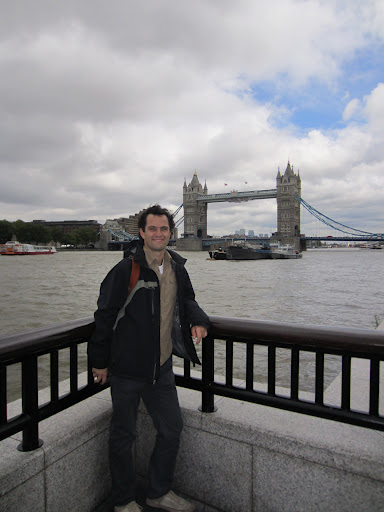
Almost a year has passed since I departed Australia for my huge journey discovering the world of wine, and I have been fortunate enough to experience a great many things. Apart from learning about some of the world’s greatest wine regions and the many wines and winemakers, I have also had the chance to visit some amazing cities and areas across three continents. The past seven weeks I have taken a break from the wine related travel and enjoyed being a fairly typical Australian backpacker. I spent about five weeks in the United Kingdom and Ireland; visiting breweries, historic cities, bars, lochs, distilleries, cliffs and of course, more bars. It was pretty tough work, don’t get me wrong, but it was also a nice opportunity to meet more people and be a tourist.

The two towers

Continue reading

Leave a comment

Filed under Musings

Spanish metal (Impressions of Spain)

It was a great privilege to travel through Spain for five weeks and visit the fourteen major wine regions to meet some of the absolute top producers in the country. What an amazing learning experience to not only be introduced to the wines they produce, but also their philosophies, culture and traditions. A lot of this is thanks to Scott Wasley who as I have mentioned is probably the most important importer of Spanish wine in Australia, working with an exceptional range of wines from the worlds largest wine producing country. I was fortunate enough to not only gain an insight into the most premium wines that Spain produces from the source, but also to their generosity and hospitality as many of the producers very kindly invited me to share lunch or dinner with them, and sometimes offered me somewhere to stay which as I have said is such a huge help to me as I am completely self-funding this trip. So from the beginning I would like to thank both Scott and all of the producers who gave me such a warm welcome to their regions and wineries.
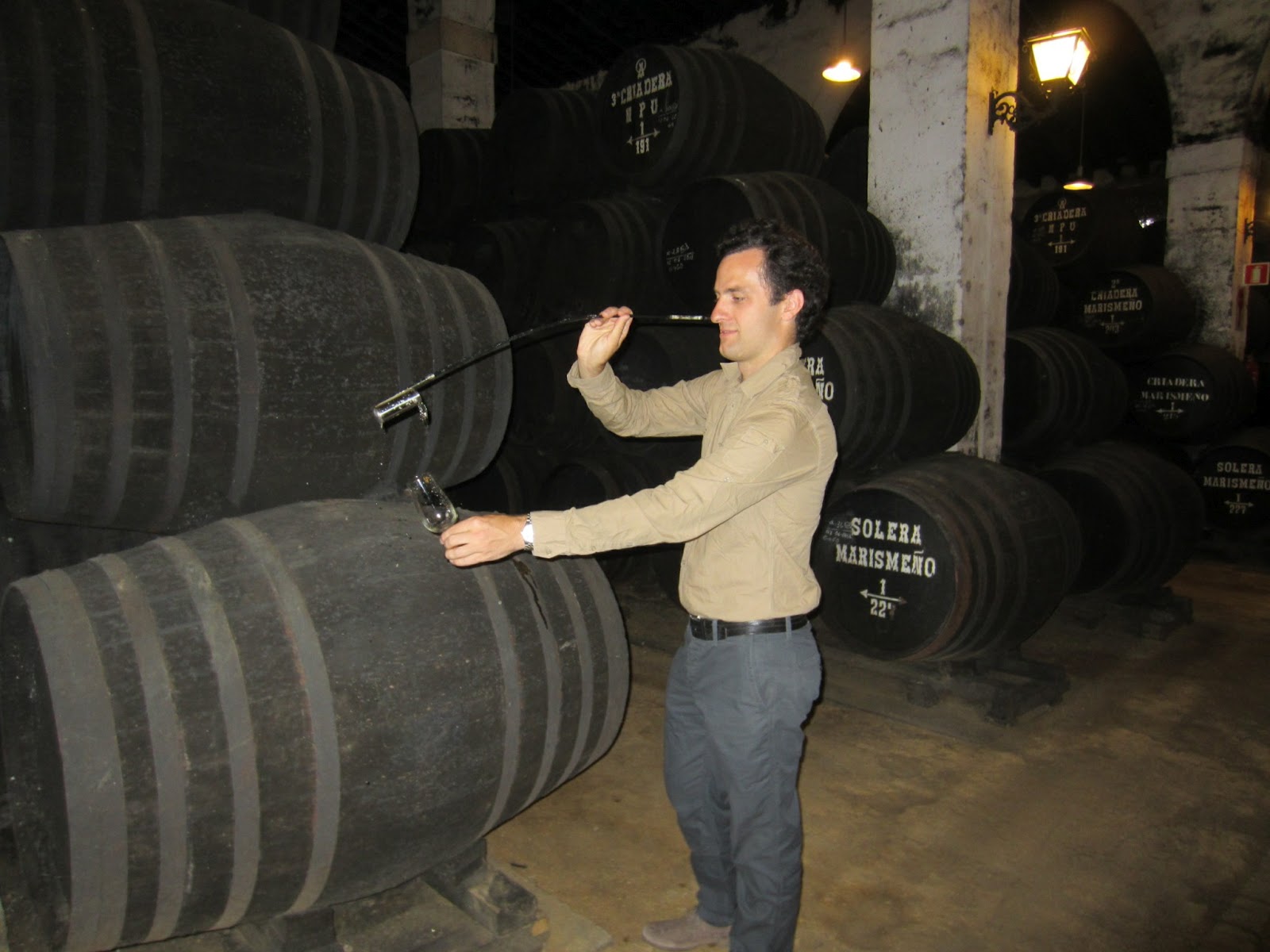
Attempting to draw fino from the solera at Sanchez Romate

Continue reading

Leave a comment

Filed under Articles

Sweet tooth (Bordeaux, France – Day Five)

It seems somehow fitting that the last day I will be visiting wineries is spent tasting some of the most famous dessert wines in the world. Graves is in the southern part of Bordeaux on the left bank but a long way from Medoc. It is a special area in the sense unlike other parts of Bordeaux all three of the famous wines are produced here; namely red, white and dessert wines. Red wine is the largest proportion of production, and in fact this was the origin of claret wine. In the original classification of 1855 one red wine was given first growth classification,which was Chateau Haut-Brion. Graves is also famous for the sweet wines, most importantly wines from Sauternes and Barsac which were also classified back in 1855. As you would remember I visited Chateau d’Yquem which is the most famous Sauternes house that has been given special First Growth Superieur status, but there are a number of other first growth estates. The varieties used for these wines are semillon and sauvignon blanc with a little muscadet. The fruit is harvested so late that the berries are botrytised and the sugar concentrated, and it is not uncommon for several passes to be made through the vineyard during the harvest to ensure only the best botrytised fruit is selected. The fermentation is stopped whilst there is still a high level of residual sugar in the wine, which is where the sweetness comes from. I visited two Sauternes estates in the morning and finished the day with an estate in Saint-Emilion.

The many aromas of sauternes captured by Chateau Suduiraut

Continue reading

Leave a comment

Filed under Winery Visits

Lead by example (Bordeaux, France – Day Four)

If you don’t work in the wine industry then Bordeaux can be one of the best wine experiences you can have. For one thing the old part of the city of Bordeaux is quite beautiful and offers many epicurean delights (although wine lists are very inconsistent and of course parochial). There are plenty of places to stay providing your budget isn’t too small, and it is quite easy to get around thanks to the buses and trams. Getting out to the wineries means renting a car or joining a tour which by all accounts are great with some tour being allowed to visit some of the top producers. There are thousands of producers to choose from and they are all relatively close to the city. The chateaus are often beautiful and the cellars are filled with flashy fancy equipment and plenty of new barrels. Speaking personally I find Bordeaux to be one of the most boring regions to visit, in no way impressing me and making very little attempt to impress me. For one the thing they have a very homogeneous and flat landscape offering one less influence on the terroir. As I have mentioned in the past fancy wineries and modern equipment don’t offer anything if you aren’t understanding and expressing your terroir well, which in most cases they are not (partly because in my opinion the terroir isn’t that good to begin with). I also feel they aren’t making respectful wines when they are doing pretty heavy maceration and new oak maturation, resulting in wines that don’t begin to drink until many years after they are released. The system of selling also is completely out of touch and arrogant in my opinion. There is a good reason why other regions in France and Europe get frustrated with Bordeaux, but at the same time their influence has been so strong on other producers around the world.
A lamp shade in the shape of the mouton of Mouton-Rothschild

Continue reading

Leave a comment

Filed under Winery Visits

A river runs through it (Bordeaux, France – Day Three)

There are many places in the world where a river is a divider both from a geographical perspective but also in an intangible way. Some of the most famous cities in the world are split by equally famous rivers, like the Thames in London and the Seine in Paris. Not that it is any comparison to these cities but Melbourne is also divided by the Yarra River, and a common question asked is ‘which side of the river are you, north or south?’ There are often philosophical, political and financial divisions around this that have a lot to do with history. Wine region sometimes have this and none more so than Bordeaux, which is separated by the Garonne River. On the right bank you find Saint-Emilion and Pomerol where merlot is the major variety. On the left bank you have the Medoc with Margaux and Pauillac, and cabernet sauvignon is king. Winemaking is pretty similar which means the selection of variety and the terroir. On the right bank there is more clay in the soils which is better for merlot, and on the left bank it is a little warmer and therefore better for the later ripening cabernet sauvignon. The left bank wines tend to take longer to age in the bottle which is why I tend to prefer right bank wines younger. But there is plenty of spoils for all and as always every vintage is different. For my third day I visited one estate on each side of the river, and then met with one of the more important Bordeaux negociants to discuss how the wines are sold in their own unique way.
One of the coolest spitoons I have encountered

Continue reading

Leave a comment

Filed under Winery Visits

Everything’s bigger in Bordeaux (Bordeaux, France – Day Two)

How did Bordeaux become the most important wine region in the world? With 120,000 hectares it is by far the largest single viticultural area in France, and when you consider the density of planting here that results in a lot of production. It has some of the highest and lowest yields in France as well, which means you can have some of the best quality and the lowest. Bordeaux was the first region I visited in Europe back in 2010, and it amazed me the size of the area and the extent to which vineyards are planted here. In spite of the quantity of wine they produce they seem to do a pretty good job of selling it, and the reason has less to do with quality and more to do with image. Bordeaux has developed one of the strongest connections with quality in wine second only to champagne. Through the classification system that designates quality of vineyards, to the glamour of the chateaus and then to the system of selling, all combine to make bordeaux wine one of the most immediately recognisable but also mysterious. My second day was spent at two estates on the left bank; Chateau Montrose and Chateau Pichon-Longueville.

The soils of Saint-Estephe

Continue reading

Leave a comment

Filed under Winery Visits

Chateau Soutard – 27/07/2012

Chateau Cadet-Piola 2006
A little sharp on the nose, quite precise and fresh, red fruits but a tad volatile and bretty. Tight and lean, very intense but somewhat simple, very soft tannins, good acids but generally quite empty and simple.

Chateau Larmande 2002
Dense and meaty, darker fruits more mature and savoury, picking up some nice bottle-character, toastier and a little mint elements, dried fruits. Quite sharp and precise, definitely a product of its vintage, high acids and a little bitterness. On the bitter side, volatile and alcoholic. Not impressive.

Chateau Soutard 2003
Visibly ageing very fast. Much meatier on the nose, burger rings, bacon rind, fairly cooked on the nose, fruit all but gone. Soft and supple on the palate, looking quite complex at the moment but very little chance that it will improve, leathery and yoghurt. Creaminess in the texture but typical old-world bad.

Chateau Soutard 2007
Deeper and darker fruits, more mellow on the nose, good concentration but still showing some of that old-world funk, almost like a brunello. Good structure through the palate, well balanced and filling the mouth very well, subdued red fruits, a little creaminess in texture from the oak and the tannins, quite supple but persistent. Good acidity through the mouth, certainly potential and a fine example but still a lot of improving to be made.

Chateau Soutard

Leave a comment

Filed under Tasting Notes