Tag Archives: Europe

Chateau d’Yquem – 23/07/2012

Chateau d’Yquem 2006
Bright golden colour, not a hint of orange. Very concentrated oily nose, apricot peach pear, dry honey and vanilla beans, finesse and elegance but very aromatic. Intense creamy texture, vanilla lanolin, fresh fruits, some delicate sweet spice, quite bracing in the acidity and astringency, needs some more time to soften and develop, A very textured wine, hiding a lot of its complexity under creaminess and alcohol.

Chateau d’Yquem from the year of my birth, not a real bottle and not tasted regretfully

Leave a comment

Filed under Tasting Notes

Chateau L’Eglise Clinet – 23/07/2012

2011 Le Petite Eglise
Nice delicate colour, light and fresh with ruby undertones. Very charcuterie-like on the nose, with bright but closed red fruits. Tight fresh and lively, deep concentration without being heavy or fat, slightly candied o the back of the palate, density of fruit looking nice and approachable, with some developing oak notes of caramel and char.

2011 Chateau L’Eglise Clinet
More intense dark purple colour. Darker fruits, more intense floral aromas, a little dusty molasses. Much more intense structure and texture, more robust fruit tannins, but soft and approachable, just youthful and intense. Some tightness from the cab franc perhaps, a refined merlot structure.

Chateau l’Eglise-Clinet 2002, unfortunately not tasted

Leave a comment

Filed under Tasting Notes

Nobody expects the Spanish disposition (Rias Baixas, Spain – Day Two)

When people think of Spanish wine 90 times out of 100 they would think of red wine. Nine times they may think of cava depending on where they are from, and maybe one time they would think of sherry. Chances are they wouldn’t think of white wine but there are two places in particular where white wine is pretty much all they make. The first is Rueda where wines made from the verdejo grape are one of the fasting growing in the country. The other place is Rias Baixas where they make wines mostly from albarino. In my opinion Rias Baixas white wines are the most Spanish that a wine can be. Firstly as a country that is mostly surrounded by water they eat a lot of seafood and other fresh and often salty dishes that are perfect matches with albarino thanks to its high acidity and zingy freshness. Secondly the country gets very hot as I have discovered myself, and as a chilled wine albarino is much more refreshing than a glass of Rioja tempranillo or oloroso sherry. As albarino wines are almost always made in a simple way they are also a reflection of the simple lifestyle that Spanish people lead, particularly in the current difficult economic situation. Then add to this the fact that albarino is very cheap to produce and can therefore be more affordable than many wines produced in Spain for the Spanish people. There aren’t really any complicated terms or levels of quality like crianza or reserve that mean almost nothing, it is simply good or it isn’t.  Albarino can be enjoyed across the whole country with any myriad of different dishes and is so easy to drink. What I’m trying to say is that Spanish should be drinking more albarino, but only as long as there is enough for the rest of us too.

Have you ever seen razor clams before?

Continue reading

Leave a comment

Filed under Winery Visits

Comtes Von Neipperg – 23/07/2012

Chateau D’Aiguihe 2007
Nice tarry black fruits cassis blackcurrant with a slight dusty balsamic note. Soft bright, good intensity and freshness, dark fruits but soft and structured. Approachable tannins and very well balanced. Reasonably simple but quite good.

Clos de L’Oratoire Grand Cru 2007
Slightly deeper and earthier, more brooding and yet still bright and fresh with expressive dark fruits. More character in the palate, earthier more savoury elements, definitely oak influence in the flavours and texture. Slightly chewier but balanced through the palate.

Chateau Canon la Gaffeliere Grand Cru 2007
More refined and closed, more mature and assured, earthy and slightly meaty with concentrated red fruits. Very bright lifted and intense, very fresh and pure, late influence on oak, structure but wonderful lines through the palate, very young. A coiled spring will open up with time.

La Mondotte 2007
More floral and dark fruits, nice concentration and lifted aromatics, full on the nose and inviting. Soft mellow and smooth, but balanced and structured through the palate. Very approachable now, not sure it will improve much, it’s great now. Quite different.

Chateau Canon la Gafelliere

Leave a comment

Filed under Tasting Notes

Pretty simple, simply pretty (Rias Baixas, Spain – Day One)

Travelling around Europe these past six months I have encountered a select few regions that exemplify my general philosophy of elegance in simplicity, and that there are varieties that express their origin much better than others but should only be grown in certain places. I have mentioned a few of these in the past, but it is safe to say that I would add the albarino variety and Rias Baixas to these lists. Many people have compared albarino to riesling which is a pretty fair assessment, not only for the fact that the wines are generally made without oak in a fresh mineralic style, but also the tendency for mature albarino wines to acquire the same oily aromas and viscosity that riesling does. It is the first reason that I feel so strongly about these wines, as albarino can be amazingly uncomplicated and unpretentious yet filled with character and style, the purest expression you can imagine. These are wines that everyone can enjoy for various reasons, and also everyone can afford. With so little influence from the winemaker there is really nothing to hide; if you don’t have good grapes then you don’t have good wine. Pretty simple really but with the propensity to use so many techniques to influence wines in the winery I think this is lost somehow, and the wines are thought of merely as simple. Why should all white wine be made like white burgundy?
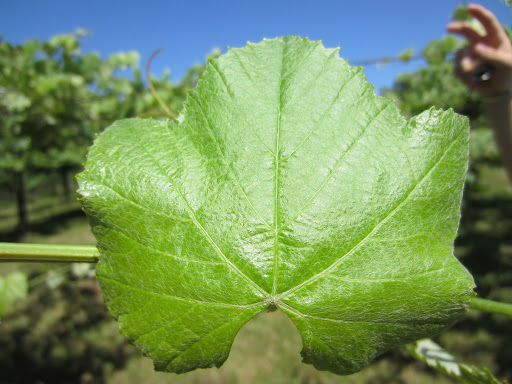
A beautiful albarino leaf

Continue reading

Leave a comment

Filed under Winery Visits

Impressions of Portugal

Firstly I’d like to point out that I only spent two weeks in Portugal and only nine days of which was spent visiting wineries. Secondly I only visited four (five if you treat Oporto separately) regions in Portugal, all of which are in the northern part of the country. I was also able to visit some of the absolute top producers in each of these regions and thus was only able to experience the best of what Portugal produces. This does also mean that I was exposed to the cutting edge and future of Portuguese wines, and meet people with experience in different regions and producers representing different elements of the wine industry. So it seems a little silly to be making assumptions and assessments about a country that requires significantly longer to get to know, but I wanted to talk about Portugal which is a producer that certainly I had very little experience with and understanding of, but feel that everyone out there needs to get to know better.

Traditional method sparkling wine in Bairrada

Continue reading

Leave a comment

Filed under Articles

It’s not easy being green (Vinho Verde, Portugal)

The Vinho Verde region is in the far northern part of Portugal on the border with Galicia, Spain. The astute amongst you would have noticed (if you didn’t already know) that the translation into English is literally ‘green wine’. I’m sure most people would hear this name as I did when I was out for dinner in Lisboa, and be slightly shocked at the idea of green wine. The name of course refers to them being young wines that need to be drunk within 12 months, and the fact that the grapes are harvested a little early to retain the acidity. There are around about 30,000 growers in the region who predominantly grow the fruit in pergolas so that they can grow other crops underneath and more intelligently use the land. The wines are pretty awful in general, and are mass-produced and often pumped with carbon dioxide to give it a little spritz. As far as I know this is the only region where the region is named after the wine rather than the other way around. The associations with the region and the quality of the wine don’t make it way for the few producers who are trying to make higher quality wine, the most prominent of which I visited in the evening.

Duck rice, a typical dish from Minho in northern Portugal

Continue reading

Leave a comment

Filed under Winery Visits

Quinta do Ameal – 19/07/2012

Branco 2011
Wonderful honey notes, quite waxy with lovely citrus rind notes. Lovely texture and ripeness but texture and finesse, focus and distinction, some richness and even a salty kind of acidity. Wonderfully fresh and will continue to open up.

Escolha 2009
Nice depth and richness on the nose, slightly broader and more floral elements, slightly riper and bolder, some honeysuckle notes. Still wonderfully fresh and light, but a very late wave of complexity and some creaminess. Wonderfully integrated oak, only adding an extra dimension of some texture and viscosity.

Solo 2011 (non-interventionist wine)
Wonderful floral sherbet notes, completely subtle and unique character, bright and pure, unadulterated. Pure and natural, no better way to describe it. Just fruit, wonderfully simple and shows what wine can be.

Branco 2003
Quite a funky oily oyster shell, water chestnuts, extremely complex, Japanese vegetables, daikon(!). Extremely subtle texture and fruit, soft and gentle, layers of complexity, very subtle creamy savoury notes.

Special Harvest 2010 (passito method)
Has kind of a spirit rum port kind of nose, oxidative and a little volatile. Good acids and focus, a little rich and textural on the front that softens very quickly. Very honey characters.

Quinta do Ameal Arinto 2006

Leave a comment

Filed under Tasting Notes

Extremes (Douro, Portugal – Day Three)

Considering there are about 44,000 hectares of vineyards planted you can imagine the size of the region and the range of terroirs, so there are a myriad of opportunities for different expressions. There are so many elements of the Douro that are taken for granted in many other regions well-known for super-premium wines, such as very old vines, steep slopes and thousands of  different vineyard owners. Something that they haven’t had in the past was wine that was designated as a single estate or vineyard, something that is so common in places like Burgundy, Mosel and Alba. The Douro Boys are at the forefront of raising the Douro Valley to the same level as such iconic regions, highlighting the aspects generally regarded as of the highest quality. They are also attempting to differentiate the Douro through the very traditional elements like the great range of varieties planted often in a field blend, and the fermentation and maceration of red wines in lagares mostly made of stone. Having the abilities and technology to much better understand their terroirs, varieties and wines there is very little to stop Douro wines in the future.
Amazing vineyards at Quinta do vale Dona Maria

Continue reading

Leave a comment

Filed under Winery Visits

Alright, still (Douro Valley, Portugal – Day Two)

The shift of focus from fortified port wines to still wines could not have waited much longer in the Douro. The entire fortified wine market has been diminishing since the 1980s as more people have been drinking dry wines all over the world. The limitations of matching port with food don’t help with the accessibility of these wines as well, as there are only so many styles and they are generally sweeter and all more alcoholic. In the past fortified wines were one of the most popular categories – particularly port and sherry wines – and they were even produced as far away as the USA and Australia. The growth of still wine production of course has been seen all over the world to the unfortunate detriment of fortified wines. Thus in an effort to stay alive it was important for the producers of the Douro to explore the opportunities of still wine production, and in a sense it couldn’t have come at a better time. The climate is one of the biggest influences on the style of wine they can produce which is big, rich and red. This style of wine has been popular for about 20 years in a number of key markets around the world, thanks in part to the influence of US wine critic Robert Parker who loves this style of wine. Thus a confluence of factors has provided them a great opportunity into the future. The producers I visited on my second day are some of the most important producers of still wine in the region.
If it weren’t empty I would be making wine angels

Continue reading

Leave a comment

Filed under Winery Visits